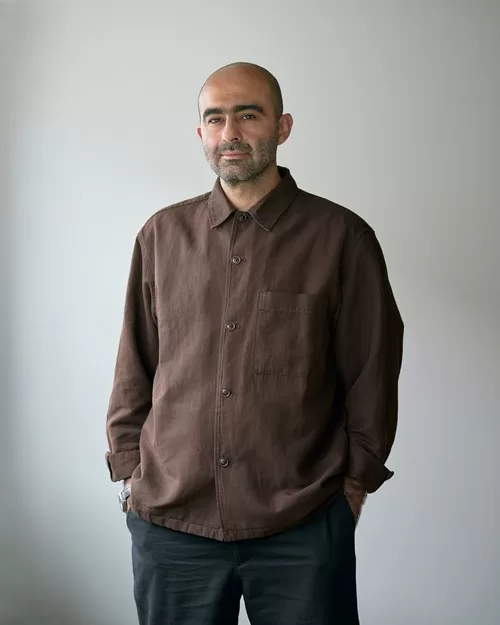
International architecture firm OMA (Office for Metropolitan Architecture) has long maintained a profound and evolving dynamic with the Middle East. From pioneering urban research in Dubai in the mid-2000s to landmark cultural institutions in Qatar and Saudi Arabia, the practice has continuously challenged traditional modes of architectural intervention across the region. Following his elevation to partner after more than 15 years with the firm, Kaveh Dabiri discussed with The Gazette via e-mail, OMA’s evolving philosophy on heritage and preservation, and the unique urban ambitions shaping cities across the Middle East. Having recently been named a partner at OMA after more than 15 years with the practice, Kaveh Dabiri reflected on what this new role means at both personal and corporate levels. He said that he started at OMA in 2009 as an intern and has since progressed through every position available to an architect within the office.Throughout that time, however, it has never felt like a regular job, but a continuous challenge to make meaningful contributions. He noted that stepping into the partnership clearly raises the challenge, yet in many ways it is just a continuation of his experience. When asked how his experience of the Middle East over those years shaped the way he thinks about architecture, Dabiri said he is hesitant to generalise their work in the region as a single experience. He explained that the Middle East, or West-Asia, is a very diverse region, and its cultural boundaries do not necessarily match its geographical ones. As a partner at OMA, Dabiri expressed that he would like to expand this type of work across many more countries both in the region and beyond. “The first place we started working in was Dubai in the mid-2000s, during the period when the UAE was looking to design a future for itself beyond oil,” he said. He said that ambition generated phenomenal energy and hunger for projects by international architects but was also met with derision by many critics in the West. He noted that they found the scale and speed of Dubai’s transformation very fascinating and wanted to understand it on its own terms before considering it as an opportunity for work. To that end, they put together their observations and conclusions in Al Manakh, a 500-page special issue of Dutch architecture magazine Volume dedicated to Dubai and the Gulf region.Three years later, they published Al Manakh 2: Gulf Continued, which looked at how the Gulf’s cities had changed after the financial crisis. He went on to say that a decade later, OMA completed its first building in Dubai, Concrete at Alserkal Avenue – a flexible venue for exhibitions and cultural events in a former warehouse. About the same time, they completed the Qatar National Library in Doha, also after many years of engaging with the country. Saudi Arabia has become a more significant part of their work in recent years, where they have completed the scenography for the first two editions of the Islamic Arts Biennale in Jeddah and now the JAX art district in Riyadh. He remarked that what continues to make the region interesting is that change continues to take place despite all the setbacks brought by crises and war. Speaking on the Islamic Arts Biennale, where OMA created a setting for objects and artworks with vastly different histories, Dabiri addressed how he thought about creating a space where all these different voices could come together. “Organising how visitors move through multiple exhibition spaces and how they interact not only with the display but also with outdoor public areas, amenities, places to eat and drink, and public programmes is much like designing a masterplan.” Having worked on the scenography for both the 2023 and 2025 editions of the Islamic Arts Biennale, Dabiri detailed how the experience of the first Biennale influenced the approach to the second. He said that each edition feels like an experiment.He added that since the first edition, the Diriyah Biennale Foundation had been gathering feedback on the visitor experience and discussing it internally. At the start of the second edition, this feedback was discussed with them in detail, and because they had more time, they were able to incorporate it properly and improve their design. Turning to the JAX District in Riyadh, where OMA worked with an existing industrial area and built upon its established character, Dabiri discussed what he found interesting about designing around an existing place rather than starting with a blank canvas. “When we began the project, JAX used to be an industrial heritage site that was already functioning as an art district through an initiative by the Ministry of Culture.” Observing a broader interest across OMA’s regional projects in working with existing environments – such as the structure of the Hajj Terminal in Jeddah, the industrial character of JAX, or the existing community around Alserkal Avenue in Dubai – Dabiri explained how that perspective influences the design process. He said that the topic of preservation has been a preoccupation in their office for more than two decades.Having worked across Doha, Dubai, Jeddah, and Riyadh – cities with distinct histories, climates, and ambitions – Dabiri highlighted the differences in how people in these cities imagine their future. Finally, expressing his curiosity about Egypt, he told the newspaper that talking about preservation, a few months ago he took part in a discussion hosted by the V&A in Cairo about the city’s architectural heritage. Dabiri emphasised that amidst grand projects such as the New Capital and the Grand Egyptian Museum, it is important not to forget the extraordinary architectural wealth that Cairo already has. The post Kaveh Dabiri: New Capital, Grand Museum spotlight Egypt’s rich architectural heritage appeared first on Egyptian Gazette.