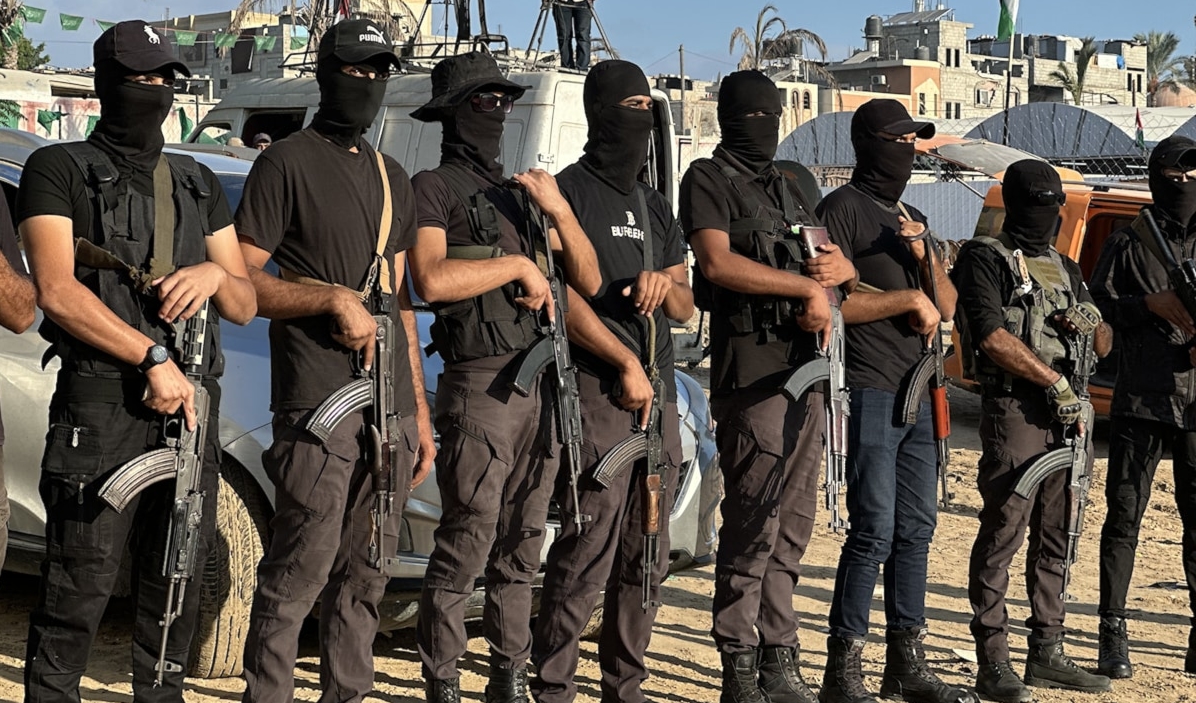
Palestinian resistance factions executed several collaborators by firing squad in a public square in Khan Younis, southern Gaza, early Sunday. The collaborators had been found guilty of providing Israeli intelligence agencies with sensitive information that led to the assassination of several resistance fighters, the deaths of dozens of civilians and injuries to others. According to a statement by Al-Haris, a platform affiliated with the resistance's security apparatus, the executions followed what it described as revolutionary rulings. The group said the operation was intended to send a message to all Israeli collaborators that "justice will be served and retribution is inevitable." The executions mark the culmination of a prolonged and complex security campaign against Israeli intelligence operations. A similar execution took place in late July, targeting a collaborator who had provided information that led to the assassination of Izz Al-Din Al-Haddad, a commander in the Qassam Brigades. The resistance later released video footage of his confession. A source in the resistance's security apparatus told Al-Akhbar that its fighters remain on constant alert against several overlapping threats. These include collaborator groups operating east of the Yellow Line, which the source said regularly attempt kidnappings and incursions into nearby areas. The groups also seek to recruit more young Palestinians by exploiting dire humanitarian conditions and the proximity of displaced people's shelters to areas controlled by Israeli forces. The source said Israeli intelligence agencies and collaborator groups had coordinated an extensive propaganda campaign in recent weeks. They distributed thousands of leaflets alongside cigarettes and coffee. The leaflets carried “friendly” social messages and a contact number for a Shin Bet officer. Despite Israel's considerable investment in recruiting and developing collaborator networks, the resistance's security apparatus has penetrated several groups and arrested dozens of their members. Collaborators have also approached people in their social circles to recruit young Palestinians, promising comfortable living conditions, monthly salaries and health insurance. However, according to the source, collaborators who have fled these groups describe a different reality, citing widespread drug use, moral decay and internal disputes. "All these promises disappear once someone gets involved," the source said. Recruits end up serving as “human shields during tunnel searches and dangerous kidnapping operations that Israeli soldiers themselves do not take part in. They also face harsh and humiliating living conditions”. Al-Haris also reported the death of collaborator Sharif Taysir Jargoun. According to information published by the platform, a woman who escaped from the camp run by collaborator Akram Jargoun and surrendered to security forces said Sharif died on November 7 from injuries sustained after Akram shot him in September. The shooting allegedly followed a dispute over Sharif's relationship with a woman who was also involved with Akram. The woman also reported serious internal disputes within the Jargoun group over the trafficking of drugs, cigarettes and human organs. She said Akram discovered that two members, Mustafa and Abdul Hamid Jargoun, had stolen proceeds from the trade and shot them in the feet. The Jargoun group operates in western Rafah. It previously split from the groups led by Yasser Abu Shabab and Ghassan Al-Dahini. Despite Israel's considerable investment in recruiting and developing collaborator networks, the resistance's security apparatus has penetrated several groups and arrested dozens of their members. The source attributed these gains to widespread public rejection of collaboration and the failure of the groups operating near the Yellow Line to establish an accepted social base. Dozens of families and young people fled those areas towards western Gaza. They have provided valuable intelligence, helping thwart dozens of operations and exposing how the collaborator networks operate. This is an edited translation of a report originally published in Arabic.