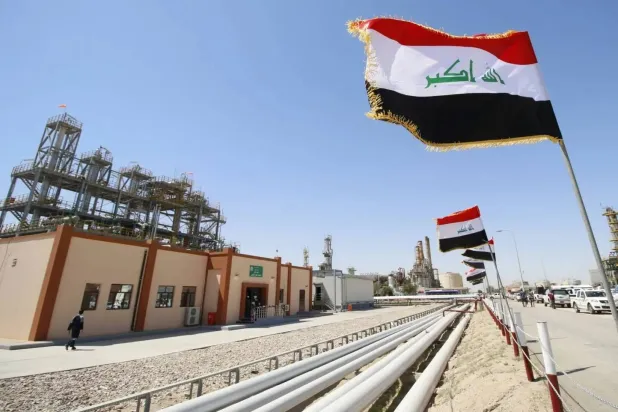
Jordan’s King Abdullah II and Iraqi President Nizar Amidi have stressed the need to proceed with implementation of the Basra-Aqaba oil pipeline project, in service of the two countries and their peoples. The king received a phone call from Amidi on Monday, during which they discussed the deep-rooted ties between Jordan and Iraq, as well as ways to enhance cooperation across various sectors. The pipeline project, which has been stalled for years, would allow oil to be transported from Basra, on the Arabian Gulf coast, to the port of Aqaba in southern Jordan, bypassing the export route through the Strait of Hormuz. Iraqi Parliament Speaker Haibat al-Halbousi described the project during a visit to Amman on June 7 as a “strategic option” for Iraq amid restrictions on oil exports through the strait. The two countries signed a framework agreement in April 2012 to build a 1,700-kilometer pipeline with a capacity to transport one million barrels of oil per day. However, the project, whose cost is estimated at around $18 billion, has yet to be implemented. The pipeline is expected to provide Jordan with about 150,000 barrels of crude oil per day. The project also includes the construction of storage facilities with a capacity of seven million barrels, as well as an oil export terminal. Iraq has lost around $60 billion during the Middle East war, Foreign Minister Fuad Hussein said last week. Iraq was producing about four million barrels of oil per day before the conflict, exporting about 3.5 million bpd -- mostly shipped from the country's south via the strait. Iraq's foreign currency reserves have shrunk by 20 billion dollars and consumer prices have risen sharply.