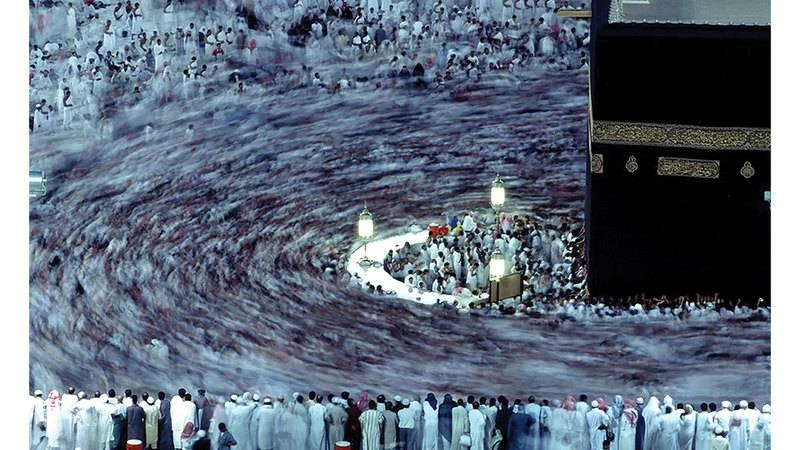
Dubai: In celebration of a photographer who has spent more than 50 years documenting the spirituality of diverse people, the General Secretariat of the Hamdan Bin Mohammed Bin Rashid Al Maktoum International Photography Award (HIPA) announced its selection of Japanese photographer, Kazuyoshi Nomachi, who was crowned an honorary award for the 15th session, titled ‘The Family’.The award comes in recognition of a career that has exceeded half a century of artistic, cultural, and humanitarian work in photographic documentation of people in remote areas with harsh climates and their relationship with the land, established beliefs, religious rituals, and management of different aspects of life, to the extent that the international press described his works and writings as “a valuable document about man and the land.”Japanese photographer Kazuyoshi Nomachi. Picture credit: SuppliedNomachi produced 15 books about his long journeys across three continents, including Sahara, The Nile, Tibet, and the famous book Mecca the Blessed, Medina the Radiant. He also received several prestigious awards in Japan and abroad, most notably the Dumon Kin Award and the Medal of Honour with a Purple Sash from the Japanese government in recognition of his artistic contributions.Influential contributionsThe Secretary-General of the Award, Ali Khalifa bin Thalith, said: “We are pleased to announce the winner of the honorary award for the ‘Family’ cycle. The HIPA team makes great efforts and conducts thorough and careful studies to select the personality deserving of this level of recognition.” Secretary-General of the Award, Ali Khalifa bin Thalith. Picture credit: SuppliedHe added: “Kazuyoshi Nomachi has made important and influential photographic contributions that touch on issues of priority to humanity and society, and we consider him an inspiring role model to be emulated in making an honourable career capable of adding significant value to humanity.”He continued: “Honouring creative individuals with special awards is at the heart of the award’s mission, inspired by the vision of His Highness Sheikh Hamdan bin Mohammed bin Rashid Al Maktoum, Crown Prince of Dubai, Deputy Prime Minister and Minister of Defence, the patron of the award, in supporting the arts and encouraging cultural and intellectual creativity.”A photograph by Japanese photographer Kazuyoshi Nomachi. Picture credit: SuppliedFor his part, Nomachi said: “It is a great honour for me to receive such prestigious international recognition from an award of the size and value of HIPA. I have traveled to remote areas of the world in search of understanding the beliefs and cultures that people have inherited across generations. My travels have taken me through the Islamic world and many other places where distinctive religious traditions still shape people’s lives. Globalisation has made the world today a place of exceptional ease and efficiency, but at the same time it has brought about profound transformations in local cultures.”He added: “My testimony and documentation of the rich ethnic traditions and diverse beliefs that endured even before the start of the accelerated process of standardisation represent an irreplaceable treasure for me, and I express my sincere gratitude for this recognition of my long career.”BiographyA photograph by Japanese photographer Kazuyoshi Nomachi. Picture credit: SuppliedNomachi was born in Japan in 1946 in Kochi Prefecture and was educated at Kochi Technical High School. He began practicing photography as a teenager, and in 1969 he studied photography under Takashi Kijima. He began his career in 1971 as a freelance advertising photographer, and the following year he made his first trip to the Sahara Desert, where he was amazed by the resilience of the people living under the harsh environmental conditions of the region.Nomachi dedicated his career to documentary photography from his first trip to the Sahara Desert when he was 25 years old, as he was captivated by the vast nature of Africa and the strong will of the people who inhabit those harsh environments. For five decades, starting from the theme of “prayer and the pursuit of the sacred,” Nomachi focused his attention on the diverse traditional cultures that reflect the lives of the people living in the harshest parts of the earth.He succeeded in capturing the spirituality manifested in landscapes of unique and exceptional beauty, where images of people and faces acquire absolute dignity, and blend with the surrounding context in visual compositions resembling paintings.Drawing on his extensive experience in the arid desert environment, Nomachi found new inspiration in the Nile River. Based on this theme, he began in 1980 to document the journey of the White Nile, from its delta to its source at a glacier in Uganda.Since 1988, he has turned his attention towards Asia, exploring Tibet, the Ganges River and Islamic holy cities.