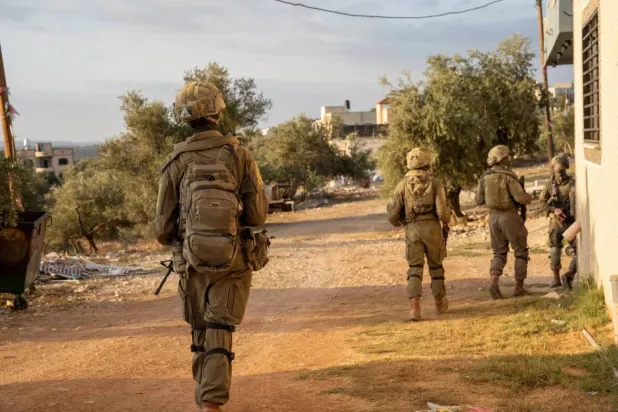
The Israeli army is taking logistical steps to prepare for a prolonged presence in South Lebanon, fortifying positions and improving road networks while expanding scorched areas north of what it calls the “Yellow Line.” Israeli strikes have also extended deeper into Lebanon, reaching Wadi Zibqin in the western sector and the vicinity of Mayfadoun in the east, in what local sources described as an expansion of depopulated areas through gunfire, artillery shelling, airstrikes and drone activity. The expansion comes amid operational challenges reported by Israeli media, particularly fiber-optic-guided explosive drones. Ynet reported that the Israeli military has yet to find a comprehensive solution to the threat and is testing various systems, focusing on protection, early detection and warning. Long-term preparations The measures offer no indication that Israeli forces intend to withdraw from South Lebanon in the foreseeable future. Ynet reported that the military was fortifying positions and improving access roads even after the 55th Reserve Paratroopers Brigade completed its mission and handed over its positions to replacement forces. The brigade completed about 100 days of mobilization, including 80 days of operations in Lebanon, concentrated between the border and what the Israeli military calls the “Yellow Line,” reaching depths of about 12 kilometers (7.5 miles). Forces from the Bislamach Brigade and the Gefen Battalion of the officers’ course are replacing the 55th Brigade, conducting drills and improving positions that provide observation and fire control over areas farther inside Lebanon. Israeli security officials cited by Ynet indicated that troops would spend the winter in protected compounds inside villages. Buildings were equipped over the summer with generators, air conditioning, and sanitary facilities, while access routes were prepared in advance. The report also cited concerns that limiting operations to securing the deployment line could erode readiness and increase the risk of attacks on Israeli forces in South Lebanon. Second line of villages Alongside fixed military positions established by the Israeli army since May, now numbering 17, according to southern Lebanese security sources who spoke to Asharq Al-Awsat, Israeli forces are expanding their fire zone toward a second line of villages bordering the “Yellow Line,” with the aim of turning them into depopulated, hazardous areas. Local sources reported intensified gunfire and artillery shelling in recent days, accompanied by persistent drone flights. The attacks have reached the outskirts of Wadi Zibqin and Mayfadoun, southeast of Nabatieh, where residents remain, and some displaced people have returned over the past three months. Lebanon’s official National News Agency reported an Israeli airstrike on Kfar Tibnit after artillery shelling between Arnoun and Kfar Tibnit. Israeli artillery also struck near the public school in Mayfadoun and Dawhat Kfar Roummane, as well as the outskirts of Haris and Haddatha. A Merkava tank fired several shells at Houla, while Israeli fire targeted the outskirts of Shaqra and Kounine woodland. A series of strikes hit Kfar Tibnit and Wadi al-Hujair, with explosions heard in Sidon and surrounding areas. In the western sector, Israeli artillery intermittently shelled Mansouri from Bayyada and Tayr Harfa, south of Tyre, with fire extending to Wadi Hassan near Majdal Zoun. Israeli forces also carried out a powerful explosion in Mansouri that was heard as far as Mount Lebanon, following another blast near Baraachit in the Bint Jbeil district. A suspicious object left from previous Israeli attacks also exploded on the outskirts of Srifa. Soldiers injured Separately, the Israeli military announced Sunday that a soldier was seriously wounded and an officer moderately injured Friday in Majdal Zoun after a grenade was improperly thrown. Eight other Israeli soldiers were injured Friday in a separate incident in South Lebanon involving a collision between two vehicles.