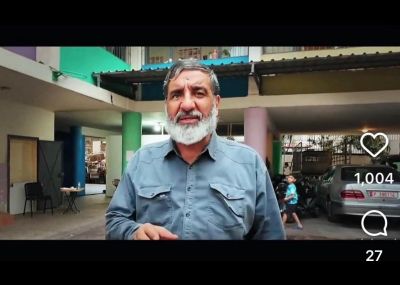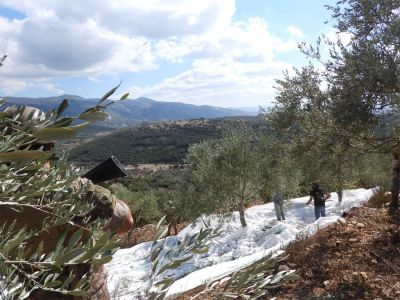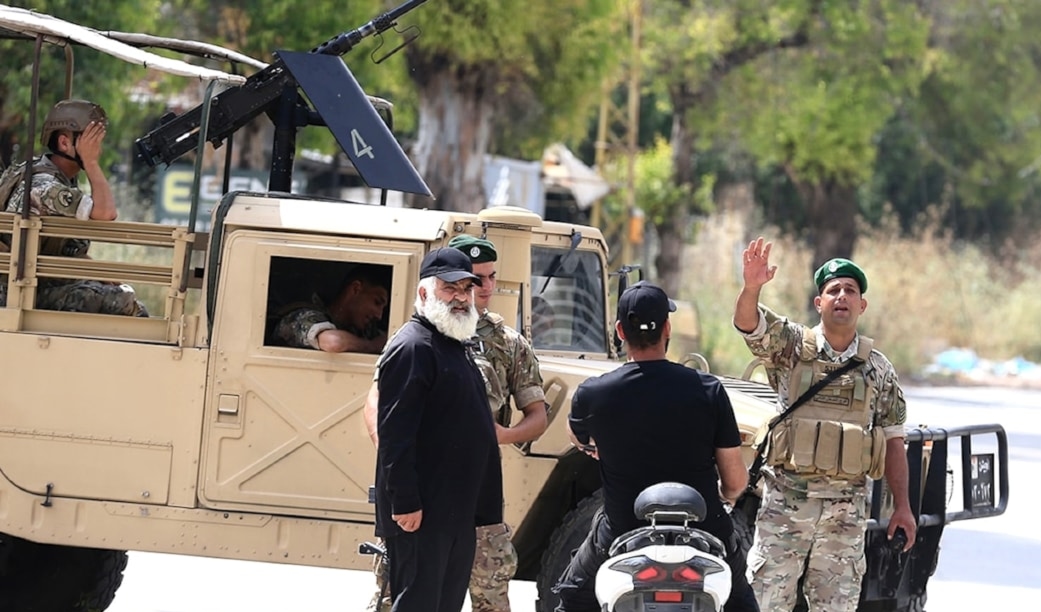
Who has the right to serve in the Lebanese Army in the south? Lebanon’s political authorities have allowed matters to reach a point where Tel Aviv appears to claim a say not only over the army’s movements, deployment and missions, but also over the names and identities of its officers. After months of reports about an Israeli “veto” on Lebanese Army officers, the Israeli Alma Research and Education Center has taken the issue a step further. In a report on the September 18 incident in Deir Mimas, it asked whether the confrontation could have been avoided if the Lebanese officer in charge had not been Shiite. For some time, the Lebanese Army, its command and senior officers have faced a political campaign, both domestic and external, centered on the claim that the army does not carry out the decisions of the executive authority. The campaign, which President Joseph Aoun and Prime Minister Nawaf Salam have so far not joined, goes beyond the army’s handling of Israeli attacks. At its core is an attempt to alter the military institution’s doctrine, including the principle that Israel is an enemy. The US has strongly pressed Lebanese authorities to ask the army not to use the word “enemy” in statements concerning Israel. US officials have also objected to the army describing Israeli forces as an occupying force. The army has not accepted this. This is not the first reported Israeli objection to the identities of personnel serving in the south. The campaign is also driven by Lebanese political parties and figures, including the Lebanese Forces and Kataeb, as well as figures associated with the US Embassy and Lebanese-US figures operating from Washington. Their central demand is that the army forcibly disarm Hezbollah. A similar position has circulated within the US administration, although US Central Command, which handles the military relationship with Lebanon, has taken a different approach. Israeli pressure on the Lebanese Army has now moved beyond questioning its performance in the south or accusing it of failing to meet Israeli demands. It has reached the composition of the force itself, with officers and soldiers being identified by sect and region. This suggests that Israel seeks a say not only in the army’s missions and deployment, but in who carries them out. In its report on the September 18 Deir Mimas incident, Alma cited the Lebanese Army’s statement that soldiers from the 7th Brigade had established a temporary observation post near the village to protect farmers who had come to inspect their land. According to Alma, an Israeli force approached the position, tensions followed, and stun grenades were thrown toward the Lebanese soldiers, who later withdrew. The report also said the Lebanese Army had stated that the deployment was coordinated with the international coordination mechanism established under the framework agreement. But Alma quickly moved from the incident itself to the identity of the post commander, Mohammad Nabih Nasser Al-Din, identifying him as a Shiite officer from the Hermel area of the Bekaa Valley. It then linked Hermel to Hezbollah’s support base and concluded that his sectarian identity “cannot be ignored in this context.” The report provides no evidence that Nasser Al-Din is affiliated with Hezbollah or that he was carrying out a mission on its behalf. Instead, it moves from his sect and place of origin to political and security suspicion, then broadens the allegation to Shiite officers generally, claiming that Hezbollah will continue to use them to serve its interests. The issue, in other words, becomes not the officer’s conduct, but his identity. This is not the first reported Israeli objection to the identities of personnel serving in the south. In July 2026, Kan reported that Israel had conveyed, through a US mediator, a list of senior Lebanese Army officers it opposed deploying in South Lebanon. Despite the denial that accompanied these reports, a serious question resurfaced. Has Israel acquired a role in deciding who is entitled to serve in the Lebanese Army in the south? Rather than stopping this process, the authorities continue to act as though they must demonstrate “good behavior” to the US and Israel... The responsibility now falls primarily on the Lebanese authorities. Instead of drawing a clear red line against interference in the army’s structure or the identities of its officers, the authorities have responded to successive Israeli pressures through accommodation. Reports of officer lists did not become a political crisis, and no clear principle was established that the army command alone determines where its personnel serve inside Lebanon. The result is that the scope of interference has grown. The same logic can be seen in earlier talk of creating a special southern force or brigade with no Shiite personnel. Whether these proposals remained at the level of discussion or progressed further, they fit the logic now presented by Alma, which is sorting soldiers according to sect and community and treating part of the army as a group that must prove its loyalty in advance. The more serious issue is that Israel’s intervention is expanding from the army’s role to its structure. Its concerns are no longer limited to where the army deploys, how it moves or what missions it performs, but extend to the officers and soldiers carrying out those missions. The Lebanese authorities also appear to be treating each demand separately, while the accumulation of these demands creates a form of de facto oversight over the institution. The army risks being transformed from a national institution whose command decides how and where its personnel deploy into one whose choices in the south are subject to Israeli objections and restrictions. Rather than stopping this process, the authorities continue to act as though they must demonstrate “good behavior” to the US and Israel, presenting the matter as routine “coordination” or field arrangements. Officials argue that they must take US “comments” into account to avoid new sanctions on army officers, as happened previously with two officers from the army and General Security, while Washington’s warnings to suspend aid to the military continue to hang over the institution. This is an edited translation for a report published in Arabic.