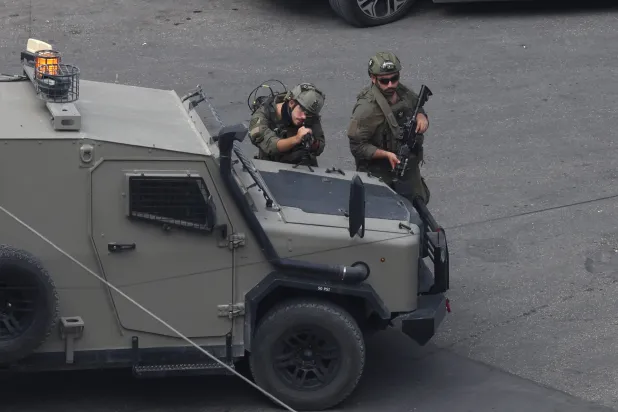
Southern Lebanon is entering an unprecedented security test as the Lebanese army moves into the first "pilot zone" vacated by Israeli forces. The shift, however, does not necessarily signal a reduction in Israel's military influence, as it is accompanied by a broader redeployment focused on retaining commanding positions, strengthening surveillance and targeting capabilities, and preserving the ability to intervene from outside the towns. The result is a transition from the direct occupation of villages to a redistribution of firepower-based control. Israel is withdrawing from selected villages and handing them to the Lebanese army, but continues to hold positions overlooking wide areas of the south, supported by drones, artillery, and electronic equipment inside the territory it still occupies. The first phase, therefore, goes beyond the army’s deployment in Zawtar al-Gharbiyeh, Froun, and Srifa. Its success will depend on where Israeli forces redeploy and whether they retain the ability to monitor, strike, or re-enter areas they have left during any dispute over the accord’s interpretation. A Lebanese security source previously told Asharq Al-Awsat that the Israeli army had established about 23 new positions inside the occupied area of southern Lebanon, most containing military vehicles and equipment. It remains unclear whether Israel intends to keep them throughout the occupation or whether they are temporary positions tied to operational needs, the source said. The positions stretch from the vicinity of Naqoura and Bayyada on the coast, through the high ground of the western sector, to the central sector overlooking the Salouqi and Hujeir valleys, and onward to the eastern heights and other points along the border. They include a large position in Maroun al-Ras. Retired Brigadier General Saeed Qazah said Israel’s withdrawal from Zawtar al-Gharbiyeh did not amount to a significant military loss as long as it retained control of more important positions overlooking large parts of the south. “Zawtar is an observation point overlooking Froun, Ghandouriyeh and Srifa, but Israeli forces remain deployed at more important positions extending from Bayyada, through the high ground of the western sector, to Beaufort Castle,” he told Asharq Al-Awsat. Those positions overlook Nabatieh, Iqlim al-Tuffah, the Litani plain, and areas across the border in Galilee, he said. The Lebanese army’s entry into Froun, Srifa, and Zawtar al-Gharbiyeh reinforces the state’s presence in the villages, Qazah said, but does little to change the military balance while Israel retains positions that provide surveillance and fire control over surrounding areas. Israel’s approach also relies on aerial and intelligence superiority. Drones, electronic surveillance systems, and long-range artillery allow it to track movements and intervene without maintaining troops inside the towns. Military experts said the model reduces the cost and risk of a ground deployment while preserving Israel’s ability to act quickly. Qazah said one of the main reasons the first phase was delayed was Lebanon’s insistence on guarantees preventing Israel from striking or re-entering areas after the Lebanese army deployed there. “Verification that these areas are clear is not carried out by Israel, but through a joint mechanism that includes the US side and the Lebanese army,” he said. “Israel therefore has no right to resume targeting these areas, conduct military operations there or reoccupy them after state authority has been established.” He said the guarantees resulted from US pressure and negotiations surrounding the accord and helped move the process from negotiations to implementation. Retired Brigadier General Naji Malaeb warned, however, that proposals reported by Israeli media could open the way for a broader interpretation of Israel’s right to intervene. “Giving Israel the right to enter and verify compliance with the understandings would be extremely dangerous,” Malaeb told Asharq Al-Awsat. “It could claim each time that it had information requiring intervention, effectively establishing a permanent right to enter and leave Lebanese territory under security pretexts.”