Add as preferred on Google
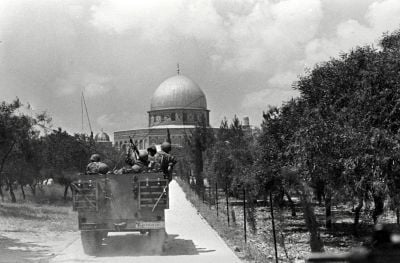
An Israeli military vehicle heading towards the Dome of the Rock, within the Al-Aqsa Mosque compound, the third holiest site in Islam, known to Jews as the Temple Mount, the holiest site in Judaism, on June 7, 1967. (Archival photo: AFP)
Add as preferred on Google This article was first published in a special edition of L'Orient-Le Jour in collaboration with "Les Nouvelles Rencontres d’Averroès" and was translated by Sahar Ghoussoub. It was May 5, 1949. Addressing a committee of the U.N. General Assembly in New York, Abba Eban was methodical. The Israeli delegate came to make the case for his country’s admission to the United Nations after an initial application was rejected in November.This time, the man in dark glasses was determined to secure a majority with a carefully crafted argument. A year earlier, he reminded the committee, Israel’s declaration of independence drew part of its historical legitimacy from this very institution. On Nov. 29, 1947, Resolution 181, which called for the partition of Palestine, recommended the establishment of two states, one Arab and one... You have reached your article limitStay informed about a Middle East in crisis.Subscribe for $0.5/month for the first 3 months. Subscribe now Log in This article is only available to L’Orient Today subscribers. Subscribe now Log in Create a free account to continue reading this article. You’ll also receive The Morning Brief, our must-read daily digest of Middle East news. Opt out anytime Email Address Password Email Address Password I would like to receive special offers from L'Orient Today as well as selections of the best articles. Register By creating an account, you agree to the terms and conditions of use and our privacy policy. Register Or register with: Facebook
Already have an account? Login here