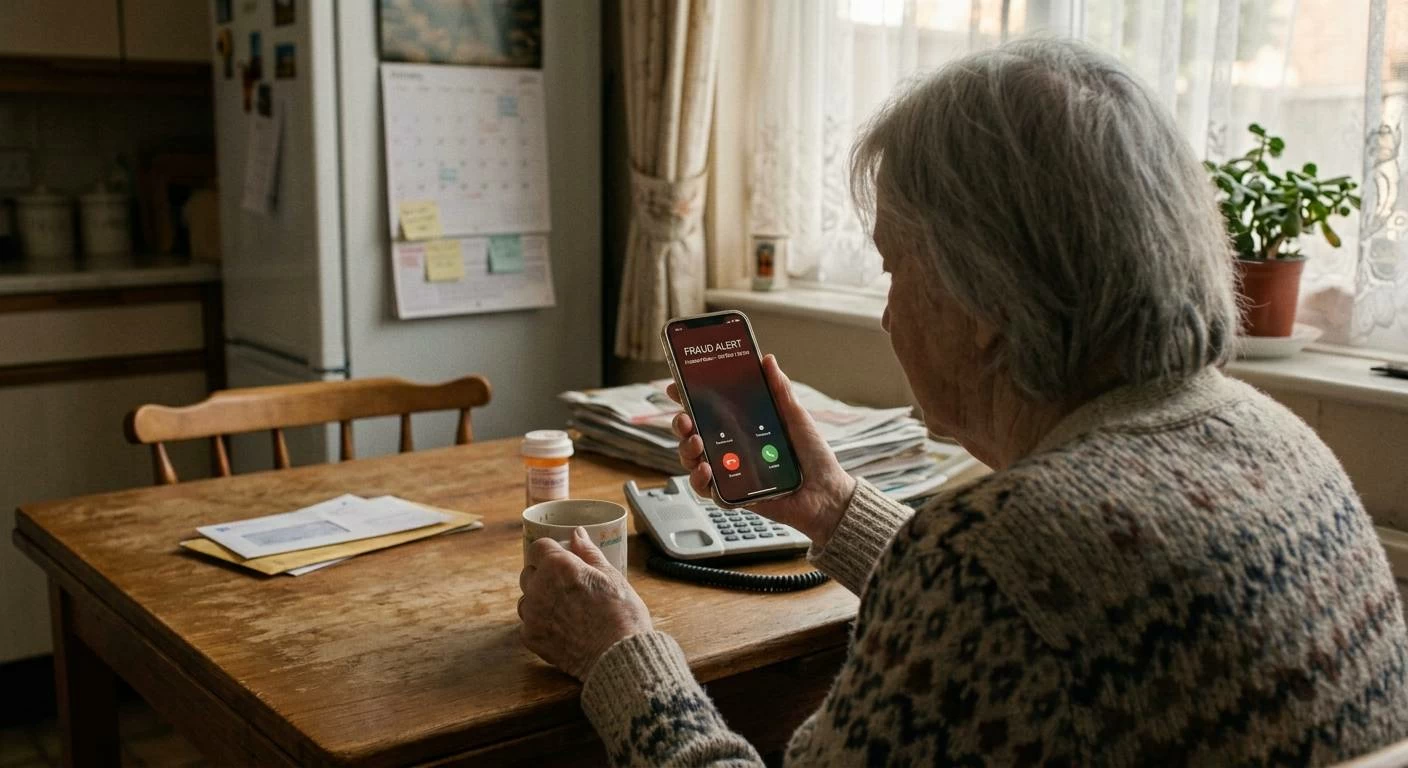
Abu Dhabi: Two cybersecurity experts warned of the rise in electronic fraud methods specifically targeting the savings of the elderly, stressing that the real danger lies in the shift in the thinking of fraudsters from merely hacking devices and systems to hacking human trust and manipulating emotions, which are complex psychological tricks that anyone, regardless of their educational level, may fall victim to.They explained that criminal groups exploit the lack of awareness among some elderly people about the rapid technological development of banking applications, and employ artificial intelligence techniques to mimic the voices of children and relatives to induce them to transfer money without thinking.For its part, the Ministry of Interior confirmed that the elderly are among the most targeted groups by cyber fraudsters, who exploit their trust in official authorities and their eagerness to help their family members. It stated that with the development of artificial intelligence, fraudsters have become able to imitate the voices of family members through short audio recordings, and use them to deceive the victim and ask them for money or personal information.In detail, cybersecurity expert Engineer Ahmed Al Zarouni explained that scammers target the elderly for several reasons, most notably that some of them lack sufficient knowledge of modern electronic fraud methods, especially with the rapid development of digital technologies, social media, and banking applications. Scammers also exploit the trusting nature of the elderly.He stressed the importance of realising that older people are not less aware or capable of making decisions, but may be less informed about the evolving methods of fraud, explaining that “the fraudster does not rely only on hacking devices, but relies more on hacking people’s trust and manipulating their feelings, methods that can victimise anyone, regardless of their age or educational level.”Cybersecurity expert Engineer Ahmed Al Zarouni explained that scammers target the elderly for several reasons - some of them lack sufficient knowledge of modern electronic fraud methods. Picture credit: SuppliedHe reviewed the most prominent methods of electronic fraud targeting the elderly, the most common of which are fraudulent phone calls and messages impersonating official or banking entities, where the fraudster claims there is a problem with the bank account or a need to update the data, then requests bank card information or the verification code sent to the phone.One of the common methods is sending fake links via text messages or the WhatsApp application, claiming that there is a postal shipment, a traffic violation, or a financial reward due, with the aim of getting the victim to enter his personal and banking data.He said: “We are witnessing an evolution in fraud operations using artificial intelligence constructs, where it has become possible to imitate people’s voices and create fake audio and video clips. An elderly person may receive a call that sounds like it is from his son or a relative asking for an urgent money transfer as a result of a problem or accident.”He continued: “There is also investment fraud through promises of high and guaranteed returns, emotional fraud that relies on building fake relationships to gain trust, in addition to fraud through fake technical support, where the fraudster convinces the victim to install an application that allows him to remotely control the phone and access sensitive information.”Al-Zarouni pointed out that the real danger is that fraud methods have become more convincing, and it is no longer easy to distinguish between real and fake messages and calls based on appearance or voice alone.He stressed that protecting the elderly begins with continuous awareness campaigns in a simplified manner that suits their daily use of technology, with the necessity of involving family members in raising their awareness and helping them to recognise modern methods of fraud.He warned against sharing passwords, banking information, or verification codes with anyone, even if they claim to be a bank employee or official agency representative. He also cautioned against clicking on unknown links or downloading applications from unofficial app stores, and warned against making any financial decisions under pressure or in haste, as scammers often use intimidation tactics or feign an emergency to manipulate victims into acting impulsively.He said: “If you receive a call from a family member requesting an urgent money transfer, you should end the call and contact them again via their known number to verify their identity, especially with the spread of voice imitation technologies using artificial intelligence.”He advised activating bank alerts and multi-factor authentication, constantly updating phones and applications, setting an appropriate limit for daily financial transfers, and seeking help from a trusted family member when faced with any unusual request.He said that in case of suspected fraud, the bank should be contacted immediately to deactivate the card or secure the account if necessary, and the competent security authorities should be notified, and assistance should not be hesitated to be sought.Digital shoppingTechnical expert Abdul Nour Sami said that “one of the most common scams targeting this group is digital purchases". Picture credit: SuppliedTechnical expert Abdul Nour Sami stated that “the elderly are vulnerable to fraud due to two dimensions. First, the technical dimension and insufficient familiarity with technological innovations, so this group falls victim to elaborate and sophisticated frauds. This is normal for any group that outlives another, especially in light of the constantly changing and evolving nature of frauds. The other dimension is that this group is the most friendly and kind, so they fall victim to emotional frauds.”He pointed out that “one of the most common scams targeting this group is digital purchases, which are marketed through paid online campaigns, where a product that the elderly may need is advertised, but the product is not delivered, or the wrong product is delivered under the pretext of the specifications mentioned verbatim, which this group usually ignores.”He pointed out that “these fraudulent campaigns carefully target this group, and the fraudsters are aware of the characteristics of the elderly, and therefore they choose them over others, and they make advertisements that suit them, by creating content that they were previously accustomed to in a style that is close to their thinking.”He continued: “One of the most common methods is to steal the WhatsApp account of someone close to the elderly person, contact him, and claim that there is an emergency situation outside the country, for example, and then ask for a bank card or a money transfer, i.e., impersonating someone they know.”He warned that in the future, fraudsters are expected to start using deepfakes, voice changes, and recording voice messages impersonating the sender's voice, or the voice of a well-known figure or the family doctor, for example, and requesting payments from the elderly person.He said: “One of the tricks that the elderly fall for is when someone contacts them, claiming to be friends with the man’s son, for example, and that he sent him to collect money. Here, the person only provides general information, and may be a son or grandson, mentioning the name of the school, the name of the workplace, or the area, and claiming that he was sent to collect this amount of money. Another trick that the elderly fall victim to is paying bills and expenses (such as Salik, water and electricity fees, or paying phone bills). The fraudster may carry out his scam twice. After the first payment is made, he calls and claims to be from the bank, informing them of a financial transaction and the importance of taking immediate action, and asking for approval for another transaction.”‘Golden word’He stressed that “to combat this type of fraud, we need concerted efforts from all parties. Banks, for example, must provide services specifically for the elderly, an additional verification mechanism, priority on the hotline, and payment facilities with relevant services such as phone calls, street fees, and parking, to prevent the elderly from accessing such links.”He stressed that the lack of awareness is due to the fact that fraudsters are constantly developing their skills, while awareness comes after a period of time has passed since the fraud, meaning that it does not take a proactive approach, and does not intervene until the phenomenon spreads. In addition, awareness campaigns have become almost seasonal and intermittent, and the family must help the elderly, whether by staying around them or adjusting their phone settings to reduce fraud.He said: “When educating the elderly, the approach must be appropriate, and they should not be blamed if they fall victim to fraud, and those around them should always be supportive of them.”He advised allocating a prepaid card for purchases through approved applications within the country, to reduce the expected damage, and as for bills, they can be linked to the bank account instead of accessing payment links.To protect against family scams, an agreement can be made with the elderly person on a "golden word" to ask about before falling victim to a scam. Children, grandchildren, and relatives should use it when communicating with him to verify that they are his relatives. Relatives should memorise that word and not share it with strangers. As for friends and impersonation, the elderly person can be advised, before taking any action, to contact a family member to verify, stressing that "the family must be supportive and helpful to the elderly person, so that he can ask at his leisure."Reliable spacesFor its part, the Ministry of Interior stressed the importance of raising awareness and involving the elderly in prevention efforts, by providing reliable spaces that allow them to ask questions, share their experiences and get support, and by developing digital policies and services and launching educational campaigns in cooperation with them.In a session entitled “Protecting the Elderly in the Digital Age,” held as part of the 15th United Nations Congress on Crime Prevention and Criminal Justice, which recently concluded in Abu Dhabi, it discussed the risks of cyber fraud targeting the elderly, and efforts to enhance prevention and cooperation to address these crimes.It pointed out that cyber fraud is linked to several transnational crimes, including human trafficking, stressing the importance of strengthening cooperation between law enforcement agencies, prosecutors and financial institutions, and accelerating the exchange of information, evidence and financial data.Shared responsibilityCybersecurity expert, Engineer Ahmed Al Zarouni, stressed that protecting the elderly from electronic fraud is not their sole responsibility, but rather a shared responsibility between the family, financial institutions, and entities concerned with awareness and cybersecurity. We must move from traditional awareness that is limited to warning against suspicious links to practical awareness, by teaching the elderly how to detect fake calls, deal with fraudulent messages, and verify the identity of callers.He addressed a message to all concerned parties, urging them not to leave the elderly to face the digital world alone. A few simple minutes spent educating and assisting them could protect the savings of many years and spare them significant financial and psychological harm.