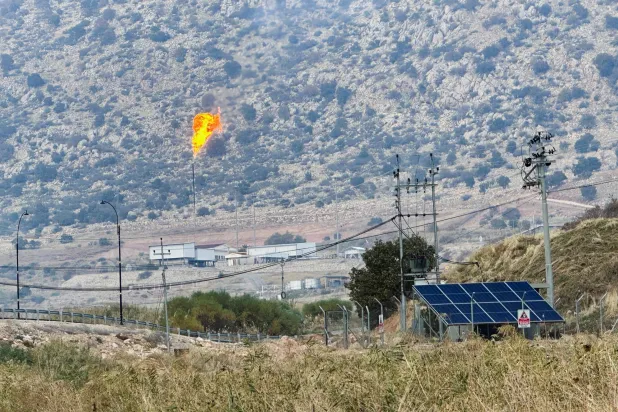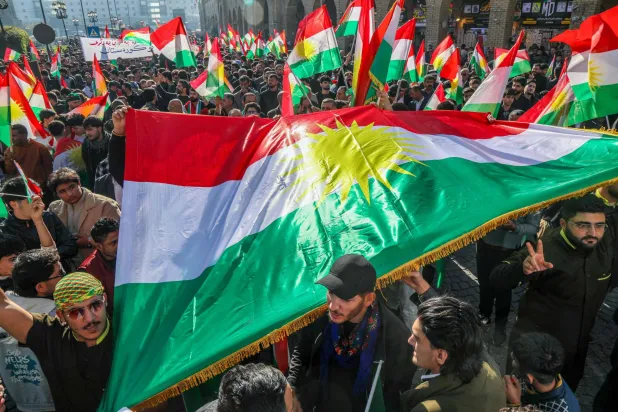
The Iraqi government estimated Friday that oil exports from the Kurdistan Region outside federal channels caused more than $100 billion in losses between 2008 and 2025, as US President Donald Trump voiced support for Prime Minister Ali al-Zaidi's efforts to stop oil smuggling, assert state authority, combat corruption and bring all weapons under government control. The US position comes amid an escalation in Baghdad's efforts to assert control over oil resources and border crossings, following decisions issued by al-Zaidi on Tuesday ordering the Federal Border Ports Authority to assume control of all border crossings in the Kurdistan Region and granting the federal Oil Ministry exclusive authority to approve exports of crude oil and petroleum products. Government spokesperson Haider al-Aboudi told the Iraqi News Agency (INA) that the Federal Board of Supreme Audit had established that losses resulting from the Kurdistan Region's oil exports outside the State Organization for Marketing of Oil (SOMO) exceeded $100 billion over 17 years. He said the closure of border crossings and deployment of forces along international borders were aimed at smugglers, adding that legal action would be taken against anyone found responsible for wasting the country's oil wealth. Al-Aboudi stressed that any oil exports bypassing SOMO constitute smuggling as long as the proceeds do not enter the state treasury. He did not explain how the estimated losses were calculated or specify whether the figure included oil revenues not transferred to the federal treasury or other damages associated with the exports. Trump Backs Al-Zaidi In a significant development, Trump announced Friday his support for al-Zaidi's efforts to strengthen state authority across Iraq. In a post on Truth Social, Trump wrote: "We support Iraqi Prime Minister Ali al-Zaidi’s efforts to assert state authority throughout Iraq, stop the smuggling of Iraqi oil, end corruption, and bring all weapons under the exclusive control of the state." He added: "We support Prime Minister al-Zaidi’s efforts to build a united, prosperous, and strong Iraq that makes its own political decisions." Unified Kurdish Position Alongside the government's measures, Iraq's two main Kurdish parties are preparing to participate in a national dialogue scheduled for early December in Baghdad with a unified position, potentially creating an opportunity to reopen disputed issues between the federal government and the Kurdistan Region through negotiations. Majid Shankali, a former lawmaker from the Kurdistan Democratic Party (KDP), said the KDP and the Patriotic Union of Kurdistan (PUK) would attend the dialogue convened by Supreme Judicial Council President Judge Faiq Zidan. Shankali told Asharq Al-Awsat that the Kurdish delegation would present a unified document representing the region as a constitutional entity, despite differences over certain details. He said Kurdish political forces intend to discuss the measures taken by al-Zaidi's government, including the statement issued by the General Command of the Armed Forces and the rulings of the Federal Supreme Court. According to Shankali, recent developments have helped bring the positions of the two main Kurdish parties closer together, despite their continuing political disagreements. He said there was "a genuine intention this time to reach a solution and agree on a real roadmap for implementing the constitution." Shankali emphasized the need to enact legislation that has long been disputed or delayed, including laws governing oil and gas, the Federal Supreme Court, the Federation Council and customs administration. The announcement of a unified Kurdish position follows a period of political divisions between the two parties, as relations between Baghdad and Erbil face a new test over federal decisions concerning oil and border crossings. Kurdish Opposition's Proposal The Kurdish position, however, remains divided among political factions. Kurdish opposition lawmakers presented al-Zaidi with a proposal outlining a roadmap for resolving outstanding disputes, while Ali Hama Salih, rapporteur of the National Stance Movement, announced that the document would be submitted to other official parties ahead of further discussions. The groups behind the proposal include the National Stance Movement, the Kurdistan Islamic Union and the Kurdistan Justice Group. Neither the Kurdistan Regional Government nor the two main Kurdish parties have issued an official response to the opposition initiative. In a statement following al-Zaidi's meeting with the Kurdish delegation, the prime minister's office said he had warned that certain parties were seeking to drag the Kurdish population into the oil-smuggling crisis to protect their influence and interests from legal accountability. Al-Zaidi stressed that the Iraqi army, which includes members of the country's various communities, would deploy along international borders rather than inside cities. According to the statement, the prime minister affirmed his government's understanding of the Kurdistan Region's distinctive status, stressing that its revenues should not benefit specific groups but should instead be distributed among Iraqis. Baghdad-Erbil Relations Face a Test As preparations continue for the national dialogue, Iraqi President Nizar Amidi visited Najaf province Friday and met local officials. He said Iraq was entering a long-awaited phase of correcting its course and that joint efforts had succeeded in preventing the country from being drawn into the conflict. The visit's direct connection to the Baghdad-Erbil dispute remained unclear, particularly as the announced agenda did not include meetings with senior Shiite religious authorities or influential cleric Muqtada al-Sadr, leader of the Sadrist Movement. Legal and political affairs researcher Amir al-Daami believes the Supreme Judicial Council's national dialogue initiative offers an opportunity to reorganize relations between federal institutions and the Kurdistan Region on the basis of constitutional partnership and the national interest. Speaking to Asharq Al-Awsat, al-Daami said the initiative's importance extends beyond resolving the dispute between Baghdad and Erbil. He argued that it raises the broader question of how political differences should be managed through constitutional and legal mechanisms rather than allowed to escalate into national crises. Political researcher Falah al-Mishal, however, believes the dialogue is intended to inform the Kurdish side of the need to comply with decisions and policies issued by Baghdad. He noted that the Federal Supreme Court's statement used the term "central" rather than "federal," arguing that the choice of wording carries political significance. Al-Mishal told Asharq Al-Awsat that al-Zaidi's policies aim to consolidate the central government's authority, with US backing and support from neighboring countries, and to end the existence of multiple centers of power in Iraq, including the influence of armed factions.