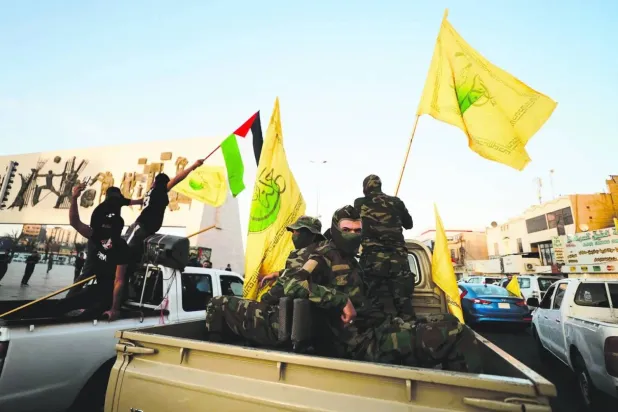
Fears are mounting in Iraq that armed factions’ refusal to surrender their weapons may be an attempt to buy time ahead of a possible resumption of the war with Iran and the revival of the so-called “Axis of Resistance,” as Baghdad faces growing security and political pressure to prevent attacks on regional targets from Iraqi soil. Political sources close to the Coordination Framework, an alliance of Iraq’s main Shiite political forces, said negotiations to bring all weapons under state control had made no tangible progress, with several factions yet to hand over the rockets and drones in their possession. However, the sources told Asharq Al-Awsat that some alliance leaders considered it unlikely that the factions would attack countries in the region in support of Iran if the war resumed, given the potential repercussions for Prime Minister Ali al-Zaidi’s government, which could face mounting regional and international pressure. Nujaba Reaffirms Refusal to Surrender Weapons Those assessments have failed to ease fears that smaller armed groups could resume attacks that would be difficult to attribute directly to major factions, amid rising regional tensions and continuing divisions in Iraq over weapons outside state control. Underscoring resistance to any change in the factions’ military status, Abdul Qadir al-Karbalai, military deputy of the Harakat al-Nujaba movement, said Wednesday that the group would not participate in the political process and that its position remained unchanged. In a statement, al-Karbalai rejected the terms “placing weapons under state control,” “handing over weapons” and “disarmament” in reference to what the group calls resistance weapons. His remarks pose an additional challenge to the government’s efforts to bring weapons under state control, with concerns extending beyond the political standoff between Baghdad and the factions to the possibility of renewed attacks on regional targets from Iraqi territory. ‘Shadow Factions’ Iraqi newspaper Al-Mada, citing informed sources, reported that the closure of the al-Sheeb border crossing with Iran in Maysan province was not solely related to the technical reasons cited by the government. The move also came amid security fears of a return by so-called “shadow factions,” small groups of five to 10 members suspected of being used to carry out attacks that would be difficult to trace to those responsible. Security agencies have stepped up surveillance of suspected attack sites over the past two weeks, the newspaper’s sources said, after attacks targeting Saudi Arabia reportedly shifted from areas in the Najaf desert in July to locations near the al-Sheeb crossing in September. The developments suggest that armed groups may be changing tactics, avoiding heavily monitored sites and seeking new areas from which to operate. The assessments and the identities of those behind the reported attacks could not be independently verified. The Iraqi government has maintained that the crossing’s closure is temporary and intended to improve operational efficiency. Government spokesman Haider al-Aboudi denied any political motive, describing the closure as “a purely administrative measure that requires no political interpretation.” Meanwhile, Prime Ministerial adviser Abdul Amir Taiban accused the Iranian side of “serious violations” of Iraqi sovereignty, creating chaos along the shared border and deliberately undermining Iraq’s economy through the smuggling of counterfeit currency and drugs. Mounting US Pressure The closure comes as Washington steps up pressure on Baghdad over cross-border trade with Iran. AFP quoted an Iraqi source Wednesday confirming the closure, while an Iranian official said border crossings with Iraq remained open to travelers, although truck traffic was experiencing delays. Two political sources said Washington was pressing Baghdad to close additional crossings with Iran. One said the US Treasury Department had raised the issue with al-Zaidi during his visit to New York last month. Security concerns also extend beyond Iraq’s land borders. A security source in Basra province said Wednesday that a drone fell into the sea about 200 meters from an oil tanker identified as the Corden Eikel, after its crew alerted Iraqi naval forces to the presence of two drones. One crashed into the water, while the other disappeared from sight, the source said. Meanwhile, Baghdad is pursuing diplomatic contacts with regional countries in an effort to contain the escalation. Iraq’s Foreign Ministry said Foreign Minister Fuad Hussein and his Emirati counterpart, Sheikh Abdullah bin Zayed Al Nahyan, discussed by phone ways to create conditions conducive to peaceful understandings that could ease regional tensions and strengthen security and stability.