ALBAWABA - Iran has been handing millions of barrels of oil to private traders causing a parallel economy worth billions to spring up; these "oil trustees", however, owe billions in unpaid revenues while they receive new shipments on credit, according to leaked documents.
Iran provided the trustees with the oil to sell it outside of traditional channels and markets; the oil trustees, however, owe debts accumulated from previous sales while still receiving new shipments on credit and with exceptional discounts.
The situation illustrates the desperate picture of a parallel economy created by sanctions that has turned evasion into an industry worth billions of dollars.
The leaked documents, revealed by Iran International, show internal dissent in Iran regarding granting large quantities of crude oil on deferred payment to four individuals known as "oil trustees" despite failures to return billions of dollars from previous sales.
Among the documents was a letter from the Protection Unit of the Supreme National Security Council to the Ministry of Oil, arguing that the $8.5 per barrel discount given to the trustees seems unusual – the documents place former IRGC official Mohammad Javad Bavand at the center of the new oil sales system.
🇮🇷 MOHAMMAD BAQER QALIBAF: “In a region where we cannot sell oil, no one will sell oil.”— Iran’s Parliament Speaker warned that if Iran is prevented from exporting oil, other countries in the region will not be able to sell theirs either. pic.twitter.com/pt3kcma72A
This is not a new strategy for Iran yet it’s the first time it’s used to this extent, having previously been on the margins of the Iranian oil trade; the main problem with this strategy being the question: “Who guarantees the money gets back to Iran?”
Ali Akbar Pour Ebrahim, former head of Iran Oil Intertrade, estimated that up to $11 billion in oil revenues are missing in action after passing through trustee networks with Judiciary Chief Gholam-Hossein Mohseni-Ejei publicly acknowledging the issue, demanding that government agencies that authorized dealings with them assume responsibility.
The strategy already relies on complicated logistics and it gets more complicated the further the barrels of oil travel from Iran, with the most complex network appearing in China, the primary destination for Iranian crude;
Reuters revealed an Iranian mechanism, starting with oil from Iran and ending as a balance inside China, converting between $2 and $2.5 billion a year of oil revenues into Chinese purchases and projects, avoiding returning the funds traditionally via international banks.
An estimated 70 percent of the money in the mechanism is used for infrastructure projects while the rest are used to pay for goods Iran needs – ranging from medicines and cars to telecommunications equipment and contracts related to military hardware.
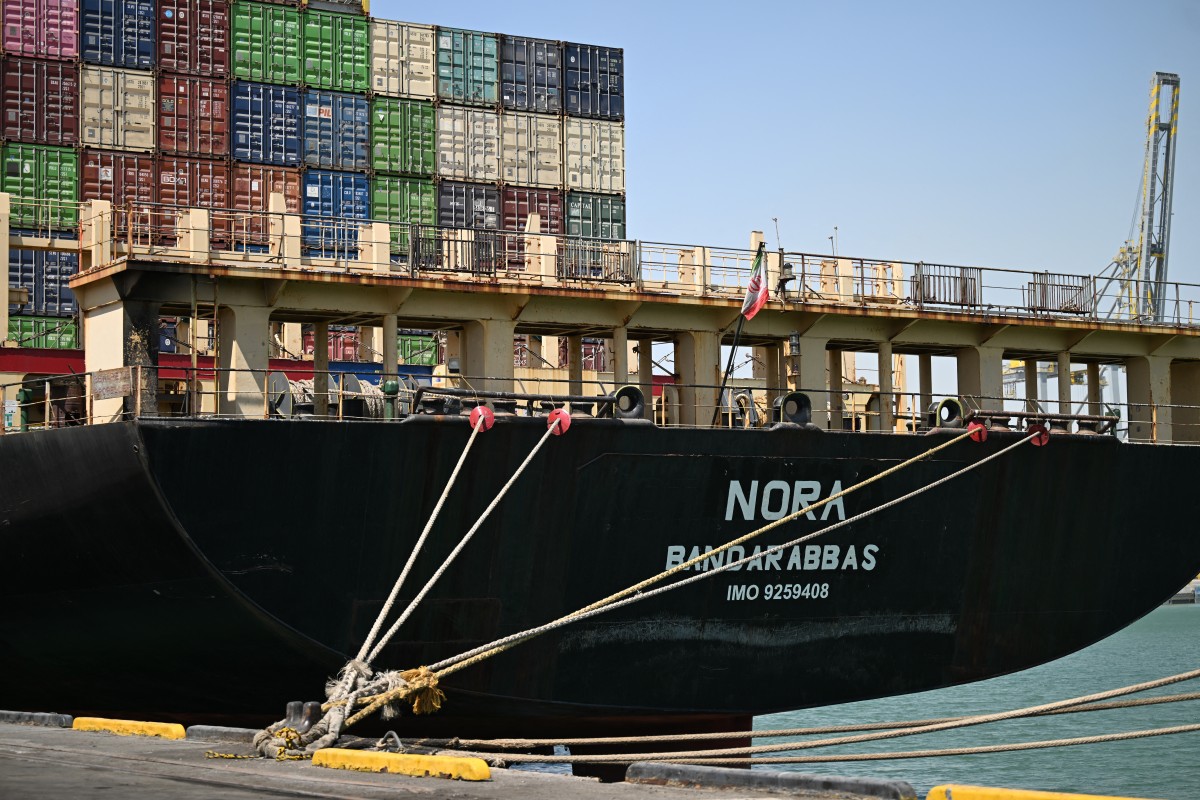
The U.S. blockade on Iran has caused a bottleneck in this strategy, however, as it was formulated to bypass sanctions; changing ship names, transferring oil between tankers, rotating companies and accounts, and hiding payments does nothing to bypass U.S. warships.
This leaves the question no longer just about the quantity of oil that can be sold, but about who holds the barrels, how much they are paid, and how much of the price returns to the Iranian state.
In the sanctions and blockade oil economy, Iranian oil does not disappear; rather the path of money between the barrel and the Iranian treasury disappears.
Pshemaf Choiaqo is a digital marketer with a passion for media, style, and presentation.
He enjoys researching unorthodox and nonconventional subjects almost as much as he enjoys writing about them.
Subscribe to our newsletter for exclusive updates and enhanced content