Iranian dissidents who once welcomed outside pressure on Tehran now condemn the U.S. war effort as strikes damage cities and historic landmarks.
Some Iranian dissidents who once believed Donald Trump’s war would weaken or topple the country’s ruling clerics are now turning against the U.S. president.
Strikes have damaged civilian infrastructure, historic sites, and killed noncombatants, according to interviews published by The Guardian.
This shift shows growing anger among anti-government Iranians who have long opposed the Islamic Republic. They now say the war has brought destruction without a clear path to political change.
The Guardian reported that frustration increased after U.S. and Israeli strikes hit residential areas, shops, fuel depots, and a school in the first two weeks of the conflict.
“They are also lying! Like the regime has been lying to us,” Amir, a student at the University of Tehran, told The Guardian. “You are all worse than each other.” The newspaper changed names to protect those interviewed.
The war began two weeks ago with what Reuters called a massive U.S.-Israeli air assault on Iran. More than 2,000 people have been killed, mostly in Iran. Mediation efforts by Oman and Egypt have failed to produce a ceasefire. Both Washington and Tehran have taken hardline positions as the conflict spreads and oil markets face pressure from the closure of the Strait of Hormuz.
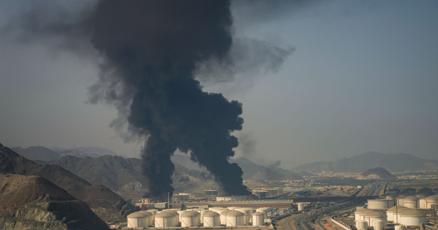
For some Iranians opposed to the regime, the turning point came after strikes on fuel facilities in Tehran. The Guardian reported that an attack on the Shahran oil depot sent black smoke over the capital, while a subsequent rain left homes, cars, and trees covered in toxic oil. Amir told the paper he started to believe that Washington and its allies “didn’t have a plan.”
“If the regime is what you want to hit, even if you think these depots were used by the regime, where do you draw the line?” Amir asked. “What about us, the ordinary Iranians?”
The Guardian also reported damage to Iranian cultural landmarks, such as Tehran’s Golestan Palace and Chehel Sotoon Palace in Isfahan. One student in Tehran asked the newspaper, “How will they rebuild … a priceless part of history?”
Another anti-regime student in Karaj said he wanted Trump’s help in removing the government. He expected strikes on the Islamic Revolutionary Guard Corps and Basij militia, not civilian infrastructure. “When did this plan change and why are they hitting our infrastructure?” he asked.
Anger inside Iran grows as Trump has shown no interest in pausing the campaign. Reuters reported that the White House turned down attempts to start ceasefire talks and remains focused on continuing military operations.
In separate comments, Trump mentioned that the United States might strike Iran’s Kharg Island oil export hub again “just for fun,” while also saying the terms for any agreement were “not good enough yet.”
However, not all dissidents have given up hope that the fighting could weaken the regime.
An Iranian doctor who treated wounded protesters in January told The Guardian he still believed the war could “at least result in real change.” Others, though, reported that after seeing civilians killed, they now think Iranians are suffering because of more than one government at the same time.
The White House has faced criticism for not having a clear objective for the war in Iran and releasing memes and video game footage that have been deemed disrespectful of the serious conflict and American lives lost.