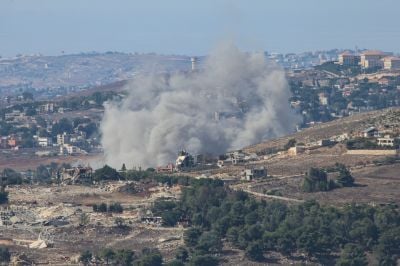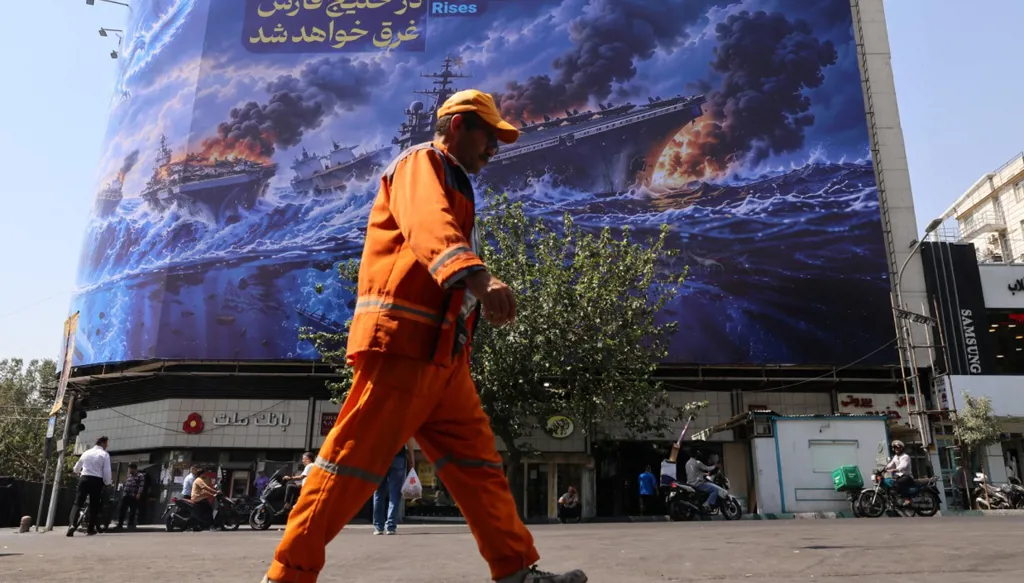
The conflict is putting growing pressure on
Washington as the war’s $38 billion-plus cost mounts, oil remains above
$100 a barrel and tensions spread from the Strait of Hormuz to Yemen and
the Red Sea.
The Iran war has demonstrated that all the hypothetical deadlines set by US President Donald Trump for the end of the conflict were artificial and based on flawed calculations. The same applies now to Vice President JD Vance’s prediction that the war will “enter a different phase” within two months, based on his belief that Tehran will lose control of the Strait of Hormuz by the US midterm elections or shortly thereafter.
Vance’s remarks are primarily aimed at American voters concerned about rising gasoline and diesel prices as a result of a war that a large majority of public opinion believes was not worthwhile. The latest manifestation of the domestic US political tug-of-war came on Tuesday, when the House of Representatives voted on a symbolic resolution calling for an end to the war. This was the third such vote, after seven Republican lawmakers backed the measure introduced by Democrats. It was the largest number of Republicans to join the Democratic minority in the House to pass the resolution. Polls suggest that Democrats could take control of the House in the November 3 elections, while the race for the Senate remains highly competitive.
The vote came as the Congressional Budget Office announced that the cost of the war had exceeded $38 billion, with monthly costs ranging between $2 billion and $3 billion. At the same time, a report in The Wall Street Journal highlighted the rapid depletion of US stocks of Patriot and THAAD interceptor missiles as a result of efforts to repel Iranian missile attacks on a military base in Jordan earlier this month. According to the report, the US military used 70 interceptor missiles to intercept 20 ballistic missiles launched by Iran. This is placing pressure on US defensive capabilities and military supply chains.
The domestic US debate is being fueled by the fact that the global price of a barrel of oil remains above $100, triggering protests in various countries, from Asia to Latin America and Europe. If shipping through the Strait of Hormuz has recovered to 50 percent of its pre-war levels, as Vance claims, and if oil is indeed “flowing” through the strait, as Trump repeatedly says day after day, why have prices not fallen below $100?
Fuel prices displayed at a petrol station in Frankfurt, Germany, September 14, 2026. (AP)
According to estimates by the Climate Solutions Lab and Brown University in Rhode Island, US consumers have paid more than $100 billion in additional fuel costs since the Iran war began on February 28, leading many families to reduce their savings and curb spending.
Inflation is also playing a role in determining financial policy. The US Federal Reserve, for example, is moving toward raising interest rates, despite Trump’s repeated calls for them to be lowered.
The conflict is increasingly revealing a shift in the initiative for managing events toward Iran, particularly with the escalation of the situation in Yemen, as the Houthis tighten their grip on the Bab el-Mandeb Strait and expand their missile and drone attacks on Saudi cities.
The risks posed by this war are becoming increasingly apparent on a daily basis. The coalition supporting Yemen’s internationally recognized government announced on Tuesday that Saudi air defenses had shot down a drone over Mecca, a claim the Houthis quickly denied. This coincided with the Houthis’ announcement that they had shot down a Saudi F-15 fighter jet over Yemen’s Marib Governorate.
Washington’s request that US citizens “reconsider their decision to travel” to Saudi Arabia provided further evidence that the war is moving toward broader escalation, with its consequences spilling over into regional security.
Disclaimer: The opinions expressed by the writers are their own and do not necessarily represent the views of Annahar.
Thank you for subscribing to our newsletter