With the U.S. midterm elections approaching on November 3, political pressure is mounting on U.S. President Donald Trump and the Republican Party amid the ongoing war on Iran and rising tensions in the Middle East.
The war launched by Washington from afar has begun to produce repercussions at home, with rising energy prices and increasing living costs raising questions about the electoral price Republicans may pay.
As Americans remain divided over the continuation and objectives of military operations, Trump faces a difficult test, particularly as a majority of American voters prioritize economic issues over foreign policy considerations. The war on Iran, along with threats to navigation and oil supplies through the Strait of Hormuz, has disrupted energy markets and driven up oil and fuel prices, putting further pressure on American families' purchasing power.
Republicans fear that the cost of the war could become an additional factor deepening dissatisfaction with the administration's performance, while Democrats are seeking to capitalize on rising fuel prices and declining purchasing power to attract voters.
To what extent could the war affect the election results? And will Democrats succeed in turning public anger into electoral gains?
Political writer and analyst Dr. Hassan Mneimneh, based in Washington, tells "Annahar" that "most polls, and therefore the forecasts conducted today and over the past weeks, point to an expected Republican defeat, albeit one that varies in scale."
He notes that "the decline of the president's party during midterm elections is a regular occurrence in the historical record of the United States, and a rule that is rarely broken. This election cycle is unlikely to be an exception."
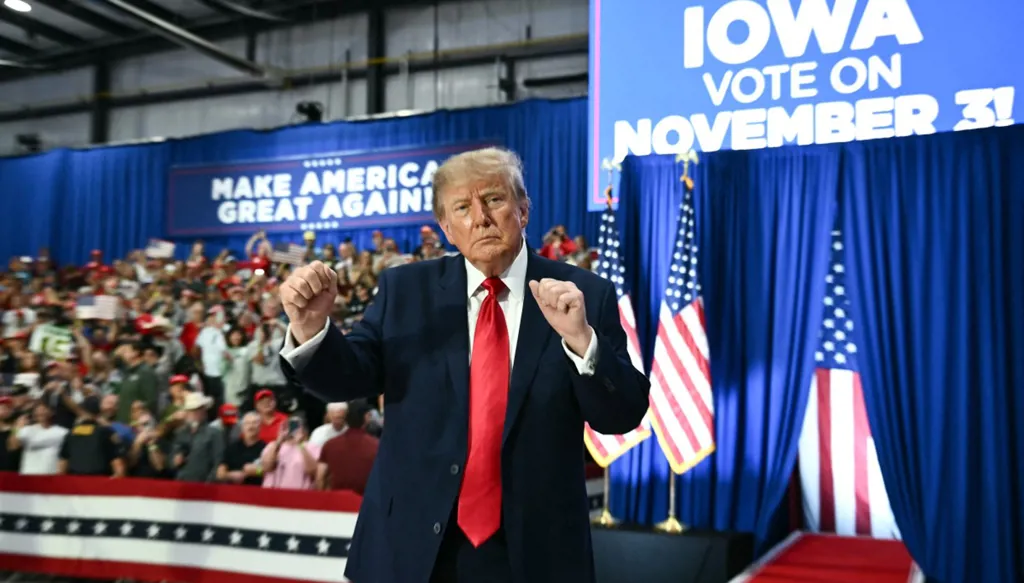
He adds, "Trump acts as if he is capable of achieving an electoral victory through the political rallies he holds in most states at an increasingly rapid pace, relying on populist mobilization that is sometimes provocative and sometimes humorous. While these gatherings appear to appeal to those already within his supportive voting base, through this activity, he is laying the groundwork to claim after the elections that he was responsible for the massive victory represented by Republicans retaining one or both chambers, if they do, or that he was responsible for making their electoral loss modest and far below expectations if they are indeed defeated, regardless of the extent of the loss. In any case, he can claim that the results are false due to fraud and manipulation, allowing him to challenge the legitimacy of the legislative authority after the elections."
According to Mneimneh, "This is the core of the issue," pointing out that Trump "will be inconvenienced if the expected Republican loss occurs, but he will not be shackled or prevented from continuing to do what he wants."
Charbel Antoun, a writer for the American newspaper "The Hill," tells "Annahar" that the open war on Iran has become "the biggest political and electoral burden facing Trump and the Republicans, as its repercussions have moved from the Gulf to the American voter's pocket."
In the "New York Times/Siena" poll, 65% of likely voters disapproved of Trump's handling of the war, while 73% disapproved of the U.S. president's approach to fuel prices. According to a "Reuters/Ipsos" poll, Trump's approval rating stood at 31%, the lowest recorded during his two terms. In general opinion polls, Democrats lead by a margin of 10 to 12 points.
"Decision Desk HQ" estimates that Democrats have a 77% chance of winning the House of Representatives and a 55% chance of winning the Senate. Interestingly, some Republican candidates in highly competitive electoral districts are distancing themselves from Trump, according to Antoun.
Mneimneh states that "Trump's disregard, and that of those around him, for the U.S. political system is evident in their overtly corrupt practices on multiple levels, and in their declaration of these practices as presidential prerogatives supposedly aimed at serving the national interest."
He believes that "in the war of narratives, Trump adheres to a strategy of denial and insistence that suits him, regardless of reality and facts. It seems that his opponents, despite notable localized victories, have not yet consolidated a position capable of confronting his behavior and policies. Indeed, a Democratic victory in the elections would allow Trump and his team to blame them for all the ensuing and potential crises and failures. The most important political battle, which begins the day after the midterms, is the presidential election two years later."
Antoun asserts that Democrats can "exploit the situation through the economic file rather than foreign policy." However, he stresses that "there are risks, as national opinion polls do not automatically translate into actual seats, and the Senate's competitive map is more complex than the House's. Additionally, voters do not automatically trust Democrats with security issues."
He adds, "It appears that some Republican voters opposing the war, especially those belonging to the Vice President's faction, are punishing the party because of the war, not just because of rising fuel prices and living costs. The greatest risk for Republicans is not merely the extended duration of the war, but its continuation amid a high cost of living and without a clear and urgent end."
"The war alone does not decide elections, but it becomes more damaging when voters feel they are paying a daily price for a war they do not understand, what it will achieve, when it will end, or how," he adds.