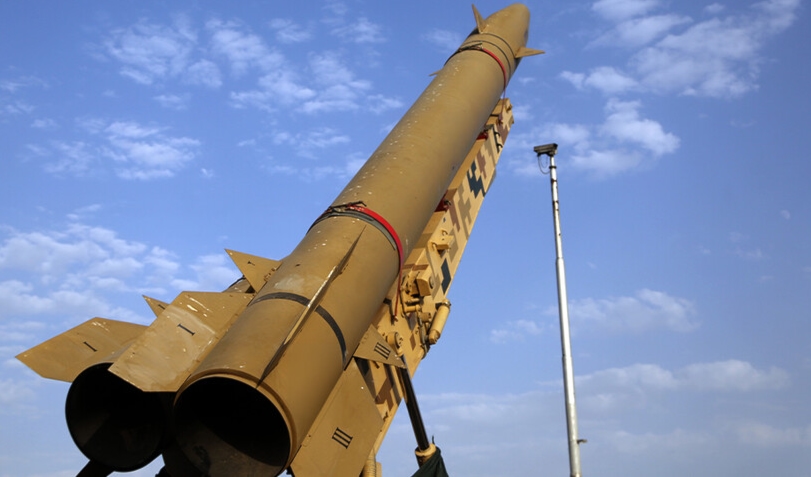
A week after the Republican Party’s defeat in the US midterm elections, criticism of President Donald Trump’s administration and its pro-war supporters is growing. The balance of power within the administration appears to have tilted toward those seeking to end the conflict. Vice President JD Vance leads this camp, while Defense Secretary Pete Hegseth faces mounting pressure that could cost him his job. The clearest sign of this change is the postponement of an expected US strike on Iran. The delay has given diplomacy another chance. But it remains unclear whether the pause will last or yield tangible results. The gap between the two sides’ demands remains wide. Tehran insists that Washington accept its terms, which the US describes as unrealistic. Qatar’s mediation efforts continue. The Qatari Foreign Ministry said on Tuesday that a meeting between Prime Minister Mohammed bin Abdulrahman Al Thani and Trump in Washington two days earlier had been positive. It added that US-Iran diplomacy had made progress and that both sides had responded positively. It provided no details, however, and said it could not predict whether an agreement was near. The Qatari prime minister also made an unexpected appearance at the G7 foreign ministers’ meeting in Paris the day after his talks in Washington. Reuters reported that he met European foreign ministers and his Saudi counterpart. He expressed cautious optimism about a diplomatic solution, saying there was still an opportunity to prevent further escalation and a wider conflict. US Secretary of State Marco Rubio, a staunch supporter of a tougher approach, offered a different assessment. He said Iran wanted an agreement but was not yet ready to reach one. He again described Tehran’s demands as unrealistic. Political speculation has also intensified. One prominent rumor suggested that Vance would soon meet Mohsen Rezaei, secretary of Iran’s Supreme National Security Council, in Doha. The reports were attributed to Turkish intelligence chief Ibrahim Kalin. Reputable Turkish media outlets quickly denied them. Their circulation, however, prompted Iranian officials to respond. Foreign Minister Abbas Araghchi dismissed reports of an upcoming meeting between Vance and Rezaei as baseless. He said no such meeting was planned. The only way to end the war, he stressed, was for Washington to “accept Iran’s terms”. These are outlined in Tehran’s proposed two-day plan, which remains on the table. Rezaei did not directly address the reported meeting. Instead, he urged people to stop fabricating false news and fictitious negotiations. He said the time had come to “surrender to Iran’s seven demands”. Iranian officials appear to see an opportunity to extract maximum concessions from Washington while offering as little as possible in return. These statements suggest that Tehran has hardened its position following the Republicans’ electoral defeat and Trump’s growing domestic political difficulties. Iranian officials appear to see an opportunity to extract maximum concessions from Washington while offering as little as possible in return. Two competing assessments of US policy are circulating within Iran’s decision-making circles. The first holds that constraints on Trump are reducing the likelihood of a major war. These include pressure from regional countries, domestic discontent and the growing influence of anti-war voices within his administration. Doubts about the benefits of another conflict also factor into this assessment. Under this scenario, Trump may be considering an agreement backed by economic pressure while keeping military action as an option. The second assessment questions whether Trump genuinely favors diplomacy. Its proponents ask why he would show flexibility toward Tehran after the elections if he had needed an agreement before them. They suspect he may instead see this period as an ideal opportunity to prepare a surprise military strike. Past negotiations have also reinforced Iran’s concerns. They overlapped with US military operations, prompting Tehran to strengthen its military readiness while keeping diplomatic channels open. The latest sign came on Tuesday, when the Islamic Revolutionary Guard Corps unveiled a new underground missile city belonging to its Aerospace Force. The event was attended by Armed Forces Chief of Staff Major General Ali Abdollahi and Aerospace Force commander Brigadier General Majid Mousavi. It featured ballistic and cruise missiles, along with their launch platforms. Abdollahi warned that any enemy miscalculation would trigger a response “extending beyond the region”. He said the surprises of a future war would emerge one after another. Iran’s advanced missiles, he added, “would take its adversaries by surprise on the battlefield”. This is an edited translation of an article originally published in Arabic.