Iran Chief Negotiator Calls to Avenge Khamenei Death with Massive Funeral Turnout
Iran's chief negotiator Mohammad Bagher Ghalibaf called on Thursday for massive turnout at Ali Khamenei's funeral to avenge the supreme leader's death in US-Israeli strikes at the start of the war.
"I invite all the Iranian people... to write a glorious page in the history of Islamic Iran through your presence" at the funeral ceremonies starting Saturday, Ghalibaf said in a statement, adding: "The nation's call for vengeance must ring in the ears of the whole world."
Khamenei's funeral, initially delayed at the height of the Middle East war, will take place as Iran and the United States observe a fragile ceasefire after signing a preliminary deal to halt the conflict.
Khamenei was killed at the age of 86 at his compound in the center of the Iranian capital on February 28, the first day of the war.
His public funeral will begin on Saturday, with his body lying in state at the colossal Grand Mosalla complex in central Tehran that hosts major Friday prayers, official ceremonies and religious gatherings.
The bodies of his slain relatives will also be presented.
Tehran, as well as the holy cities of Qom and Mashhad, which will host later stages of the funeral and burial ceremonies, will observe public holidays while the events are underway.
Authorities have ordered public and private offices in Tehran to close from Saturday through Monday, while traffic restrictions will make much of the city center inaccessible to private vehicles.
The airspace over Tehran will be partially closed from Friday and fully closed on Monday.
Following the ceremonies in Tehran, Khamenei's body will be taken to the holy Iraqi cities of Najaf and Karbala before his burial on July 9 at the shrine of Imam Reza in the northeastern city of Mashhad, his birthplace.
Former Rivals Unite in New Front Against Ethiopia’s Abiy Ahmed
Abiy Ahmed came to power in 2018 on a promise of peace and unity for an Ethiopia scarred by decades of conflict. The path earned him a Nobel Peace Prize. Eight years later, some of his closest allies have become his enemies.
The break has taken a sharper turn. Former allies now lead an armed coalition seeking to end his rule and have gained ground in the north.
Tensions are also rising with Eritrea, which backed Abiy in his 2020 war against the Tigray People’s Liberation Front before the two countries fell out.
Experts who spoke to Asharq Al-Awsat disagree over whether the crisis will deepen or prove short-lived. They point to a widening rift between Abiy and his former allies, as well as outside support, particularly from Asmara.
Ethiopia’s crisis entered a new phase on Sunday when seven armed groups announced the “Ethiopian Forces for Survival Alliance.”
Its members include the Tigray People’s Liberation Front, the Amhara Fano National Movement and the Oromo Liberation Army. The alliance says it aims to end Prime Minister Abiy Ahmed’s rule and form an inclusive transitional administration.
Until recently, some of its members were fighting on opposing sides, African affairs expert Ali Mahmoud Kalni told Asharq Al-Awsat. Fano’s shift in Amhara is “one of the clearest signs” that old alliances are changing, he said.
Fano factions fought alongside federal forces against the Tigray front in the 2020–2022 war. They later turned against the government as disputes grew over security in Amhara and arrangements following the Pretoria agreement.
A particular flashpoint was the government’s 2023 decision to disband regional special forces and absorb their members into the army and police.
The move raised widespread fears in Amhara that the region’s security forces would be weakened. Fano fighters and federal forces have clashed there since 2023.
In Tigray, the 2022 Pretoria agreement left disputes over territory, security and the front’s future relationship with the federal government unresolved. Renewed tensions in 2026 brought the Tigray front into the new armed alliance against Abiy.
In Oromia, the government’s conflict with the Oromo Liberation Army has continued. The movement returned to Ethiopia after Abiy took power, then resumed its armed campaign.
Kalni said the coalition’s formation showed how far the gap had widened between the federal government and regional armed groups. For now, he said, opposition to central government policies unites them more than a shared political program.
Ethiopian political analyst Zahed Zidan attributed their move toward coordination to regional complications and outside support.
He cited Eritrea’s stance, political hostility and regional and historical claims that the groups believe the federal government has ignored.
That rapprochement has come despite deep divisions among the groups themselves: Fano forces once backed the federal army against Tigray.
A day after the Tigray front seized airports in northern Ethiopia, the Ethiopian army said on Thursday it had killed 272 rebels in fighting in the north.
Abiy, meanwhile, arrived in neighboring Djibouti to announce a joint project to strengthen economic ties. He did not directly comment on the fast-moving events.
US Ambassador to Ethiopia Ervin J. Massinga said on Wednesday he was disappointed by the Tigray People’s Liberation Front leadership’s decision to launch a large-scale attack.
“I am disappointed by the decision of the TPLF leadership, which the United States sanctioned earlier this year, to launch a large-scale attack today,” he said.
“Rejecting African Union-sponsored dialogue led by President Obasanjo and entering a fight that cannot be won does nothing for the people. Other armed groups would be wise to avoid this course.”
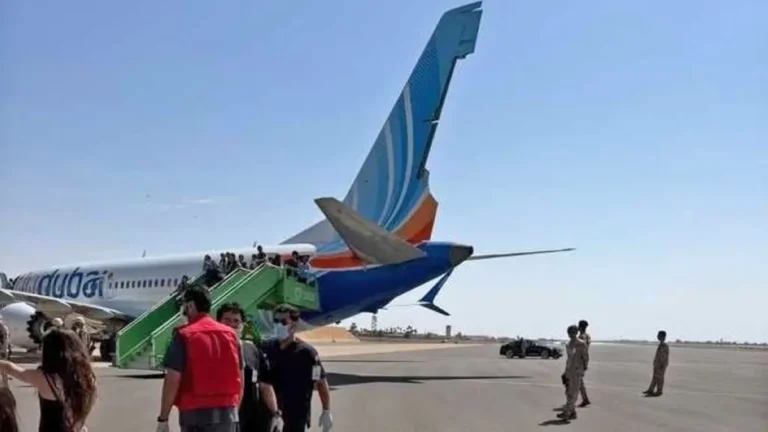
On Wednesday, Tigrayan rebels seized the airport in Mekelle, the regional capital, from federal police. Ethiopian Airlines suspended flights to the region because of “the current situation,” security and local sources told Reuters and Agence France-Presse.