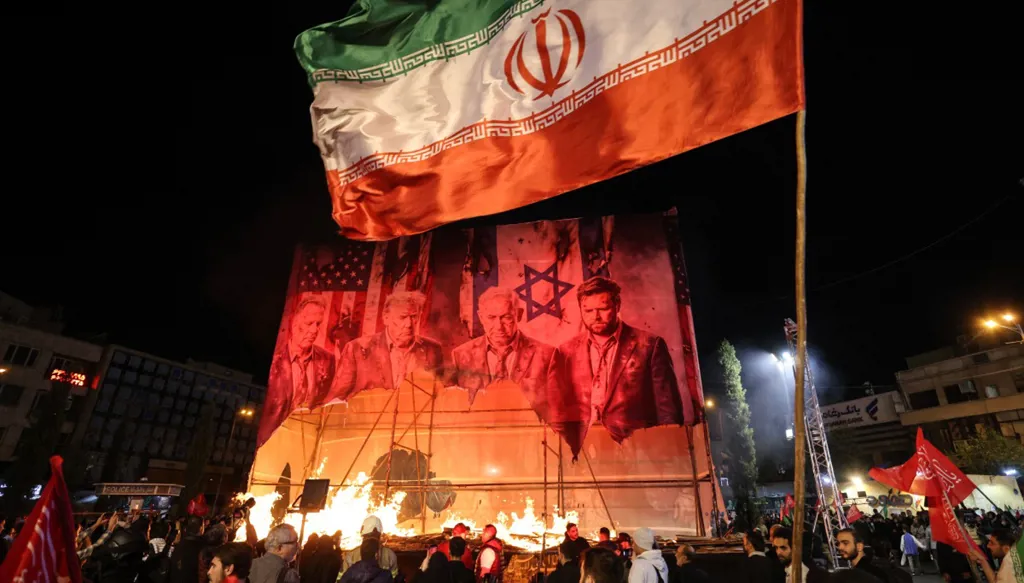
Iran's hardline factions are betting that President Donald Trump's electoral defeat will push him to make concessions to end the war. However, this assumption could pose significant risks for Tehran, especially if the U.S. president responds to his domestic weakness by hardening his negotiating stance or resuming military operations.
Following the Republican Party's losses in the midterm elections, Iran's conservative hardliners have raised their voices, demanding tougher terms from Washington and seeking to establish a "new world order" that strengthens the Islamic Republic's position and regional influence.
A message from Supreme Leader Mojtaba Khamenei on Wednesday warned against "any inclination towards submission," a stance interpreted by hardline circles as a directive to Iranian negotiators to stand firm in their demands.
Statements from American officials have further strengthened these circles' confidence in their interpretation. Donald Trump admitted in a call with "Fox News" that the war on Iran contributed to the Republicans' losses, while Vice President J.D. Vance also considered the war a cause of the defeat.
Iranian affairs expert Dr. Firas Elias told Annahar that hardliners view the election results as "a strategic opportunity to reshape the terms for ending the war," based on their belief that Trump's domestic setbacks will make him less capable of bearing the costs of escalation and more in need of a diplomatic breakthrough he can market as an achievement for his administration.
According to Elias, they are seeking to capitalize on this moment to raise Iranian demands concerning the nuclear program, security guarantees, and the nature of U.S. commitments in any potential settlement.
This approach is based on a growing belief among hardliners that Tehran's pressure strategy has yielded results and that Washington is now more willing to make concessions to end the conflict.
More than eight months after the outbreak of the war, a political stalemate persists despite the decline in military operations. Iranian negotiators continue to shuttle between Tehran and Doha as part of Qatari efforts to bridge the gaps and reach an understanding that would address the nuclear issue and end the conflict.
CNN reported on Thursday, citing a regional official, that the risk of renewed war has diminished following the Republican defeat, although the risks of escalation remain.
Diplomatic communications across the Middle East have also intensified. Qatar announced on Friday that Trump had called its Emir, Sheikh Tamim bin Hamad Al Thani, to discuss de-escalation.
Iranian Foreign Minister Abbas Araghchi has also been in contact with his counterparts in 12 countries, including the UAE, Saudi Arabia, Oman, Qatar, Kuwait, Jordan, Pakistan, Turkey, Cyprus, Egypt, Iraq, and Tunisia.
Iran insists on seven conditions before reopening the Strait of Hormuz, notably ending the war on all fronts, paying reparations, withdrawing U.S. forces, and lifting sanctions.
The Iranian leadership is seeking an agreement that ends the war while securing long-term strategic gains, while security and military institutions, led by the "Revolutionary Guard," continue to push for tougher settlement conditions.
Elias indicates that institutions linked to the "Revolutionary Guard" hold significant influence over the negotiating position, whether by determining acceptable concessions or influencing the political and security environment surrounding the negotiations.
However, the hardliners' ability to impose their conditions remains tied to the calculations of the higher leadership, which faces a complex equation between preserving strategic power and avoiding a prolonged war of attrition that threatens internal stability.
The importance of these calculations grows amid the ongoing internal dispute in Iran between factions advocating continued pressure on the United States and others who view settlement and diplomatic openness as a way to ease economic pressures.
Elias warns that hardliners could fall into a "strategic miscalculation," as Trump's domestic weakness may instead lead him to harden the terms of a settlement or use military threats to strengthen his negotiating position, fearing that offering concessions to Tehran could become further evidence of his declining political standing.
This is where the danger of Iran's bet lies. While Tehran believes that time is on its side and that domestic pressures will push Trump to soften his terms, Washington may view the heightened Iranian demands as an attempt to extract concessions that exceed American limits.
Elias links the future of Qatari mediation to the ability of both sides to overcome these conflicting calculations, particularly as continued mutual hardening could bring the military option back to the forefront despite ongoing diplomatic efforts to end the war.