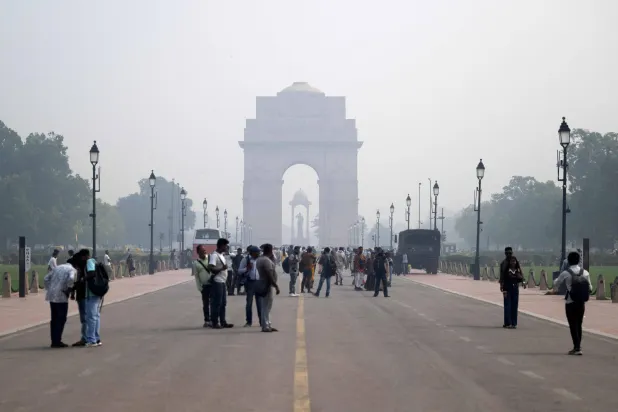
India's cabinet approved on Wednesday a mega-museum showcasing the country's history and civilization, which the government said will cost around $340 million and have the largest display area in the world. First announced in 2023, the project received approval as Prime Minister Narendra Modi's Hindu nationalist government renewed its emphasis on the country's pre-colonial cultural identity. The museum's name, Yuge Yugeen Bharat, translates roughly as "India through the ages" and invokes the country's ancient Sanskrit name, Bharat. It will occupy former civil service offices in New Delhi, known as North and South Blocks, which were designed by British architects Edwin Lutyens and Herbert Baker in the 1920s. In a statement, the cabinet said the museum will be "spread over a proposed built-up area of approximately 178,509 square meters". "Benchmarked against major international museums, Yuge Yugeen Bharat Museum is going to be the museum (with) the largest display area in the world," it added. India's cabinet said the Yuge Yugeen Bharat is "envisaged as a landmark civilizational museum showcasing the continuity, diversity and richness of Bharat's (India's) civilizational heritage". The first gallery is expected to open to the public by the end of 2027, with project completion scheduled for financial year 2030-31. Modi came to national power in May 2014, and has since taken multiple steps to glorify the country's heritage and culture. His government built the world's tallest statue, a 182-meter (597-foot) monument to Vallabhbhai Patel, for his role in bringing princely states into India. Modi also backed the revamp of New Delhi's historic administrative district in his second term and moved lawmakers to a new parliament building in 2023. "The Museum is envisaged as a national public cultural institution... it will provide opportunities for learning, research, cultural engagement and appreciation of India's civilizational heritage," the government statement said on Wednesday. Around 1.8 million objects have been identified from national and state museums, archaeological collections and private holdings for potential display. The museum is designed to accommodate up to 10 million visitors a year.