Add as preferred on Google
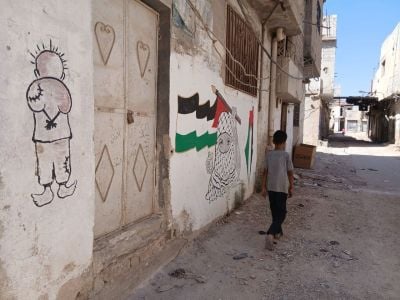
A child walks along a wall in the Deraa camp, in southern Syria, in July 2025. (Credit: Soulayma Mardam Bey/L’Orient-Le Jour)
Add as preferred on Google This article was first published in a special edition of L'Orient-Le Jour in collaboration with "Les Nouvelles Rencontres d’Averroès" and was translated by Sahar Ghoussoub. My grandfather, born in Tantoura on the Palestinian coast, had never imagined living far from the water. After leaving his village in the aftermath of the 1948 Nakba, he chose to settle on the banks of the Barada River in Damascus.And because, in a moment of sentimental weakness, I had promised him that I would find my way back to the mother waters, I owe you a few explanations.Along the eastern shores of the Mediterranean lies a land of ancient civilization, shaped by a long and turbulent history: Syria.On the outskirts of Damascus, the world’s oldest continuously inhabited capital, stands Yarmouk camp, home since 1957 to the largest concentration... You have reached your article limitStay informed about a Middle East in crisis.Subscribe for $0.5/month for the first 3 months. Subscribe now Log in This article is only available to L’Orient Today subscribers. Subscribe now Log in Create a free account to continue reading this article. You’ll also receive The Morning Brief, our must-read daily digest of Middle East news. Opt out anytime Email Address Password Email Address Password I would like to receive special offers from L'Orient Today as well as selections of the best articles. Register By creating an account, you agree to the terms and conditions of use and our privacy policy. Register Or register with: Facebook
Already have an account? Login here