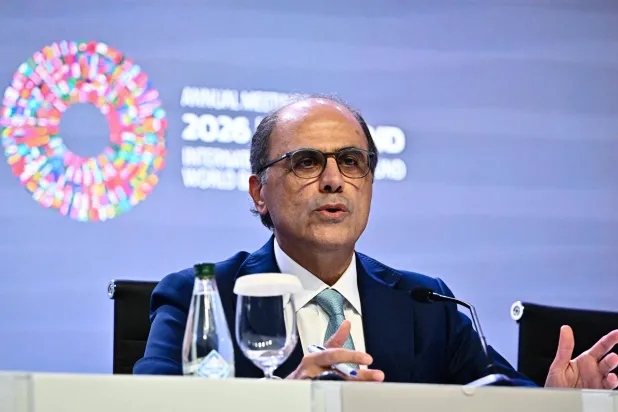
Jihad Azour, director of the International Monetary Fund’s Middle East and Central Asia Department, said the war in the Middle East was weighing on the region’s economic outlook, with economies across the Middle East and North Africa, Afghanistan and Pakistan expected to contract by 1.3% in 2026 before rebounding strongly in 2027, provided the conflict eases and trade gradually returns to normal. Azour made the remarks at a news conference on Thursday to present the IMF’s Regional Economic Outlook report, which examines the economic fallout from the conflict and its varying effects across countries in the region. The impact of the war is being felt through multiple channels, including energy, shipping, tourism, trade and confidence. Its effects vary across regional economies depending on whether countries export or import oil, their exposure to disruptions and their capacity to contain the economic fallout. Recovery expected in 2027 The IMF’s growth projections are based on a scenario in which the conflict subsides in early 2027 and trade gradually returns to normal. Under this scenario, the economies of the Middle East and North Africa, Afghanistan and Pakistan are expected to contract by 1.3% in 2026 before growing by 6.6% in 2027. The 2026 growth forecast is around 3 percentage points lower than the projection issued in April, reflecting the conflict’s impact on economic activity across the region. The effects of the war differ between oil-exporting and oil-importing countries. Oil exporters have faced disruptions to energy production and shipping, while oil-importing economies have shown resilience, supported by domestic demand, remittances, tourism revenues and financial conditions, as well as government measures to limit the pass-through of higher commodity prices to consumers. Gulf Cooperation Council economies are expected to experience a V-shaped recovery, with economic activity declining before rebounding. However, output is likely to remain below pre-conflict projections over the medium term, Azour said. By contrast, growth in oil-importing countries is expected to accelerate in 2026 and 2027. Economies in the Caucasus and Central Asia are projected to grow by 5.2% in 2026 and 5% in 2027, while inflation continues to ease. The IMF raised its growth forecasts for the Caucasus and Central Asia compared with its April projections, as improved prospects for oil-importing countries offset downgrades for some oil exporters in 2026. Inflation and external balances under pressure Azour expects inflation to rise across the Middle East and North Africa, Afghanistan and Pakistan in 2026, while continuing to decline in the Caucasus and Central Asia. Government measures, including subsidies, price controls and fixed exchange rates, have helped limit the pass-through of higher commodity prices to consumers in parts of the region. However, these measures come at a fiscal cost. External positions are expected to weaken across most economies in both regions, with the GCC’s current account surplus projected to narrow from around 5% of gross domestic product in 2025 to 1.3% in 2026. Uncertainty remains exceptionally high Azour said uncertainty surrounding the outlook remained exceptionally high, with risks tilted to the downside. Key risks include renewed disruptions to energy production or trade routes, which could drive up energy prices and intensify pressure on regional economies. Other risks include a tightening of external financial conditions if markets reassess expected productivity gains from artificial intelligence, as well as higher interest rates amid concerns over inflation and public finances. The Caucasus and Central Asia face additional risks, including renewed disruptions stemming from Russia’s war in Ukraine, lower oil prices and weaker external demand if markets linked to artificial intelligence undergo a sharp correction. Low-income and fragile countries remain the most vulnerable, given their reliance on food imports, substantial financing needs and declining official development assistance, which constrain their ability to withstand economic shocks. IMF urges stronger fiscal buffers, continued reforms Azour said the main economic policy priorities were to maintain price stability and ensure fiscal sustainability. Monetary policy should serve as the first line of defense if upside inflation risks materialize, he said. In the Caucasus and Central Asia, preserving gains in reducing inflation and strengthening central bank independence are key to anchoring inflation expectations and limiting the pass-through of future supply shocks to prices. On fiscal policy, governments should provide temporary, targeted support to the households and businesses hardest hit by the crisis, rather than adopt broad-based measures that increase public debt without delivering lasting gains in economic activity. Azour urged countries in the region to rebuild fiscal buffers through credible monetary frameworks, adequate reserves and sound public finances to strengthen their capacity to withstand future shocks. He said the current disruptions also provided an incentive to seize long-term opportunities through structural reforms to boost productivity and create jobs, diversify trade and economic activity, deepen regional integration, and create conditions conducive to harnessing technology and artificial intelligence.