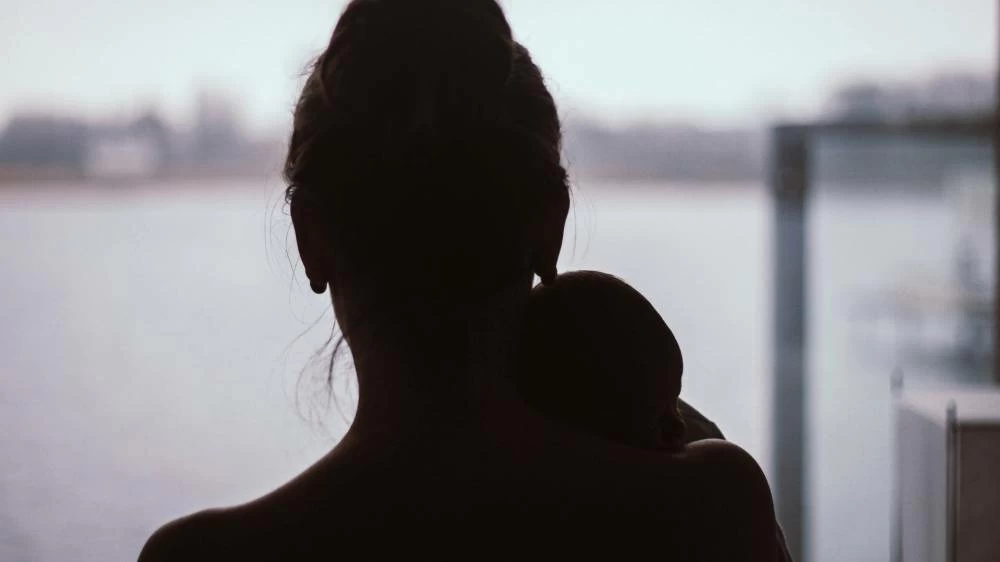
Dubai: In 1986, one mother sat in the dark, tears pouring down her face, not knowing why.In 2010, an exhausted mother lay in bed, wondering if she would ever escape the fog and be able to find her way back.In 2024, a mother curled up, panicking on the bathroom floor, asking how she was supposed to manage it all.The postpartum period is one of the most challenging for new mothers – and has been for centuries. Greek physician Hippocrates first recorded descriptions of emotional difficulties and mood changes following childbirth, as early as 700 BC.Yet, in the modern era, up to 50% of women with postpartum depression (PPD) go undiagnosed, according to an October 2019 study published in the UK-based medical journal BMJ Open Quality.Struggling alone – a reality no one talks aboutWhy does a new mother’s struggle seem invisible? For many, it’s because the postpartum journey is often traversed alone.Sana Karim said reality hit within a few days of delivering her daughter on March 1, 2026. The Indian homemaker, who previously worked as the marketing head for a luxury event space in Dubai, said she was seriously misled about the initial weeks after childbirth: “What everyone told me and what I was programmed to believe as the most amazing days of being a mother, were the ones I hated the most. Not because of my baby, but because I hated myself for not loving it enough. I felt anger toward my husband who slept through the nights, and even toward my family who told me every day what they thought I should do, now that I'm a mother. It was all too much for me.”She said she went through depressive episodes in the months that followed. “I sat in the dark, breastfeeding my baby, and in those moments when I thought I should be bonding, I was crying when no one saw me, so my family didn't think I was ungrateful. I know now that I should have talked about what I felt.”Sana Karim said: "I was crying when no one saw me, so my family didn't think I was ungrateful. I know now that I should have talked about what I felt.” Picture credit: SuppliedPakistani national Wajiha S. delivered her son in July 2016, but found it extremely difficult to bond with her child. She said: “I was doing everything I was ‘supposed’ to do... but emotionally, I felt completely disconnected. There was a void I couldn't explain. I loved him, but I couldn't feel that love the way I thought a mother should. I blamed myself… over time, I became more withdrawn, exhausted and lost.”She knew something was seriously wrong a few days after her family moved into a new apartment in Dubai. She said: “We had large windows in our new home, and I would sometimes look outside and think depressive thoughts. They became so intense but the scariest part was that I would then carry on with my day, as though nothing had happened.”For Amina Ehsan, a Dubai-based marketing manager, the initial few weeks after childbirth in November 2024, were about joy and recovery, so it didn’t prepare her for how her body and mental health changed over the next few months.She said: “I felt at a loss when my daughter was 20 months old. She was loving life but I was just not feeling my 100%. I hadn’t dropped the baby weight, work stress took over, and honestly, I spread myself too thin.”What initially felt like burnout, spiralled quickly. Ehsan said: “I noticed that if something fell off track, I would have a breakdown, which never used to happen before. Because things didn’t feel in control, [I would] panic and just hate myself for not being able to get it together. I’d find myself on the bathroom floor crying, and trying to find answers to why it was so hard to [manage] it all.”Culture and family impactWhile feeling alone can be debilitating for mothers, many cultures provide guardrails to make sure they have the support they need.A May 2026 study, published in the US-based social science journal Social Currents, found that customary practices, such as extended family care, mandated rest, and special diets, often function as protective supports that can enhance emotional and physical recovery.When they’re missing, the impact can be brutal.Egyptian national Asma S., a 65-year-old retired marketing manager, said she yearned for her family and siblings, who lived in Cairo, when she delivered her second daughter in Dubai, in 1986 – just a year after her first daughter was born.The fact that she was expected to manage everything on her own – from motherhood to personal recovery to household tasks – meant she felt the immense cultural pressure of being a perfect mother and wife.She remembers the crushing loneliness she felt in those early years, when she was struggling to manage two children under two years old, while still providing dinner and packed lunches for her husband, who would go early to work and return home late in the day.She said: “I remember putting my children to bed, and sitting in a dark room, and just crying for hours and hours – every day for months. It was so tiring, and I felt so alone. That was when I began resenting my husband, and so many years later, I feel our relationship still hasn’t healed from that time when I felt abandoned.”She said she wasn’t even aware of a condition called PPD, back in the 1980s, and only learned about it when her kids became teenagers: “Now, I wish I could give that woman in the dark a hug, and tell her she’s not alone.”Even as cultural practices can cushion the motherhood journey, the same Social Currents study found that rigid expectations, gender role demands, and family-driven stigma around mental health can have the opposite effect – they restrict autonomy and heighten distress for new mothers.Tasneem L., a UK-based musculoskeletal and women’s health physiotherapist, said the customary 40-day period of rest that’s usually advised in South Asian cultures, prevented her from seeking support when she needed it.The Indian national delivered her son in March 2010: “I was expected to stay indoors for 40 days, or around six weeks, until I had recovered. I was told that if I did anything other than feed and care for my baby, I could suffer with health problems later in life. Because everyone treated this as normal, I didn’t realise that I might need more support.”It just added another layer of stress for her, as a new mum: “For the first two weeks, I think I was completely numb. It felt as though the world around me was just carrying on while I lay there in a fog. I also had a colicky baby who I struggled to [feed], and I felt like I had absolutely no one to guide me or help me understand what to do. I was exhausted, overwhelmed and simply trying to get through each day… the pressure came from within myself. I felt that I just had to cope and carry on.”Sana Karim had similar expectations placed upon her: “I come from a culture where girls are sadly raised to suffer in silence, even in motherhood. We are expected to get up and run like what we went through is not life-altering, both for mum and baby.”Karim said her path to healing didn’t happen overnight, but the support of her immediate family members helped enormously – they stepped in when she was at her lowest, emotionally and physically: “I give huge credit to my parents, my sister and my husband. My mother would cook me salmon and make me a drink that is supposedly great for lactation. My sister sat with me and we spent hours scrolling through funny [Instagram] Reels – it lifted my mood, and reminded me that I was also a sister and a daughter. My husband took me out on weekends, when we could find time – something we did before I became a mum. I slowly and steadily started feeling like myself.”Mothers prioritise themselves lastWithout cultural customs and the support of family members, new mums can find it challenging to ask for help. One of the reasons why, is because they tend to prioritise themselves last.A September 2013 study in the US-based medical journal Midwifery, documented the postpartum journey of 31 mothers in the US, and found that six months after giving birth, 80% of the women had not returned to their pre-pregnancy levels of self-care. Researchers found that it may have contributed to, or exacerbated poor mental health in the new mums.The research isn’t surprising to Wajiha S. She said it took her 16 months to seek medical advice: “My husband and sister gently told me they were worried and encouraged me to get help. Admitting it was incredibly difficult. I was in denial for a long time, and there was so much happening around us – my mother-in-law was seriously ill and my husband had lost his job – so I kept putting myself last.”When she finally visited a general physician, he diagnosed her with PPD, and she began counselling sessions “that became an important part” of her recovery.In Amina Ehsan’s case, she became her own therapist and cheerleader: “I never went to therapy. I mainly spoke with my partner, my sister or mum and asked for their support and guidance. They heard me out… but I had to take things into my own hands. I told myself – focus on one thing, then the next. I saw what I could fix [in that moment]. If it was not in my control, I learned to let it go, and revisit it later, when I could find a solution for it.”Feeling seen, and noticing othersGoing through the postpartum journey, however, can open your eyes forever – you learn to treat yourself with a little more kindness and grace, and recognise the struggle others may be going through.When she was finding it hard to cope, Sana Karim said she spoke with her best friend in the UK, who had an eight-month-old at the time she gave birth. Her friend gave her the validation she didn’t show she needed: “She had just lived through the same phase, and speaking to her, I felt seen. When she said ‘me too’, I never felt more relieved. I realised then, why so many mum groups exist. It's not for fun, these are silent support groups, masked as [social] events – they are so important to make mothers feel supported, heard and seen.”The circle of support is important to Tasneem L., too. As a physiotherapist, she uses her postpartum experience to help other women who want to feel comfortable in their skin again, after childbirth.Today, she offers a regular six-week women’s health movement and wellness course, focused on mobility, core strength, balance and breathing. said: “Because of my own experience, I’m more aware of the early signs that someone may be struggling, even before she fully recognises it herself. I help women recognise when something may need further medical attention, so they don’t feel they simply have to accept pain or discomfort as a normal part of motherhood.”Wajiha S. said her experience allowed her to notice when her younger sister began struggling with postpartum depression – she had her baby four years later, in 2020.Wajiha said: “It was during the peak of the COVID-19 pandemic. She had just gone through postpartum hemorrhage. I was mainly the one helping her with recovery, and I saw the signs. Her issue wasn't about connection with her baby, but it was related to other things – hypersensitivity, self-hate, withdrawal and struggling to express herself emotionally.”She said she’s grateful she was able to be there for her sister during her postpartum experience. And she’s thankful she was able to fully recover from her own PPD: “I think about how many times I came close to losing my life and how different things could have been. But I don't judge that version of myself anymore. I have compassion for her. I'm grateful I found my way back – to myself, to my son, and to life.”Get help in the UAEIf you are struggling with PPD, and need someone to talk to, consider seeking professional help and joining support groups. Here are some ways to do so across the country.Support groupsThe LightHouse ArabiaDubai-based mental health and wellness clinic The LightHouse Arabia offers a free monthly online support group for women, called ‘The Fourth Trimester: Supporting Women Through Postpartum’. Their aim is to provide a validating and compassionate space for new mums to share experiences, build a community and access resources, setting the foundation for long-term mental health. To register, call them at 04 380 2088, or email them at reception@lighthousearabia.com.American Wellness CentreThe American Wellness Centre’s AWC Support Programme is a dedicated initiative that helps both pregnant and new mothers. The Programme offers a free mental health screening, conducted by qualified mental health professionals, and a safe space for one-on-one emotional support. You can also receive tailored advice, with practical tools and guidance, as well as referrals to psychologists or specialists if needed. The initiative is free of charge. Book a free screening by calling AWS at 050 2770888.Mama TribeMama Tribe, a UAE based community group for mothers, accepts memberships and – based on when you had your baby – adds you to a WhatsApp group featuring other mums who delivered around the same time. Each ‘Mama Gang’ WhatsApp group allows you to connect with other mums experiencing the same milestones at the same time, and gives you access to real-time support. While joining the community is free, paid memberships give you further access to postpartum guides, workshops and coaching sessions. Learn about them, and join at mamatribe-uae.com.HotlinesNational Hope helpline: 800-HOPE (800 4673)As part of the UAE National Programme for Happiness and Wellbeing, access the National Hope mental health hotline at 800 4673 (you can call or WhatsApp this number) to receive immediate psychological counselling and support. The service is available in Arabic and English.Itma’en: 800 506Dubai Health, in collaboration with the Community Development Authority, and the Dubai Health Authority, offers the Itma’en service (which means ‘rest assured’ in Arabic), making mental health support freely accessible to all. The helpline operates daily from 9am to midnight, and connects you with specialised counsellors. Contact the Itma’en helpline at 800 506.American Hospital’s helpline: 04 3774686American Hospital Dubai offers a free mental health hotline to support people dealing with emotional distress, anxiety or overwhelming thoughts. Contact them at 04 3774686.Medico Arabia’s helpline: 056 9005443 or 050 1590070Dubai-based healthcare consultancy Medico Arabia offers a 24/7 mental health distress helpline for anyone experiencing emotional distress, anxiety, trauma or overwhelming thoughts. Contact them at 056 9005443 or 050 1590070.The Department of Health – Abu Dhabi hotline: 800-SAKINA (800 725462)Residents in the Capital can call the Department of Health – Abu Dhabi hotline, 800-SAKINA (800 725462), which offers 24/7 psychological assistance, as well as direct access to qualified and compassionate mental health professionals. The hotline supports both Arabic and English.For emergency services, call 999 to connect with the authorities.