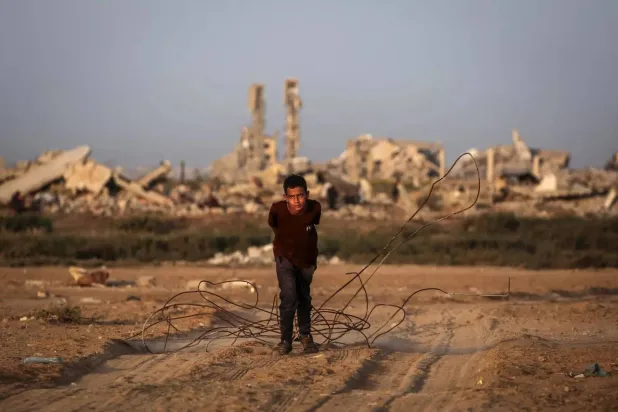
Humanitarian and security conditions are worsening in Gaza as Israel tightens restrictions on border crossings and the movement of people and goods, while armed groups backed by the Israeli military press ahead with attacks on the ground. In a surprise move on Tuesday morning, Israel informed Egyptian and Palestinian coordination officials that it planned to block goods and humanitarian aid arriving through the Rafah crossing between Egypt and Gaza, citing alleged smuggling of banned items, mainly cigarettes, tobacco products and other goods Israel prohibits from entering the enclave. Israel also abruptly turned back more than 20 patients and 35 accompanying relatives who had left for medical treatment through Rafah, citing security concerns. Hours later, the patients were told they could travel after all. Israel also maintains tight control over shipments entering through the Kerem Shalom crossing. Supplies remain below levels seen before the latest crisis, which halted the flow of goods into Gaza for a full week before limited deliveries resumed about 10 days ago. The restrictions have triggered "severe shortages of essential goods, record price increases and a near-total collapse in purchasing power," the Gaza Chamber of Commerce said. Maher al-Tabbaa, the chamber's director, said Israel was allowing only about 200 types of goods into Gaza under stringent restrictions. Prices have surged by 500% to 600%, while those of goods barred by Israel have soared by between 2,000% and 3,000%, he told a press briefing. Armed groups raid displacement camp Gaza's worsening humanitarian crisis has been matched by deteriorating security, with Israeli airstrikes continuing alongside operations by armed groups based in areas occupied by Israeli forces. Under a ceasefire agreement based on a plan proposed by US President Donald Trump, a conceptual boundary known as the "yellow line" separates Israeli-occupied territory in eastern Gaza, covering more than 60% of the enclave, from areas to the west controlled by Hamas and other Palestinian factions. In an operation described as mirroring Israeli military tactics, armed men infiltrated a displacement camp near Abu Hamid roundabout in central-eastern Khan Younis shortly after midnight between Sunday and Monday, under the cover of Israeli drones flying overhead. The gunmen entered on foot before reinforcements arrived in four-wheel-drive vehicles, allowing them to seize control of the camp and surround it. They then ordered several people to surrender over loudspeakers, only to discover that none of those sought were there, a source on the ground told Asharq Al-Awsat. Three sources and eyewitnesses living near the camp said the gunmen searched tents and opened fire, terrifying residents, particularly women and children. They abducted more than 35 members of the Barbakh family, including teenage boys, and took them to areas under their control in eastern Khan Younis, the sources said. More than 10 hours later, the armed groups released all but four of those abducted, keeping the four young men for questioning. A source on the ground quoted some of those released as saying they had been interrogated by Israeli officers, not the armed men who had handed them over to Israeli forces stationed nearby. A source from a Palestinian faction in Khan Younis said the raid was intended to "spread chaos and flex the muscles" of armed groups backed by the Israeli military. Another source said the operation could be a prelude to an Israeli advance aimed at expanding the territory under its control and pushing the yellow line farther west. The boundary lies just a few hundred meters from the camp, the source said, pointing to similar Israeli advances in other parts of Gaza.