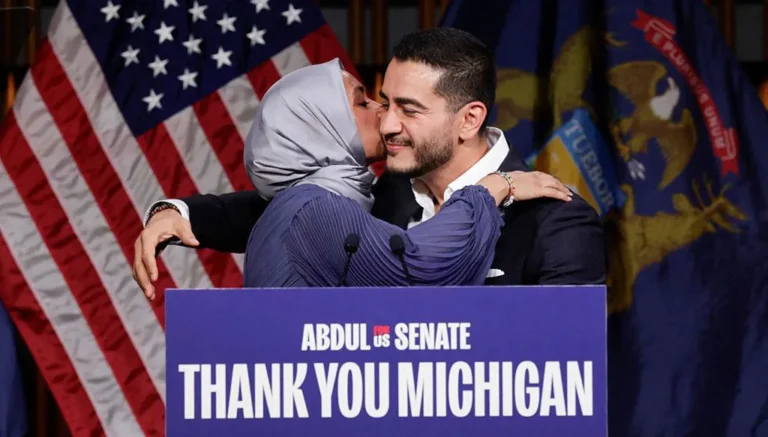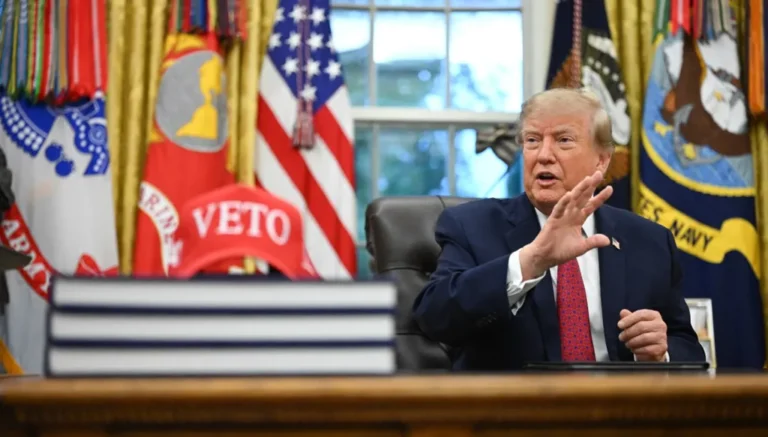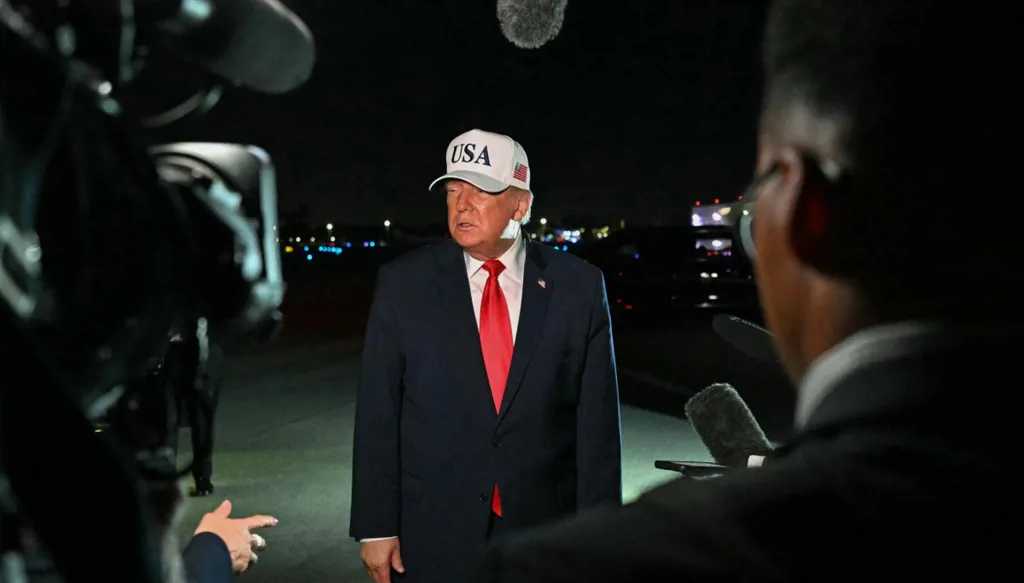
Analysts and commentators in America agree that President Donald Trump's policies were responsible for the severe defeat Republicans suffered in the midterm elections held on Tuesday, which ended with Democrats comfortably taking control of Congress in both houses.
When referring to Trump's policies, this includes a series of unconventional decisions made by the president since his return to the White House for his second term on January 20, 2025. The war with Iran alone was not responsible for pushing inflation higher than it was during Democratic President Joe Biden's term.
Trump imposed significant tariff increases through executive orders from the first day of his return to the White House. Addressing Americans, he said that the world had exploited the United States for decades and that it was time for the country to protect itself. He called April 2, 2025, the day he declared his tariff war, "Liberation Day."
He made no distinction between foe and ally, with dozens of countries affected. His goal was to bring American companies investing abroad back to the United States. He failed to achieve this goal and was forced to reach a trade truce with China, the world's second-largest economy. However, he succeeded in shaking the global economy.
The second economic shock came less than a year into his second term. It was caused by his decision to wage war on Iran on February 28 of the previous year, in partnership with Israel. Trump set four weeks as an arbitrary time limit for the war.
But this optional war waged by America, just eight months after American B-2 bombers targeted Iranian nuclear facilities in June 2025, failed to garner public support as it dragged on and triggered a global oil shock following Iran's closure of the Strait of Hormuz, through which 20% of the world's energy supplies pass.
Gasoline, diesel, agricultural fertilizers, and food prices quickly increased globally and within the United States. Trump's popularity fell to 31%, while opposition to the war, which has now lasted nine months, grew.
The war also caused a split within the "MAGA" movement, Trump's electoral base founded on the "America First" slogan and the promise of ending endless foreign wars. Vice President J.D. Vance did not hide his initial opposition to the war and was not convinced by Trump's justifications.
The majority of Americans were also unconvinced by Trump's frequent pre-election assertion that rising fuel prices and the losses affecting their pocketbooks were a small price to pay to prevent Iran from obtaining a nuclear weapon.
Trump further exacerbated the situation by seeking ways to convince Americans that the Iran war was not responsible for rising fuel prices, instead shifting the blame to Ukraine for bombing Russian refineries. He resorted to lifting sanctions on Russian diesel to curb prices and promised every American $5,000 if Republicans retained control of Congress. He consistently reassured Americans that prices would sharply decline once the war ended, repeatedly promising that it would end soon.
None of this managed to prevent a catastrophic congressional loss for Republicans or remove the threat to their chances of retaining the White House in 2028.
This concern led Vance to distance himself from Trump's positions, directly pointing to the Iran war as the primary cause of the electoral failure and urging Republicans to reflect on the results and learn from them.
Is this the beginning of a shift in the party's course to free itself from Trump's influence, which has extended since 2016? This will become clear in the not-too-distant future.