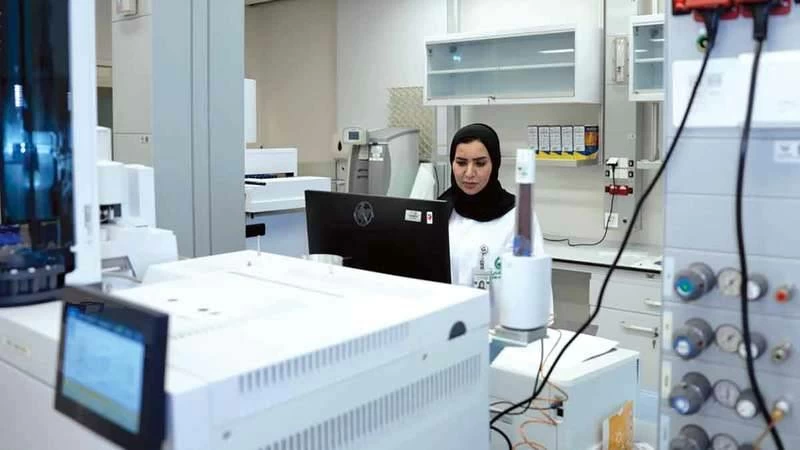
Dubai: The Drug Observatory Centre at the General Department of Forensic Science and Criminology of Dubai Police conducted a phishing initiative targeting websites offering suspicious products. The team infiltrated several of these sites and ordered products that arrived at the specified addresses within hours. Subsequent laboratory analysis revealed that some of these products contained narcotics listed in the schedules of the Federal Law. This allowed for the identification of the nature of these products, verification of their contents, and coordination with the General Department of Drug Control at Dubai Police and other relevant authorities to take the necessary measures.In the context of digital efforts to combat drug trafficking, the General Department of Drug Control at Dubai Police announced the monitoring and blocking of 297 websites promoting drugs during the second quarter of 2026, compared to 110 websites during the first quarter, bringing the total to 407 websites during the first half of the year. The department also provided security agencies in several countries with 125 pieces of security information during the second quarter, which contributed to the arrest of suspects in drug trafficking cases worldwide.Dr. Ibtisam Al-Abdouli, Director of the Drug Observatory Centre at the General Department of Forensic Science and Criminology of Dubai Police, said that the Centre's work is not limited to examining seized substances and identifying their types. It extends to studying patterns of their emergence and change, levels of detection, their temporal and spatial distribution, and associated substances and chemical precursors. Analysing these indicators and linking them to laboratory, field, and surveillance data contributes to forming a more comprehensive picture of the drug situation and its trends, enabling early detection of new substances or patterns, and identifying indicators that may require further investigation.In detail, Dr. Al-Abdouli stated that the Observatory launched an online drug-trapping initiative in 2025 after monitoring websites that were offering suspicious products.She added that the team accessed several of these websites, ordered products, and the orders were delivered to the specified addresses within hours, before being analysed in the laboratory.Dr. Ibtisam Al-Abdouli pointed out that the Observatory does not view drugs solely as substances, but extends its work to individuals and the effects of drug use. Picture credit: SuppliedShe explained that the analyses revealed that some products contained narcotic substances listed in the schedules of the Federal Law. This prompted coordination with the General Directorate of Drug Control and other relevant authorities, as well as contacting economic bodies and the telecommunications sector to take the necessary measures regarding these sites. Monitoring and follow-up operations are ongoing.Al-Abdouli pointed out that the Observatory does not view drugs solely as substances, but extends its work to individuals and the effects of drug use. This is achieved through the development of highly sensitive tests capable of detecting new substances that may not be available in traditional testing programmes.She noted the cooperation with several entities with extensive experience in this field, including the Erada Rehabilitation Centre, following the signing of a memorandum of understanding aimed at supporting the Centre in dealing with some new substances that current tests cannot detect.She explained that some cases revealed the presence of types of drugs not included in the usual testing programme. This contributed to a change in how the case was handled and viewed, giving the medical team a more complete picture of the substance the person was using, which greatly contributed to the treatment process.Regarding the most prevalent types, Al-Abdouli pointed out that one particular type stands out as a major challenge, not only due to its widespread availability but also because of the ease with which, its chemical composition can be altered.She explained that changing the composition allows for the frequent production of new types. After a group of substances is added to the legal lists, other compositions may appear within a month or two, necessitating re-examination and resubmission for inclusion.Furthermore, Al-Abdouli clarified that the Drug Pattern Analysis Section at the Drug Observatory Centre complements the Centre's oversight role. It represents a modern tool in the field of monitoring, investigation, and research. Its role is not limited to detecting the presence of narcotic substances and identifying their types, but extends to studying patterns and related changes in terms of new substances and compounds, their levels of emergence, their temporal and spatial distribution, and associated substances, precursors, and related chemicals.She added that analysing these indicators and linking them to laboratory, field, and surveillance data contributes to a more comprehensive picture of the drug situation and its trends, the early detection of emerging substances or patterns, and the identification of indicators that may warrant further investigation.She explained that this approach provides a scientific basis to support regulatory bodies in setting priorities, guiding monitoring and control efforts, and enhancing the ability to proactively respond to changes in drug trafficking patterns. This contributes to shifting from reacting to a problem after it emerges to monitoring its indicators and predicting its potential trends.In another context, she pointed out that the examination moves beyond simply answering the question, "What type of drug?" to a broader question concerning the frequency of chemical signatures in different samples and whether this points to a common source. She explained that this makes drug pattern testing part of a forensic chemical intelligence system, not merely a diagnostic test.Al-Abdouli emphasised that this is the core of the battle the Observatory is waging. Every substance legally listed could be the precursor to another, and therefore the list cannot be considered final. She noted that the Centre does not merely search for substances found in seized materials, but also strives to uncover what might follow.She stated that the Observatory is no longer just a unit investigating seized substances, but has become a scientific authority in the field. She highlighted its patents and the implementation of innovative projects that have garnered local and international acclaim and awards. It has also become a reference point for companies specialising in drug detection, extraction, and testing products.She explained that companies developing products in this area submit their products to the Observatory for evaluation, whether they are devices or tools for drug detection or extraction products. Experts conduct scientific tests, and the evaluation results are then issued.She added that if the product proves suitable for distribution, it can be approved. However, if deficiencies or aspects requiring development are identified, the product is returned to the company for the necessary modifications before re-evaluation.