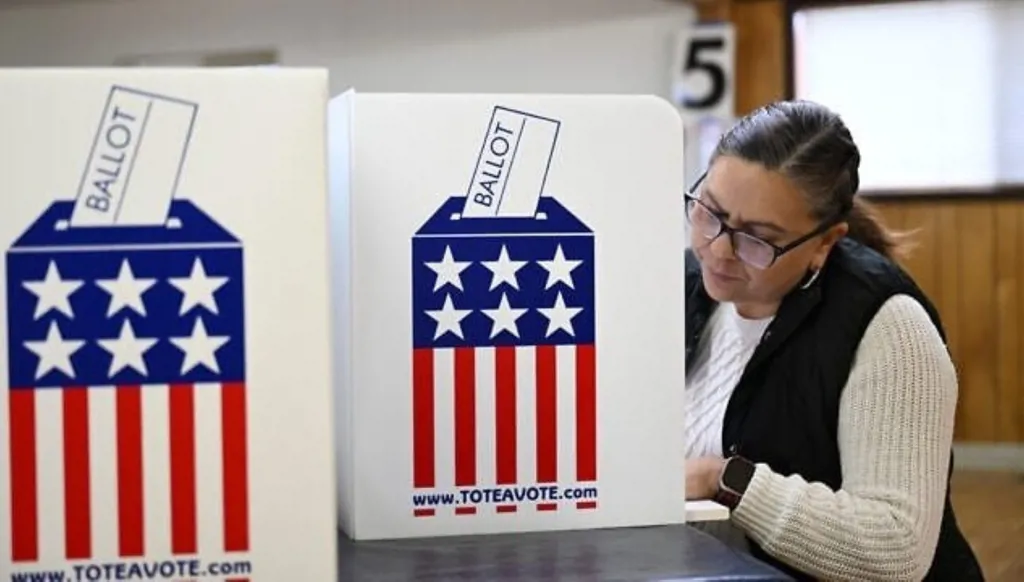
A Democratic victory in securing control of both the House of Representatives and the Senate in the US midterm elections would open a window for changing environmental policy, but the scope for such change would be defined by President Donald Trump's powers. The new majority, which will take office on January 3, 2027, could block legislation, step up oversight and negotiate funding, while the administration would retain control over law enforcement and foreign policy. As a result, the shift is likely to begin with efforts to curb the climate rollback before seeking to restore the protections and incentives that have been scrapped.
The scale of the stakes is reflected in estimates by Climate Action Tracker: under current policies, US emissions in 2035 are projected to be 13% to 18% higher than the levels forecast by the tracker under Joe Biden's administration in 2024. This is a comparison between projections, excluding emissions from land use and forestry, rather than an actual measured increase. It illustrates the potential damage of remaining on the current course.
Among the most prominent decisions open to challenge is the Environmental Protection Agency's (EPA) repeal, on February 12, 2026, of the 2009 "Endangerment Finding", which classified greenhouse gases as a threat to public health and welfare. The agency also repealed the greenhouse gas emissions standards for cars and trucks. Democrats can investigate the legal and scientific grounds for the decision and question officials about it. However, reinstating the standards would require legal action, effective legislation or a regulatory review by the administration; it would not happen automatically as a result of the change in congressional majority.
In the power sector, the agency repealed most of the emissions reduction requirements adopted by the Biden administration in 2024 for fossil fuel power plants on September 14, 2026, and proposed eliminating the remaining standards. It also introduced sweeping amendments on October 27 to loosen regulations governing the oil and gas sector, including methane controls. Here, a distinction must be made between repeals that have already been finalized and proposed rollbacks: the new Congress can step up pressure to halt further action, but it cannot restore the old rules through a hearing alone.
The second front is financial and industrial. Trump's tax law, signed on July 4, 2025, accelerated the phaseout of clean energy incentives. Vehicles purchased after September 30, 2025, were no longer eligible for tax credits of up to $7,500 for new vehicles and $4,000 for used ones. Support for solar and wind energy was also brought to an earlier end, with projects that began construction after July 4, 2026, losing the relevant tax credits if they are not placed into service by the end of 2027.
The new majority could seek to extend some of these incentives as part of a broader tax deal, linking them to the protection of factories and jobs and lower electricity bills. However, reviving the entire Biden-era package remains unlikely as long as Trump retains the power to veto legislation. Overriding a veto requires the support of two-thirds of those voting in each chamber, while ending a filibuster against most ordinary legislation in the Senate requires 60 votes. Winning a majority does not mean having those numbers.
Budgetary measures and oversight therefore appear to be more realistic tools. Democrats could reject further cuts to funding for environmental protection and climate research, and negotiate provisions restricting the use of funds to dismantle existing programs. They could also scrutinize the withholding of previously approved grants and summon officials to explain their decisions. Control of the Senate would also allow them to reject new nominees for environmental and judicial positions that require its approval. However, spending conditions themselves would still require legislation signed by the president or enacted over his veto.
Internationally, reversing course would be more difficult. The US withdrawal from the Paris Agreement on climate change took effect on January 27, 2026. Washington also notified the United Nations of its withdrawal from the UN Framework Convention on Climate Change, which is set to take effect on February 27, 2027. This latter deadline gives the new Congress a narrow window to pressure the administration to reconsider, but a Democratic vote does not replace the executive and diplomatic procedures required to reverse the decision.
The dispute also extends to climate financing for developing countries. On January 8, 2026, the US Treasury Department announced its immediate withdrawal from the Green Climate Fund. The new majority could make restoring US participation and funding a negotiating point in budget discussions, but implementation would require an agreement with the administration. For Arab countries exposed to drought, extreme heat and water scarcity, the practical value of any shift in US policy will depend on adaptation financing and technology transfer, not merely a change in rhetoric. This also links climate policy to Washington's influence and its relations with its partners.
From a geopolitical perspective, a policy shift could help stem the erosion of Washington's credibility among its partners, but it would not eliminate the uncertainty facing investors and allies. UN climate chief Simon Stiell has warned that the withdrawal harms the US economy, jobs and security. From this perspective, Democrats could frame clean energy as an issue of industrial competitiveness and energy supply security, building limited common ground around power grids and manufacturing rather than waiting for a comprehensive climate agreement.
The most likely outcome, then, is that US environmental policy will shift over the next two years towards ongoing bargaining: protecting the funding that remains, holding the administration accountable and seeking to secure limited changes. Restoring international commitments, emissions standards and scrapped incentives, however, will depend on Republican cooperation, court rulings or a change in the White House's position. The significance of the victory lies in raising the political cost of environmental backsliding and giving clean investment a chance to survive until the next presidential election in 2028.