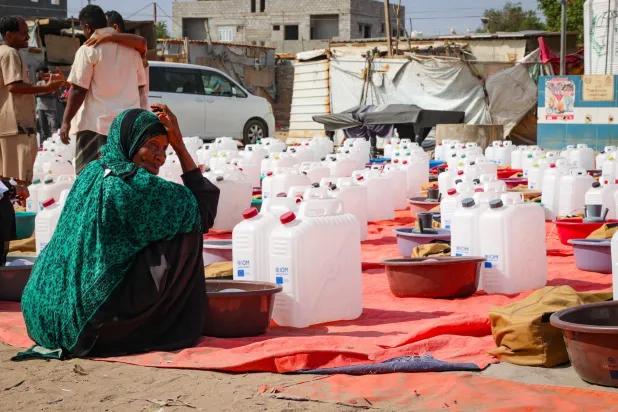
Local and international medical organizations in Yemen reported a sharp rise in daily casualties from the Houthi military escalation, to 132 from about 93 last week, with the Lahj governorate the hardest hit as fighting persisted and the Houthis targeted populated areas with missiles and drones. The latest Health Cluster report put the total number of casualties recorded by the health emergency operations center through the end of October at 9,730, including 7,959 injuries and 1,771 deaths, an increase of 658 in just five days. The southwestern province of Lahj accounted for 309 casualties, or 47% of the new cases. Marib recorded the highest fatality rate, with 36 deaths among 172 casualties, or 21%. Of those, 117 casualties, including 20 deaths, were reported on Oct. 30 alone in Al-Jubah and Harib districts and along the Al-Jawf front. The Health Cluster, which comprises 31 health sectors, warned of deteriorating services along Yemen's western coast. All three partner-supported health facilities in Al-Waziyah district had stopped operating, while access restrictions prevented the collection of October data in Dhubab district. The deterioration came as the number of displaced people exceeded 320,000, according to the International Organization for Migration (IOM), with most of the displacement occurring over the past two months. Yemenis displaced by Houthi attacks in Taiz gather to receive aid on the outskirts of Aden. (AP) Diseases Some 43,000 people have been displaced from Lahj's Al-Mudarabah and Al-Arah district since the start of last year, while the interim capital Aden currently hosts more than 56,000 displaced people. Prices of essential goods in Taiz have risen threefold to fivefold. The report identified 28 new or reopened displacement sites sheltering 21,273 people without dedicated site management or humanitarian oversight. Another 105 sites, housing 74,456 people, were recorded in western Taiz districts that came under Houthi control during the same month. The humanitarian response faces severe shortages. The World Health Organization (WHO) is funding just nine mobile medical teams against a target of 30 to 40, and four fixed health centers against a target of 25 to 35. The report also highlighted an urgent need to coordinate with the Executive Unit for the Management of IDPs Camps to identify suitable locations for delivering services. Cholera cases continued to fall across the five worst-affected provinces, dropping from 639 in epidemiological week 40 to 443 in week 43. Data for week 44, however, remained 23% incomplete. The WHO consequently identified 23 districts with a combined population of 2.25 million as priorities for requesting a single dose of oral cholera vaccine from the International Coordinating Group. Cholera cases continued to fall across the five worst-affected provinces. (UN) Healthcare gaps Restrictions have disrupted aid deliveries, forcing the cancellation of air bridge flights to Sanaa scheduled for Oct. 29 and Nov. 3. The WHO's second pilot medical shipment, weighing 10 metric tons, also remains on hold pending coordination with the World Food Program for transport to Taiz. The disruptions come amid a severe funding shortfall. Just 12% of the 90-day humanitarian response plan has been funded, with the WHO receiving $3.7 million of the $31 million required, leaving a $27.3 million gap. Even if an additional $7.3 million under discussion with European donors and the Central Emergency Response Fund is approved, 65% of the plan would remain unfunded, threatening the response beyond year-end. The report identified four critical, unfunded gaps in the care of injured patients: patient referral systems, a Level 2 surgical facility, expanded intensive care capacity, including fuel for 77 health facilities, and post-discharge rehabilitation services. Without post-discharge rehabilitation, patients cannot be safely released from surgical wards, leaving beds occupied, reducing hospital capacity and preventing new patients from receiving treatment.