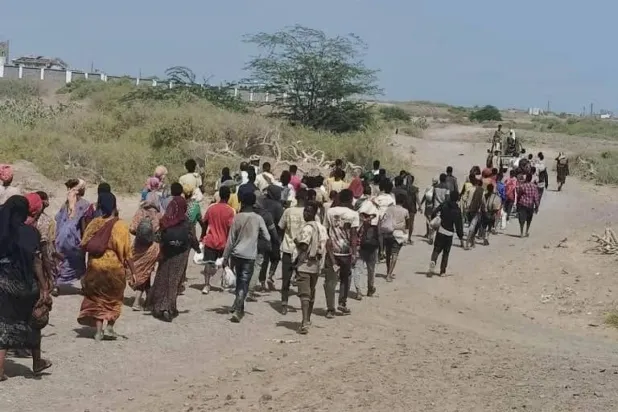
Escalating Houthi military operations in southwestern Yemen are putting thousands of refugees from the Horn of Africa at growing risk, with missile strikes near a refugee camp disrupting essential services, restricting movement and forcing families already displaced by conflict to seek safety elsewhere. The United Nations refugee agency (UNHCR) warned of a deepening humanitarian crisis affecting more than 65,000 refugees and asylum seekers in Yemen, where mounting insecurity, economic collapse, dwindling resources and restrictions on aid access have left tens of thousands without safe shelter or basic necessities. Despite the worsening conflict, thousands continue to risk their lives on perilous sea crossings from the Horn of Africa to Yemen, the agency said. At the center of the latest concerns is Kharaz refugee camp in Lahj province, home to about 9,500 refugees from Somalia and Ethiopia and located just tens of kilometers from areas of fighting. While no refugee casualties have been reported or confirmed, missile strikes in surrounding areas have forced some services to shut down and restricted residents' movement, deepening fear among families who had already fled violence and conflict in their home countries. UNHCR partners, working with local authorities, have managed to deliver food aid to the camp, while healthcare and water supplies continue despite serious difficulties. Other essential services have nearly ground to a halt. Schools have suspended classes, while legal assistance and documentation services have stopped. Soaring fuel and basic commodity prices have added to the strain, leaving refugee families struggling to meet their daily needs. Refugees flee again With insecurity mounting and humanitarian access increasingly restricted, refugee families have begun leaving Kharaz and other parts of western Yemen for safer areas in the south, including Aden. But even the journey to safety carries risks. Families are forced to travel along routes used by warring parties, exposing them to further insecurity. The deteriorating situation has also driven a rise in requests for voluntary repatriation, as growing numbers of refugees seek help returning to their home countries. Since the Houthi offensive intensified in August, UNHCR has organized three flights from Aden to the Somali capital, Mogadishu, returning 607 Somali refugees to their homeland. More than 1,100 others have expressed a desire to return. Yet those efforts are also under threat. UNHCR warned that continued strikes targeting airports and intensifying clashes were endangering refugees and aid workers and jeopardizing voluntary repatriation operations. More than 134,000 arrivals Even as years of conflict have left Yemen grappling with one of the world's most protracted humanitarian emergencies, migrants and asylum seekers continue to arrive on its shores. More than 134,000 migrants and asylum seekers crossed by sea from the Horn of Africa in the first nine months of the year, fleeing conflict, persecution, instability and poverty, according to UNHCR. Many hope to pass through Yemen on their way to other countries. Instead, they find themselves in a nation where deteriorating security and humanitarian conditions have made daily life increasingly precarious. The flow is also moving in the opposite direction. Since September, about 4,200 people have left Yemen by sea for Djibouti and Somalia, with humanitarian organizations expecting departures to rise as maritime conditions improve. The movements come as more than 300,000 Yemenis remain displaced following upheaval in recent months, adding to pressure on scarce resources and overstretched humanitarian services. For residents, refugees and migrants alike, the overlapping crises are deepening hardship in a country already battered by years of conflict. UNHCR warned that without urgent international action, adequate funding and unhindered humanitarian access, thousands more could be forced to flee, facing further deprivation and suffering.