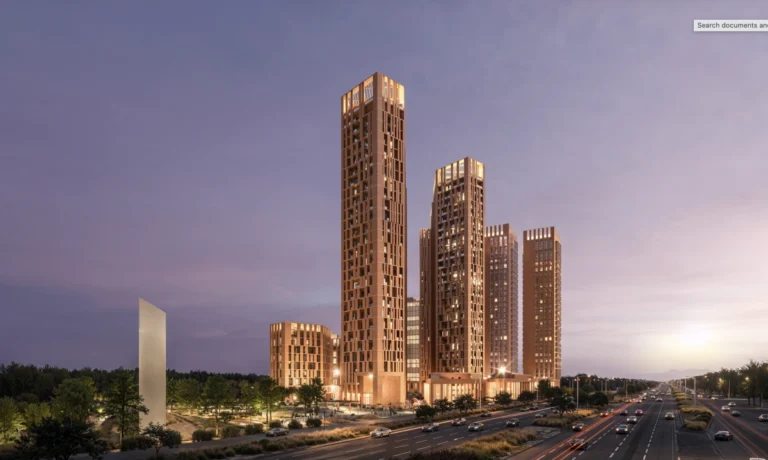
The real estate market in Makkah is witnessing an accelerating shift toward investment in hospitality assets, fueled by the growing numbers of Hajj and Umrah pilgrims and the expansion of the city's capacity. This trajectory is cementing hotels as a primary source of operational revenue for a number of real estate developers. This comes at a time when the recovery in hospitality returns has reflected more clearly on the financial results of real estate companies, driven by improving occupancy rates and average room prices, particularly during the Hajj and Umrah seasons. Sustained demand underpins hospitality boom Financial and economic advisor Dr. Hussein Al-Attas told Asharq Al-Awsat that Makkah's hospitality sector is experiencing "one of its strongest historical phases." The growth witnessed by the sector is underpinned by structural factors, foremost among which is the continuous increase in the number of Umrah pilgrims and visitors, alongside the gradual expansion of Hajj capacity and projects tied to Saudi Vision 2030, he added. He stressed that the expansion of the Grand Mosque, alongside the development of transportation networks, roads, trains, and the enhancement of the visitor experience, has contributed to raising the efficiency of the hospitality ecosystem. This, in turn, has reflected on occupancy rates and average room prices, with Al-Attas explaining that demand for hotels in Makkah has become more sustainable year-round with the growth of Umrah programs, no longer being limited to peak seasons. This shift reflects the growing significance of hospitality operations within the business models of real estate firms operating in Makkah. This comes as developers pivot part of their focus away from the sale of lands and units toward the development of income-generating assets that can be retained and operated over the long term. Hotels drive profitability The performance of the Jabal Omar Development Company exemplifies the growing importance of hospitality operations in the financial results of Makkah real estate developers. The company returned to profitability in the second quarter of 2026 with a net profit of 158.1 million riyals, compared to a loss of 42.1 million riyals in the same period last year, while revenues increased by 42.5 percent to 715.2 million riyals. The company attributed the revenue growth primarily to the sustained improvement in hotel performance, particularly during the Hajj season, alongside the opening of the "Rotana" hotel earlier this year, according to a disclosure published on the Saudi Exchange (Tadawul) website. Al-Attas said hospitality operations have become the primary engine of profitability for a number of real estate companies in Makkah, after previously relying more heavily on land sales or the development of traditional real estate projects. He explained that rising occupancy rates and improving average room prices support the operational revenues of hotels, while the recurring nature of these revenues provides companies with more stable cash flows compared to returns generated from asset sales. Khaled Al-Mobid, CEO of Menassat Real Estate Company, stated in an exclusive comment to Asharq Al-Awsat that Makkah possesses an exceptional advantage represented by the sustained demand for hospitality. He explained that the continuous influx of Hajj and Umrah pilgrims, alongside the objectives of Vision 2030, lends hospitality investment greater attractiveness compared to a number of other real estate assets, particularly in locations close to the Grand Mosque and projects linked to transportation and services. Al-Mobid pointed to a shift in developer strategies away from focusing on the sale of real estate units toward developing income-generating assets, such as hotels and serviced apartments, alongside leveraging international hospitality brands. A developer's focus is no longer confined to construction, but has extended to operational quality and asset management, as a project's value has become linked to its operational performance rather than its development cost alone, he remarked. Rising supply tests the market's capacity to absorb growth The expansion of hospitality investment in Makkah coincides with an increase in room supply, which may intensify competition among operators, particularly within categories witnessing the entry of new projects. Al-Attas said that in the short term, this increase could exert limited pressure on pricing within certain segments if the new additions are concentrated within the same hotel tier. However, over the medium and long term, demand will be capable of absorbing a significant portion of this expansion, given government targets to boost the numbers of Umrah pilgrims and visitors, and Makkah's transformation into a destination welcoming growing influxes year-round. According to Al-Attas, the volume of supply will not be the sole decisive factor, as the quality of the hospitality product, location, service standards, and the efficiency of revenue management will play a primary role in a hotel's ability to maintain high occupancy rates and returns. Al-Mobid said that increasing room counts will not suffice to guarantee project profitability as competition intensifies, noting that a hotel's ability to maximize revenue per room and achieve operational efficiency will become more vital with new projects entering the market. Operational efficiency key to maintaining margins Conversely, Makkah's hospitality sector faces a series of challenges that could test investors' profit margins in the coming period, led by rising costs for land, construction, and operations, alongside wages, energy, maintenance, and financing costs, in addition to the need for qualified personnel to manage hospitality establishments efficiently. Al-Attas said that rising operational costs and persistently high interest rates could exert pressure on companies, at a time when increased competition will force operators to focus more heavily on operational efficiency and boosting the guest experience to maintain profit margins. Sustaining high occupancy rates outside of peak seasons presents another challenge for the sector, requiring the diversification of target markets and the attraction of new visitor segments in alignment with the expansion of Umrah programs and the objectives of Vision 2030. Al-Mobid said future profitability hinges on product quality, operational efficiency, and maximizing revenue per room. He stressed the importance of diversifying hotel tiers, leveraging modern technologies in revenue management, reducing operational costs, and delivering a premium hospitality experience. With demand and supply expanding simultaneously, the future of hospitality investment in Makkah is pivoting toward a heavier reliance on asset operational efficiency, product quality, and location, rather than an increase in hotel capacity alone. This shifts developers' ability to manage assets and convert growing visitor numbers into sustainable cash flows into a decisive factor in the future.