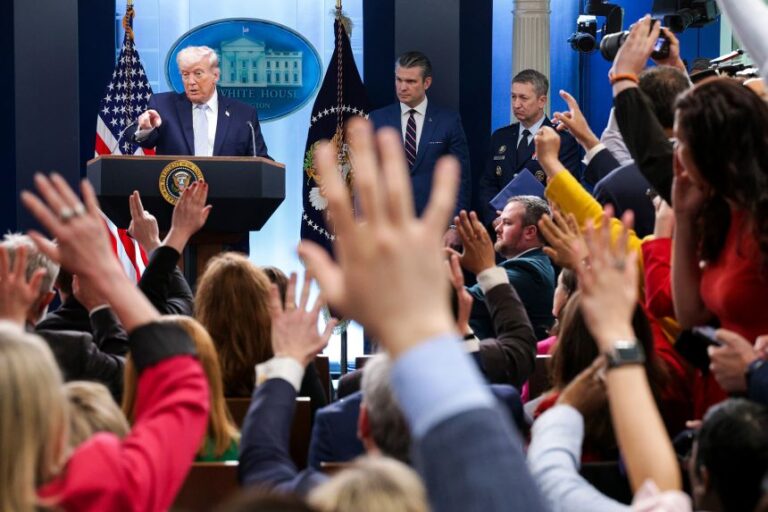
Tensions in the Strait of Hormuz, one of the world’s most vital energy corridors, have escalated sharply as the United States and Iran exchanged accusations over control of the waterway and freedom of navigation. Washington announced a significant military buildup to secure commercial shipping, while Tehran insisted that all maritime movement must be coordinated with its forces. The confrontation has raised fears of disruption to global energy supplies and heightened concerns about regional stability. US Treasury Secretary Scott Bessent declared that Iran does not control the strait, asserting that the United States has “full control” over the passage. He urged international partners to increase pressure on Tehran, framing the dispute as a test of international resolve. US Central Command reinforced this position, reporting that two US-flagged commercial vessels transited the strait safely and denying Iranian claims of attacks or blockades. In a move underscoring Washington’s determination, Central Command announced the deployment of around 15,000 troops, more than 100 aircraft, and guided-missile destroyers as part of an operation to restore freedom of navigation in the strait, through which roughly a quarter of global seaborne oil trade passes. Iranian military officials countered with equal force, insisting that security in Hormuz is “fully under the control” of its armed forces. The commander of Iran’s Khatam Al-Anbiya central headquarters warned that any threat would be met with a “harsh response,” while the Islamic Revolutionary Guard Corps (IRGC) cautioned shipping companies against ignoring directives, vowing to intercept vessels that fail to comply with its protocols. The escalation comes amid conflicting accounts of maritime incidents in the strait. Iran’s military claimed its naval forces issued warnings to US destroyers approaching the strait and fired warning shots using missiles and drones after the vessels ignored alerts, holding Washington responsible for any consequences. The US military flatly denied that its ships had been targeted, highlighting the conflicting narratives that have become a hallmark of the crisis. The fallout has reverberated across the Gulf. The United Arab Emirates initially warned citizens of a “potential missile threat” before later declaring conditions safe. Qatar and Egypt condemned an attack on a UAE tanker, describing it as a violation of international law and freedom of navigation, and warning of its impact on global energy security. Egypt’s foreign ministry emphasized that targeting commercial vessels represents a “serious threat to regional stability and global energy supplies,” while Qatar rejected the use of the strait as a pressure tool and called for it to be reopened unconditionally. Meanwhile, maritime security reports indicated that container ships had come under fire, and Iran’s IRGC claimed to have seized three vessels, underscoring the risks despite efforts to sustain a ceasefire. Diplomatic efforts are underway to prevent further escalation. Pakistan’s foreign minister discussed developments with his Iranian counterpart, stressing the need for de-escalation. Russia signaled readiness to propose new initiatives for a Middle East free of weapons of mass destruction, linking the Hormuz crisis to broader regional security concerns. As global concern mounts, the dispute over Hormuz has become more than a bilateral clash; it is a test of international diplomacy, energy security, and the fragile balance of power in the Gulf.The post Hormuz flashpoint: US-Iran clash over shipping control deepens first appeared on Dailynewsegypt.