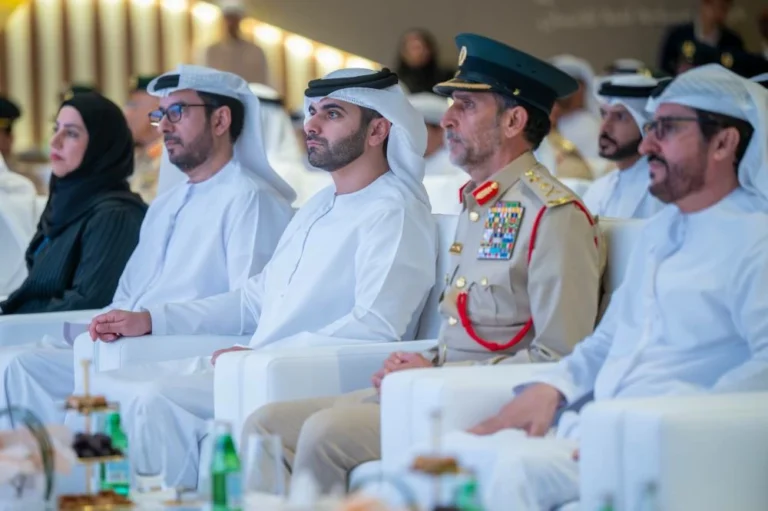
Abu Dhabi: Experts participating in the session “Layers of the Security System in the Gulf and Strategic Independence” at Hili Forum 2026 discussed regional and international security challenges and their impact on defence cooperation and diplomatic relations.Professor Dr Abdulkhaleq Abdullah, Non-Resident Associate at the Emirates Center for Strategic Studies and Research (ECSSR), said there remains a need for a global power to serve as a key pillar in ensuring Gulf security.“There is a constant need for a global power that forms a fundamental pillar to ensure the security of the Gulf, as the countries of the region cannot undertake this task alone,” he said.“The only global power capable of playing this role is the United States. I believe that we need a greater American presence, not less.”Dr Dhafer Al Ajmi, Executive Director of the Gulf Monitoring Group in Kuwait, highlighted what he described as major changes in military doctrine.“The biggest shift we have witnessed concerns military doctrine, which refers to the prioritisation of weapons on the battlefield,” he said.“This is a radical shift, as the air force was previously considered the main source of power for any country.”Addressing international decision-making, Firas Maksad, Director of the Middle East and North Africa Programme at Eurasia Group in the United States, said American influence is undergoing significant changes.“American influence, under the Trump administration today, is witnessing an increasing decline,” he said.“The State Department, at best, plays only a marginal role, while the National Security Council in Washington is almost completely absent.”He added that decision-making has become concentrated within a narrow circle inside the administration and is largely shaped by presidential directives.Dr Dania Thafer, Executive Director of the Gulf International Forum in the United States, emphasised the importance of long-term investment in security capabilities and technology.“The UAE has achieved remarkable success in terms of investment in the security field, and Qatar has also performed relatively well,” she said.“However, this is a long-term investment that requires a strategy for dealing with multiple parties, and a multi-layered strategic approach to cooperating with different entities around the world in order to secure technology.”Dr Khalid Al Jufairi, Adjunct Associate Professor of International Politics at Georgetown University in Qatar, said the future of Gulf security should be built on flexibility rather than reliance on a single framework.“The future of Gulf security is not based on a multi-layered approach, but rather on a flexible, modular approach that allows for the creation of a security network whose components can be assembled or separated as needed,” he said.“The issue is not about relying on a specific supplier or entity to guarantee security, but about having political and operational freedom of choice.”Participants concluded that Gulf security and strategic independence depend on a balanced combination of reliable partnerships, self-reliance and institutional resilience to strengthen the region’s ability to respond to future challenges.