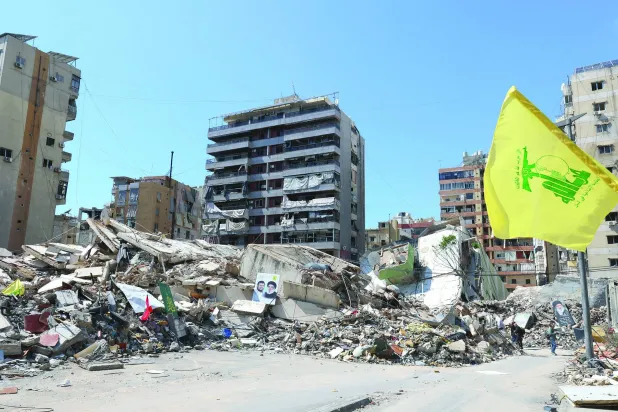
Hezbollah’s pledge to stay out of any new US or Israeli war against Iran has raised doubts in Lebanon over whether the Iran-backed group can resist Tehran’s influence or avoid dragging the country into another conflict. The reported decision has revived memories of March 2026, when Hezbollah opened the Lebanese front despite earlier promises not to intervene, raising questions about whether domestic pressures or Iranian calculations will determine its next move. On Monday, Hezbollah lawmaker Hassan Fadlallah insisted that the group’s military decisions were made independently. “The resistance’s decision is a Lebanese decision taken by its leadership. No one, whether abroad or at home, dictates it,” he said. Fadlallah maintained that this approach had remained unchanged under former Hezbollah leader Hassan Nasrallah and his successor, Naim Qassem. He said the group’s position reflected its own assessment of the national interest and its commitment to defending southern Lebanon and liberating occupied territory. “Iran has never asked us, either in the past or today, to support it against American-Israeli aggression,” he stressed. Hezbollah MP Hassan Fadlallah. (Reuters) Tehran’s influence Ministerial sources told Asharq Al-Awsat that Fadlallah’s reference to the national interest was noteworthy but insufficient to dispel concerns. They said Lebanon’s president had been indirectly informed that Hezbollah would not join Iran in another war, but warned that the position could change with developments on the battlefield. They recalled a similar commitment that collapsed within 48 hours during the March conflict. The sources argued that Hezbollah, which continues to reject government decisions, ultimately “remained subject to the calculations of Iran’s Revolutionary Guard Corps (IRGC), with limited room to act against Tehran’s wishes.” They also cited “reports of disagreements within the IRGC over a possible war, with some favoring confrontation and others opposing it, adding to uncertainty over the consequences for Lebanon.” ‘Tactical political maneuver’ The destruction, displacement and reconstruction costs of the previous war, particularly in Hezbollah’s support base, could weigh on the group’s calculations. Another conflict could also deepen domestic divisions over who has the authority to decide on war and peace, amid government efforts to establish exclusive state control over weapons. But Imad Salamey, a political science professor at the Lebanese American University, described Hezbollah’s position as a “tactical political maneuver.” He told Asharq Al-Awsat: “Such statements often sought to contain domestic tensions, reassure the Lebanese public and ease pressure on the group without providing genuine guarantees about its military or political conduct.” Salamey added that “Hezbollah was not bound by rules of engagement imposed by the Lebanese state or subject to an independent national authority overseeing its military decisions.” “Nor were there legal or international mechanisms to ensure compliance with its commitments,” he noted. A woman walks through her apartment, which was damaged by Israeli airstrikes in the southern Lebanese city of Tyre on June 17, 2026. (AP) “The gap between Hezbollah’s promises in 2025 and its military actions in 2026 had reinforced doubts about their credibility,” he remarked. “While domestic pressures could influence the timing and tone of Hezbollah’s political statements, its strategic decisions remained closely tied to Iran’s regional interests,” Salamey said. Any decision to stay out of a conflict could therefore be reversed if Tehran’s calculations changed, potentially leaving Lebanon exposed to unilateral military decisions outside state institutions. Pledge broken Hezbollah had previously told Parliament Speaker Nabih Berri that it would not intervene in a US war against Iran. Berri subsequently relayed that position to Lebanese officials. The group nevertheless fired six rockets toward Israel in March 2026. Reuters reported at the time, citing sources, that Berri felt he had been deceived. Prime Minister Nawaf Salam also said at the time that the government’s guarantees that Hezbollah would stay out of the conflict “did not last more than 48 hours.”