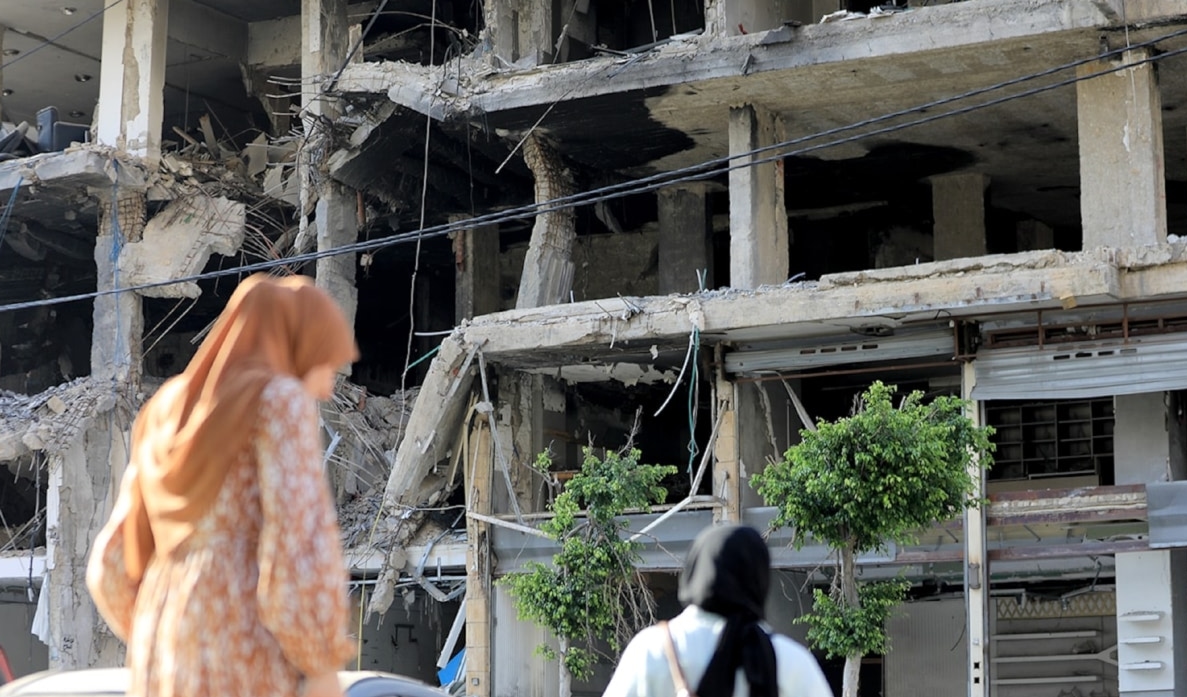
Hezbollah has begun distributing housing allowances to people whose homes were destroyed or severely damaged and rendered uninhabitable during the 2024 and 2026 wars. The payments also cover people displaced from occupied border areas or nearby villages, regardless of whether their homes were damaged. In Areas Three and Five, which include administrative Beirut, the southern suburbs and Mount Lebanon, payments began on Monday, October 26, according to a source in Hezbollah's housing program. The source expects “all eligible families to receive their allowances within a month of the start of disbursements”. The process is running smoothly. Beneficiaries visit designated centers in their respective areas to collect payment receipts. The procedure takes no more than a day. Recipients can cash their receipts the following day at centers set up specifically for this purpose. Beneficiaries do not need to visit Al-Qard Al-Hasan Association branches. Instead, the association's employees work at the payment centers to facilitate the process. So far, 80% of those who collected receipts have cashed them. One center serves Areas Three and Five, covering Beirut and Mount Lebanon, while another handles Area Four in the Bekaa. Southern villages have more centers because of the scale of destruction and displacement. Four centers serve Area One, south of the Litani River, and two serve Area Two, north of the river. The source said authorities “could open another center in each of the two southern areas if needed, given the large number of beneficiaries”. Following the latest Israeli offensive, Hezbollah's specialized units conducted a survey of displaced residents in southern villages and towns. Survey committees inspected homes, classified their damage and identified eligible properties using a standard form prepared by Mimar, a company involved in the process. The resulting lists were added to the records of people eligible for compensation for damage caused by the 2024 war. Many had already received payments, with some receiving compensation twice, when Hezbollah began updating its housing assistance program before the 2026 war. The package includes an $8,000 furniture allowance for all areas, plus a rental allowance of $6,000 in Beirut and the southern suburbs and $4,000 elsewhere. However, the 2024 beneficiary lists were reviewed rather than transferred unchanged. Two main adjustments were made. Families that had repaired their homes were removed, while new categories of beneficiaries were added to cover cases excluded from the previous program. The new category includes homeowners whose rental properties were destroyed or damaged, provided they also rent another home to live in. These landlords had relied on rental income from their damaged properties to cover their own housing costs. They can now receive compensation for lost rental income, while their tenants qualify for furniture allowances if the tenants' homes were affected by the 2026 war. The source said the 2024 program did not cover such cases. However, a review of the records showed that they should qualify for assistance. The change will also apply to people affected by the 2026 war who meet the eligibility criteria. Hezbollah Executive Council head Sheikh Ali Daamoush previously announced the housing and compensation program for people displaced and affected by the September 2024 and March 2026 Israeli offensives, under the group's "Promise and Commitment" initiative. He said payments would be distributed over one year in four installments, issued every three months. Each eligible housing unit in Beirut and the southern suburbs would receive a total of $14,000, while units in other areas would receive $12,000. The package includes an $8,000 furniture allowance for all areas, plus a rental allowance of $6,000 in Beirut and the southern suburbs and $4,000 elsewhere. The program covers families who used the damaged properties as their primary, permanent homes. Summer homes, secondary residences and properties left vacant because their owners live abroad are excluded. Applicants must also have no alternative housing unit. This is an edited translation of a report originally published in Arabic.