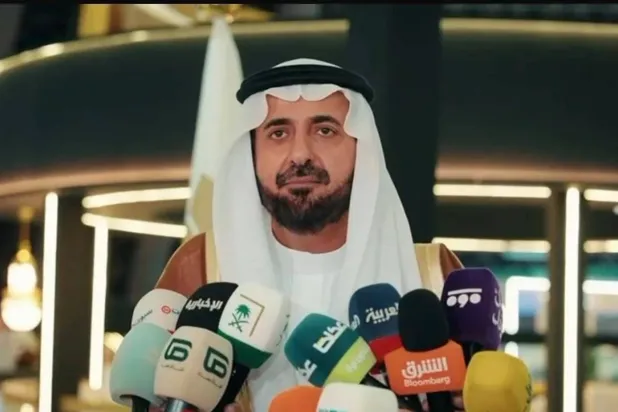
The sixth Hajj Conference and Exhibition wrapped up in the Saudi city of Jeddah on Wednesday, drawing more than 200,000 attendees and participants from over 150 countries, a sharp rise from around 14,000 at its 2022 debut. The four-day gathering brought together officials, experts and service providers for talks and agreements aimed at improving pilgrim services and accelerating preparations for future Hajj seasons. Saudi Minister of Hajj and Umrah Tawfiq Al-Rabiah hailed the event as a "major qualitative leap," citing soaring attendance, wider international participation and a growing number of contracts to improve services for pilgrims. Speaking to reporters at the close of the conference, Al-Rabiah said the event had expanded significantly since its launch in 2022 with just 84 participating companies. The minister said the gathering attracted representatives from more than 150 countries, including ministers, religious leaders, muftis and government officials, reflecting its growing role in shaping pilgrim services. He said the conference had grown more than fivefold, praising the organizers and expressing hope for further improvements in services. Held under the theme "From Makkah to the World" at Jeddah Superdome, the conference was organized by the Ministry of Hajj and Umrah in cooperation with the Pilgrim Experience Program. It brought together government planning and operations agencies, Hajj affairs offices, service providers and technology companies to tackle challenges facing pilgrims and finalize preparations for the 1448 AH Hajj season. The program focused on three areas: infrastructure and operational services; empowerment and integration; and development and sustainability. Discussions covered transportation, accommodation, catering, crowd management, healthcare, security and safety, digital transformation and workforce training. A key focus was the shift toward all-inclusive service packages for pilgrims, alongside tighter contracting procedures, stronger oversight and better ways to measure service quality. Artificial intelligence and data analytics also featured prominently in discussions on streamlining operations and improving the pilgrimage experience. Conference sessions revealed that the Nusuk app had surpassed 65 million users worldwide and offered more than 100 services. The electronic Hajj platform, meanwhile, connects more than 70 entities inside and outside Saudi Arabia, helping coordinate pilgrim reception, transportation, accommodation, group movements and departures. Participants also examined advances in housing, transportation and healthcare, including the growing use of smart technologies, sensors and communications systems. Discussions highlighted stronger governance and oversight, and a shift from measuring operational readiness to assessing how services actually affect pilgrims. On the final day, attention turned to preparations for the next Hajj season, with sessions exploring artificial intelligence, the future of digital services, smart infrastructure, medical readiness and the role of regulations in improving hospitality standards. The contributions of Saudi Scouts to pilgrim services were also highlighted. Specialized workshops on the fourth day addressed emergency response coordination, the shift from prevention to healthcare, food safety, catering and services linked to the Nusuk Card. Other sessions focused on crowd management at the holy sites, early warning systems and improving the skills of Hajj sector workers. Beyond the formal conference sessions, the program featured the Hajj Council, showcasing personal and professional experiences in serving pilgrims, alongside the Innovation Council, the Awareness and Training Diwaniya and the Hajj Affairs Offices Forum. Dedicated spaces also allowed participating organizations to exchange expertise and explore cooperation. The accompanying exhibition showcased technological and operational solutions for the pilgrimage journey, with specialized areas covering healthcare, aviation, technology, innovation and media. A business center and partner platform provided opportunities for meetings, contract negotiations and partnerships ahead of future Hajj seasons. The conference's previous five editions generated more than 1,850 agreements related to pilgrim services and hosted over 310 discussion sessions, underscoring the event's expansion over the years. With the sixth edition concluded, the focus now shifts from discussions and agreements to implementation, as Saudi Arabia seeks to turn new partnerships and technological solutions into practical improvements for the 1448 AH Hajj season. The effort reflects a broader push to strengthen coordination among service providers, improve efficiency and deliver a better experience for pilgrims at every stage of their journey.