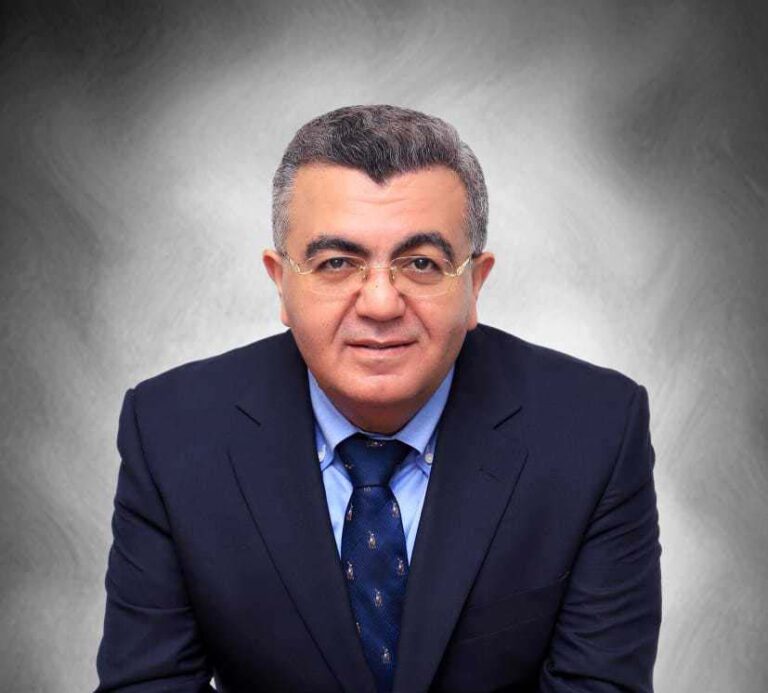
By Ibrahim Negm Every year, millions of Muslims leave behind their homes, titles, occupations, habits, and familiar comforts to stand before God in the plain simplicity of Hajj. It is easy to describe Hajj as a journey to Makkah, but this would only touch its outer form. In truth, Hajj is a journey from noise to meaning, from self-importance to humility, and from fragmentation to unity. It is one of Islam’s most powerful answers to the spiritual ailments of the modern age. Modern life has given humanity many tools, but it has not always given it peace. We live in an age of speed, comparison, distraction, loneliness, and moral exhaustion. People are more connected, yet often more isolated. They possess more choices, yet sometimes lack direction. They are surrounded by information, yet may still suffer from a crisis of wisdom. Hajj speaks directly to these conditions, not through abstract sermons, but through lived experience. The pilgrim begins by entering the state of ihram. Ordinary clothes are set aside. The rich and poor, the famous and unknown, the powerful and weak; all wear the same simple garments. In a world obsessed with image, status, brands, and social display, ihram restores the human being to his or her essential truth. Before God, we are not defined by wealth, office, race, nationality, or public reputation. We are defined by sincerity, moral responsibility, and the state of the heart. The Qur’an reminds humanity that the noblest among people are those most conscious of God, not those most decorated by society. Then comes the gathering of Arafat, the heart of Hajj. Pilgrims stand in supplication, aware of their weakness and hopeful of divine mercy. Arafat teaches modern man the courage to stop. In a culture that glorifies constant movement, productivity, and self-promotion, Hajj asks the human being to pause, repent, reflect, and begin again. This pause is not escape. It is moral repair. Societies cannot be healed if individuals never examine themselves. Public crises often begin as private failures of conscience. The tawaf around the Kaaba offers another lesson. The pilgrim moves around one sacred centre. This image is deeply needed today. Much of modern anxiety comes from living without a centre. Desires pull in one direction, markets in another, politics in another, and digital platforms in yet another. Hajj reminds Muslims that life must have a moral centre Without God at the centre, the human self easily becomes restless, inflated, and confused. The sa‘i between Safa and Marwa recalls the struggle of Hajar, peace be upon her, as she searched for water for her child. It teaches that faith is not passivity. Trust in God does not cancel effort. Hajar moved, searched, struggled, and hoped. Her story is a lesson for families, mothers, migrants, the vulnerable, and all who struggle quietly in a hard world. It tells us that sincere striving is never lost before God. Hajj also provides a powerful remedy for the disease of division. Pilgrims come from every continent, speaking different languages and carrying different histories. Yet they stand together, pray together, and move together. This is not a shallow slogan of unity. It is a disciplined unity under God. In an age of racism, sectarianism, nationalism, and cultural arrogance, Hajj teaches that human diversity is not a threat. It is a sign of God’s wisdom when governed by justice, mercy, and mutual recognition. The Prophet Muhammad, peace and blessings be upon him, emphasised in his Farewell Sermon the sanctity of life, property, and dignity, and reminded people that no Arab has superiority over a non-Arab, nor a non-Arab over an Arab, except by piety and good conduct. This message remains one of the most urgent moral declarations for our fractured world. The true test of Hajj begins after the pilgrim returns home. The journey is not meant to end at the airport. It should continue in gentler speech, cleaner earnings, stronger family ties, deeper compassion, and a renewed sense of service. Hajj is not only a memory of sacred places. It is a training in becoming a better human being. Our modern ailments are many: arrogance, loneliness, greed, anger, distraction, and loss of meaning. Hajj does not offer a superficial cure. It offers a demanding one. It asks us to remember God, humble the ego, honour others, discipline desire, seek forgiveness, and live with a higher purpose. That is why Hajj remains, in every age, a journey not only to the Sacred House, but back to the sacred meaning of being human. Negm is Senior Advisor to the Grand Mufti of Egypt The post Hajj and cure for modern soul appeared first on Egyptian Gazette.