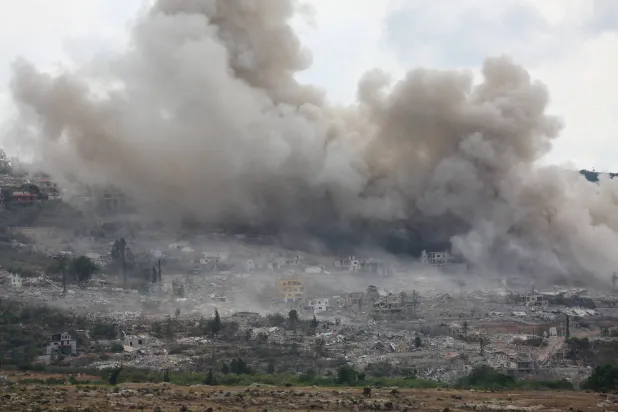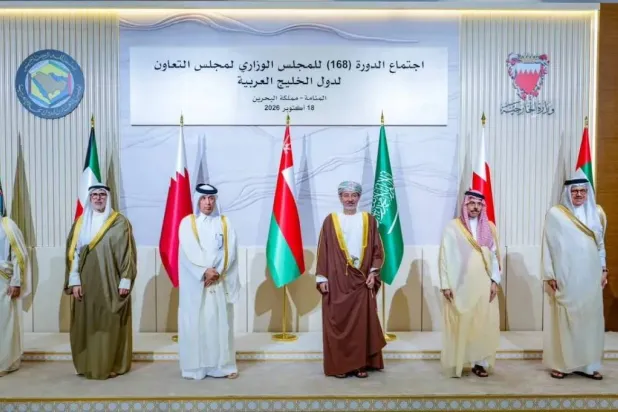
Foreign ministers of the Gulf Cooperation Council (GCC) called on Sunday for designating the Houthi group as a terrorist organization and halting the support that allows it to acquire missiles and drones. Meeting in Bahrain for the 168th GCC Ministerial Council, they demanded that Iran cease its aggression against regional countries and compensate for the resulting damages. The ministers stressed the need to involve Gulf states in any negotiations or arrangements affecting their security. Any understandings with Iran must encompass its nuclear and missile programs, as well as its drones and support for regional proxies, while expressing support for diplomatic efforts aimed at de-escalation, they added in a statement. They condemned the ongoing Houthi attacks against Saudi Arabia, including the targeting of the Two Holy Mosques, civilian airports, and vital installations, which resulted in civilian casualties. The council expressed its condolences to the families of the victims and wished the injured a speedy recovery. The council underscored the full solidarity of the Gulf states with Saudi Arabia and backed all measures it takes to protect its security and sovereignty. It stressed that any attack on a member state constitutes an attack on all council states under the Joint Defense Agreement, while emphasizing the council states' right to individual and collective self-defense under Article 51 of the United Nations Charter. The ministers welcomed the presidential statement by the UN Security Council on October 15, which condemned the Houthi attacks on Saudi Arabia, including the targeting of Aramco facilities, and stressed the Kingdom's right to self-defense. They also demanded the strict implementation of the arms embargo against the Houthis and expressed support for reaching a political solution to the Yemeni crisis in line with the three references. On Iran, the Ministerial Council held Tehran fully responsible for the attacks on the Gulf states and Jordan. It demanded accountability for those responsible and urged that Iran be compelled to repair the resulting damages in accordance with Human Rights Council Resolution 61/1 of 2026. The ministers stressed the importance of protecting navigation in the Strait of Hormuz, Red Sea, and Bab al-Mandeb Strait, warning against closing these waterways, obstructing navigation within them, targeting commercial vessels and their crews, or planting mines. They rejected the imposition of unlawful fees or restrictions on the transit of ships, as well as subjecting transit passage to prior permission or mandated routes. Furthermore, they demanded the restoration of freedom of navigation and the return of conditions in the Strait of Hormuz to what they were prior to February 28.