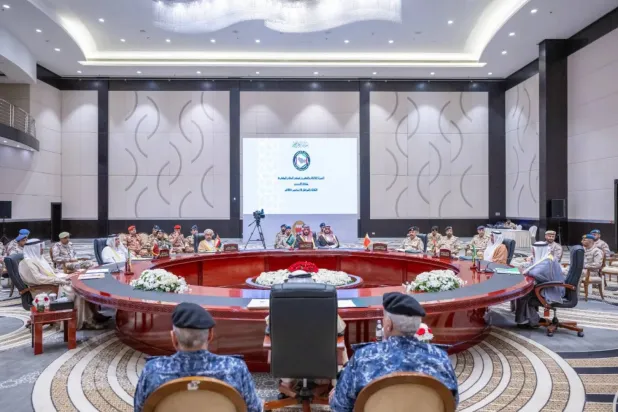
The Gulf Cooperation Council member states approved on Tuesday the establishment of an advanced headquarters for their Unified Military Command in Kuwait and the deployment of appropriate forces to it, the bloc's secretary-general said. The announcement followed the 23rd meeting of the GCC's Joint Defense Council, attended by defense ministers from the bloc's member states, in Bahrain. The meeting discussed ways to boost joint Gulf defense efforts in a manner that supports the security and stability of the member states and the region. Representing the Saudi delegation, Defense Minister Prince Khalid bin Salman praised the constructive outcomes of the meeting, which deepen Gulf defense integration and help in elevating coordination and readiness to confront various risks and challenges to ensure the security and stability of Gulf countries. GCC Secretary-General Jasem Albudaiwi said the decision to launch the advanced command falls within the framework of boosting joint Gulf military action. Saudi Defense Minister Prince Khalid bin Salman at the meeting Bahrain on Tuesday. (Saudi Defense Ministry) It implements the directives issued by the leaders of the GCC states during their extraordinary meeting in Jeddah in April, aimed at unifying efforts, raising readiness to confront joint threats and challenges, and safeguarding the security, sovereignty, and stability of the Council's member states, he added. He also praised the competence and sacrifices of the Gulf armed forces in countering Iranian attacks. He strongly condemned the treacherous attacks by Iran and the Houthi militia targeting civilian installations and holy sites in Saudi Arabia, stressing that the GCC countries stand united in full solidarity with the Kingdom to protect its security and stability, based on the principle of a shared Gulf destiny. The GCC established its Unified Military Command at a summit in Kuwait in December 2013 to plan and manage joint military operations and strengthen member states' defense capabilities against potential threats to their territory, airspace, waters and interests.