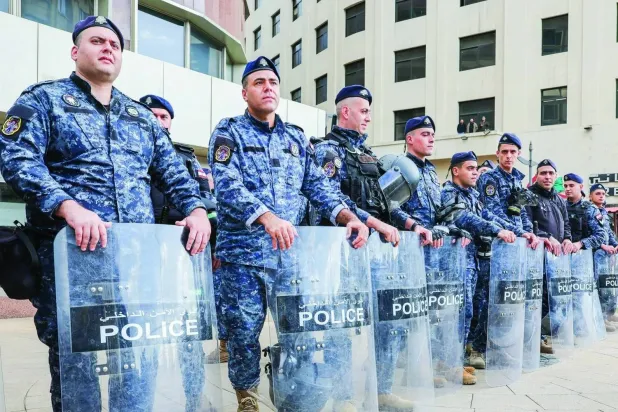
Concerns are mounting over lawlessness in Lebanon, from street robberies in Beirut to armed clashes in its southern suburbs and Baalbek in eastern Lebanon, as shortages of security personnel, vehicles and equipment limit patrols. The unrest comes amid political divisions over extending state authority and establishing its monopoly on arms. A security source acknowledged that "political and partisan protection enjoyed by some offenders is hampering law enforcement." Sporadic violence A Syrian national was killed near the Iranian embassy in Beirut's Bir Hassan area on Friday following a personal dispute. On Thursday, a clash involving automatic weapons between minibus drivers in Hay al-Sellom, in Beirut's southern suburbs, left people wounded. The incidents followed a confrontation between the Lebanese army and wanted suspects in Baalbek's Sharawneh neighborhood. The army said raids on Tuesday involved exchanges of gunfire with wanted suspects, resulting in six arrests and the seizure of weapons, ammunition and drugs. Two months ago, disputes in Beirut neighborhoods, particularly Aisha Bakkar and Bourj Abi Haidar, escalated into armed clashes, leaving people dead and wounded. Nighttime street robberies, locally known as "tashlih," have since heightened concern among the capital's residents. The incidents pose a growing challenge to the state and test its ability to enforce security and stability, particularly across Beirut, ahead of Christmas and New Year celebrations and amid reports of strong bookings at hotels, tourism establishments and on flights to the Lebanese capital. Dwindling resources A security source identified the declining capacity to deploy personnel as a key factor behind the deteriorating security situation. "Fewer security personnel, coupled with shortages of vehicles and equipment, have limited the ability of security forces to patrol as frequently as needed and cover several areas at once," the source told Asharq Al-Awsat. The shortages, the source added, have disrupted patrol schedules and slowed responses to reports of crime. Beirut's surveillance network has also suffered. The number of operational cameras has fallen from 4,000 to around 1,700, the source said, making it harder for investigators to track suspects after a crime. Interior and Municipalities Minister Ahmad al-Hajjar had urged Beirut Governor Marwan Abboud to expedite repairs to the surveillance network and street lighting as part of measures discussed with Defense Minister Michel Menassa to bolster security in the capital. In early November, al-Hajjar announced plans to step up deployments, patrols and investigative operations to combat robberies and pickpocketing. The Central Internal Security Council also discussed intensifying patrols and strengthening coordination among security agencies. Political protection Beyond resource shortages, the security source pointed to the political and partisan protection enjoyed by some offenders. "When that protection translates into intervention to dissuade security agencies from arresting a wanted suspect or pursuing a violation, law enforcement becomes contingent on the state's ability to enforce its decisions across all areas," the source said. Security enforcement thus intersects with the political dispute over extending state authority, leaving personnel on the ground to contend with disagreements over their powers to intervene and the scope of their pursuit of offenders, the source added. The source stressed that dwindling resources did not absolve security agencies of their responsibilities. The security plan launched by al-Hajjar about a month ago remains in effect, the source said, aimed at cracking down on violations, arresting wanted suspects and curbing attacks in Beirut and across other governorates. Securing the road from Rafic Hariri International Airport to downtown Beirut remains a priority to reassure expatriates and Arab and foreign tourists, the source added. "We attach particular importance to securing places of worship and tourist sites during Christmas and New Year celebrations. This was the focus of the Central Internal Security Council's latest meeting," the source said.