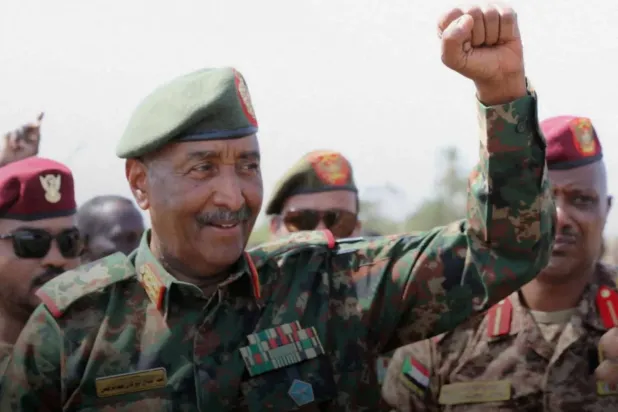
Ground fighting has eased on Sudan’s main fronts after army advances and a retreat by the Rapid Support Forces (RSF) in North Kordofan in recent days. Drone attacks have increased, while limited skirmishes continue on several fronts. Witnesses and field sources said the lull followed heavy fighting that significantly changed the areas held by each side in North Kordofan. The army captured several towns, strengthened its hold on Bara and the surrounding area, and secured the export road. It also opened a supply route from Omdurman through White Nile and North Kordofan states to El Obeid. The RSF withdrew to the north and northwest. The sources said the army’s advance west of El Obeid stopped abruptly when its forces reached Umm Sumaymah. A counterattack forced them back toward the outskirts of El Obeid. No further major attempt to advance has been reported on that front. Activists said the army also pulled back from around Sodari and Mazrub after extending its defensive lines through several nearby towns. The RSF returned to the strategic town of Mazrub, which it had left during the army’s wider offensive. In Blue Nile state, the army held its positions. Pro-army sources said its forces repelled RSF attacks and inflicted casualties and equipment losses, preventing the RSF from making further gains. The RSF and its allies still control Kurmuk and Geissan. Direct ground fighting there has also eased in recent days, though both sides have continued attacks with drones and artillery. Drone warfare The army said on Thursday that its air defenses had shot down a long-range FH-95 drone it described as hostile. The announcement came days after intensive drone attacks on military sites in El Obeid. North Kordofan residents said the RSF had stepped up drone attacks on government-held cities in the state, disrupting daily life and deepening their sense of insecurity. Reuters recorded footage of the aftermath of major attacks this month on two cities along the front line. Residents described them as part of a new wave of strikes, following weeks in which the RSF appeared to have reduced its drone use under international pressure. Drone use has increased sharply during Sudan’s three-and-a-half-year war. Both the army and the RSF use technology that has become central to other conflicts, including the war in Ukraine. The United Nations says drone attacks by both sides killed more than 1,000 civilians in the first half of this year. The toll highlights the growing cost to civilians as such attacks spread beyond traditional front lines. On September 8, a drone struck a crowded courtroom in the government-held city of Umm Rawaba. The city is in North Kordofan, a central Sudanese state that has become one of the war’s main fronts. Emergency Lawyers, which describes itself as an independent volunteer professional group defending rights, said about 10 people were killed and dozens wounded. The courthouse was extensively damaged, with columns from its facade and debris from one of the city’s prominent buildings strewn around the site. A day later, a drone struck the College of Development and Technological Sciences in El Obeid, the capital of North Kordofan. The strike destroyed its roof and extensively damaged its buildings. Standing amid the wreckage as workers cleared debris, the college’s dean, Abdelaziz al-Sheikh, said a security guard had been killed and eight lecture halls badly damaged. “We lost the college guard. Eight halls were targeted and completely destroyed,” he said. Other parts of the college had also sustained extensive damage, he added. Omnia Abulgasim, a student who had taken an exam at the college the day before the attack, stood beside the rubble. “The whole college was destroyed. We feel our dreams and our future have been destroyed,” she said. At a hospital in Umm Rawaba, Salah Bakhit said his arm had been crushed and his body struck by shrapnel in the courthouse attack. He had fled El Obeid for safety after months of drone attacks on the city earlier this year, as the RSF sought to increase pressure on it. As ground fighting eases on several fronts, drones are playing a growing role in attacks on military positions, as well as on cities and civilian facilities relatively far from the fighting. Residents and vital infrastructure are bearing an increasing share of the war’s cost.