Students, school pupils, teachers and public-sector employees in Greece are preparing to take to the streets on Wednesday to protest the rising cost of living, pointing to similarities with the situation in France.
Rallies are expected to take place at noon in Athens and Thessaloniki, the country's second-largest city, as students and teachers voice their frustration over difficult economic and educational conditions.
Providing free public education, as emphasized by Katia Koupousidou, a representative of philosophy and education students at Aristotle University.
Continuing protests as part of an organized plan to address the current situation.
Protesting rising housing costs, which are placing a heavy burden on students.
Increasing public spending on education to address staff shortages and inadequate infrastructure.
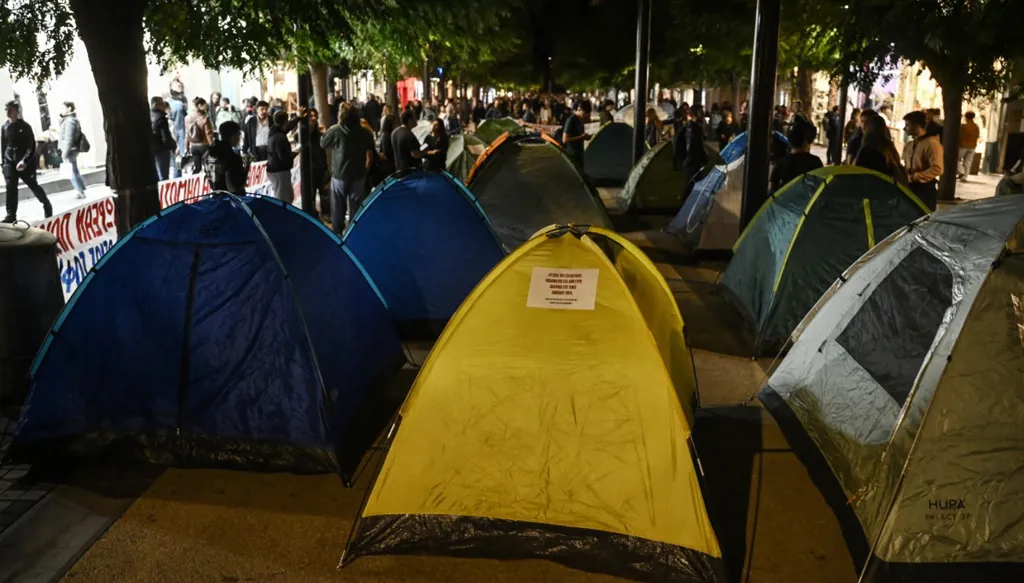
Agence France-Presse reported on Tuesday evening that dozens of students had set up tents outside Parliament in Syntagma Square in Athens, as well as on a pedestrian street in Thessaloniki, in what marked the second protest of its kind in a week.
The public-sector employees' union ADEDY called for a work stoppage beginning at 11:00 a.m. local time (08:00 GMT) and urged members to join a rally in Athens, carrying banners expressing solidarity between Greece and France in confronting economic and educational challenges.
Despite an increase in the minimum wage, take-home pay remains no higher than €920, leaving many people in a difficult financial situation.
Severe shortages of teaching staff persist, with schools facing a shortfall of around 15,000 teachers, according to the secondary school teachers' federation.
Education accounted for just 3.3% of gross domestic product in 2023, compared with the European Union average of 4.7%.
Greece's conservative government has sought to avoid any comparisons with the protests and acts of violence in France. Prime Minister Kyriakos Mitsotakis has stressed that Greece will never return to the era of major social unrest that the country experienced during the financial crisis, when austerity measures inflicted severe hardship on the population.