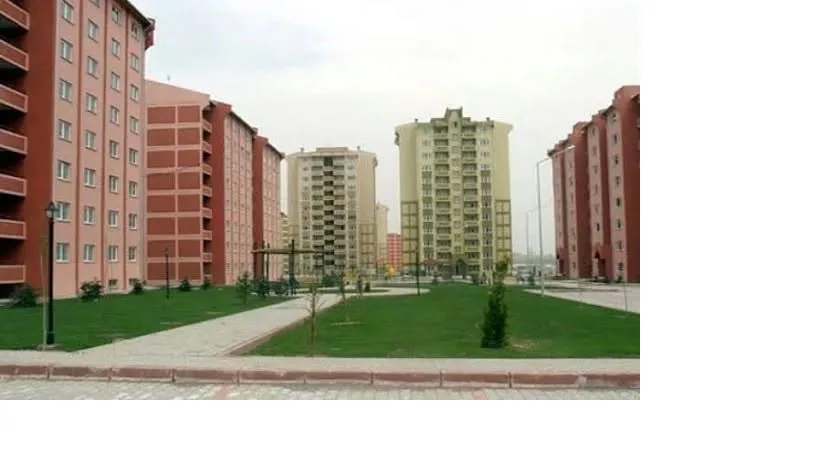
The government has launched a national housing programme for the construction of approximately a million residential units over four years.
It has officially finalised a package of public-private partnership (PPP) agreements to significantly accelerate affordable home construction.
Prime Minister Mostafa Madbouly attended the signing of a series of agreements between the government and private property developers last week to build around 20,000 affordable housing units in eight new cities under the presidential “Housing for All Egyptians” initiative.
The move came in response to directives by President Abdel Fattah El-Sisi during “Egypt Forum 2026” to expand private-sector participation in providing housing for middle and low-income families.
The comprehensive social safety nets encompassing housing support, food subsidies, healthcare, education, and social pensions remain a top government priority, with expanding state budget allocations pledged over the next four years to protect low- and middle-income households.
The agreements bring together the New Urban Communities Authority, the Social Housing and Mortgage Finance Fund (SHMFF) and several private property developers.
Under the partnership model, 80 per cent of each project will be allocated to housing units offered to eligible citizens at affordable prices and under conditions set by the fund.
The remaining 20 per cent will be allocated to residential or commercial units at market prices, allowing developers to generate returns and maintain the financial viability of their projects.
Developers will also receive land at preferential prices to reduce construction costs and encourage further private-sector investment in affordable housing.
Following the signing of the agreements, Housing Minister Randa el-Menshawy said the new step is aimed at expanding private sector involvement in development projects while ensuring a sustainable supply of affordable homes.
The partnership model clearly defined the responsibilities of government bodies and private developers, combining the programme’s social objectives with the private sector’s expertise and efficiency.
SHMFF Chief Executive Mai Abdel Hamid said 104 property developers had submitted 137 applications for 17 land plots offered during the programme’s first phase.
Eligible homebuyers will have access to mortgage financing at a declining interest rate of 8 per cent, with repayment periods of up to 20 years.
The initiative forms part of broader efforts to improve access to housing finance for low-income households.
Abdel Hamid described the project as a “new step” towards expanding private sector participation in providing affordable housing for citizens.
In her recent press remarks to local media, Abdel Hamid added that the 20,000-unit project was the first in a series of planned housing developments to be implemented in partnership with the private sector.
Abdel Hamid stressed that the government was providing various forms of support to make housing more affordable. These include mortgage financing, direct cash subsidies, in addition to the provision of land, utilities and essential services in new cities.
Abdel Hamid stressed that beneficiaries of the new housing projects would also receive an ownership share in the land on which their buildings are constructed, in accordance to the applicable regulations.
These measures, she added, aimed to help citizens secure suitable homes while supporting the country’s urban development plans and improving living standards and quality of life.
Private sector partnerships are a key component of the inclusive housing finance programme supported by the World Bank (WB).
Since 2015, the WB has supported Egypt’s national housing programme through its $1 billion Inclusive Housing Finance Programme-for-Results (PforR).
To date, the programme has supported the delivery of over 420,000 subsidies to low-income households. More than half of the programme’s beneficiaries are below the age of 45, and one in five are women.
The state had implemented or was completing around 2 million housing units over the past few years.
Most fall under social housing, while others target middle-income households through projects, such as Sakan Misr, Dar Misr, and Jannah.
These projects aim to enable citizens to own homes through affordable payment plans extending to around 20 years, at prices that are not available in the private real estate market.
The number of housing units completed or under construction for low-income citizens under the “Housing for All Egyptians” presidential initiative has reached approximately 1.21 million units, according to recent official government reports.
Since President Sisi took office in 2014, Egypt has pursued housing programmes targeting different income groups, alongside initiatives to redevelop unsafe areas and establish new urban communities.
The ‘Housing for All Egyptians’ initiative is a central component of the government’s affordable housing policy. The programme provides eligible low-income households with subsidised housing and access to mortgage financing.
Successive offerings have expanded the availability of homes in new cities and other locations, allowing beneficiaries to purchase units through payment arrangements designed to make homeownership more accessible.
Sakan Misr targets middle-income households through apartments in new urban communities, positioning it between subsidised housing for lower-income groups and more expensive residential developments.
Dar Misr is another government-backed programme targeting middle-income buyers, providing apartments in new cities through government-administered allocations and payment arrangements.
Jannah offers residential units generally positioned towards higher-income segments than conventional social housing.
The government has also pursued ‘Beit Al Watan’, a programme offering residential land in new cities to Egyptians living abroad. Unlike apartment-based social housing schemes, it focuses on residential plots that buyers can develop subject to planning and construction requirements.
Together, these programmes reflect the state’s approach of offering different residential products to households with varying purchasing capacities, although affordability and payment terms differ significantly across schemes.
The national housing policy has also included relocating residents from unsafe settlements and improving living conditions in informal urban areas.
Projects, such as Al-Asmarat in Cairo and Bashayer Al-Kheir in Alexandria have provided alternative accommodation for residents affected by unsafe or inadequate housing. The redevelopment of the Maspero Triangle in central Cairo has also involved relocating residents and providing alternative housing arrangements.
These initiatives differ from conventional housing allocations because their primary purpose is to replace unsafe accommodation and improve living conditions.
The government has simultaneously expanded new urban communities, including the New Capital, New Cairo, 6th of October City and New Alamein, supported by investments in roads, utilities and public infrastructure.
Egypt’s long-term development plan through 2052 included 39 new cities, of which 27 had been completed or were under development, while an estimated 14 million to 15 million people lived in new cities.
The expansion of urban communities has created locations for social housing, middle-income apartments and higher-priced residential developments.
The post Gov’t teams up with developers for 20,000 new flats appeared first on Egyptian Gazette.