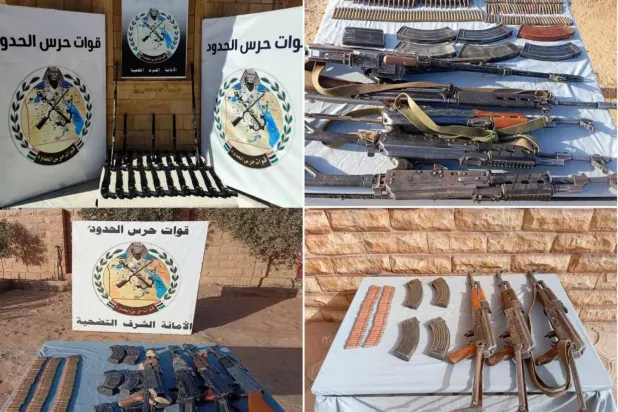
Egypt’s military rolled out a three-phase crackdown on illegal gold mining along the Sudanese border between June and October as the practice spread, before reports emerged from Sudan of a bombardment that killed and wounded miners in the border area. Egyptian military and strategic affairs experts told Asharq Al-Awsat that the prospectors, known locally as “dahaba,” threaten stability and national security, leaving authorities no alternative but to confront them. That, they said, has driven the military’s campaigns since June. They expected tougher measures against border violations, warning that illegal gold mining sites could become “support hubs for terrorist groups.” Videos released by Egypt’s military spokesman since the launch of the “Southern Shield” campaign said illegal gold mining “is no longer merely an encroachment on the state’s resources, but has become an organized criminal activity that threatens national security and fuels arms, drug and human trafficking.” One video described the south as part of a mineral-rich belt where legal mining is expanding. “However, criminal networks have exploited the rugged mountainous terrain to establish illegal mining sites using heavy equipment, four-wheel-drive vehicles and advanced communications devices.” The military spokesman said the groups “include armed Egyptian and foreign elements, some of whom have attacked military and police forces and targeted legally operating mining companies, necessitating a broad security campaign based on precise intelligence to dismantle these sites and eliminate sources of threat.” Illegal mining Sudan’s Transitional Sovereignty Council said it had formed a fact-finding committee to investigate “the incident involving a number of Sudanese miners in the border area between Egypt and Sudan.” The committee includes representatives from the public prosecution service and judicial and security bodies, the council said in an official statement on Monday. Its task is “to investigate the circumstances of the incident and establish all related facts.” In Egypt, military spokesman Colonel Ahmed Atman said on Monday that military and civilian police law enforcement units were pressing ahead with the campaign’s third phase against illegal gold mining in the Eastern Desert. The operation followed the dropping of warning leaflets to criminal elements and aimed “to enforce full sovereignty within Egypt’s borders and protect its national assets and resources,” he said. The first phase took place in June. That month, the military said it detected 58 instances of unauthorized gold prospecting and seized 20 metal detectors, 118 power generators and 86 metric tons of rock containing gold ore. Protecting territorial borders is vital to safeguarding the state’s standing and stability, Egyptian strategic affairs expert Major General Samir Farag told Asharq Al-Awsat. Sudan’s instability undermines conditions along the border and efforts to secure it, he said, allowing gangs to infiltrate Egyptian territory to smuggle weapons and drugs and mine gold illegally. That, he said, “prompts Egypt to protect its borders, nothing more.” “The dahaba are trained gangs that pose grave risks to Egyptian national security and create pockets of threat in the south of the country, opening the door to wider threats,” Farag said. Authorities are reinforcing border guard posts and stepping up mounted and mobile patrols, using modern vehicles and satellite communications to prevent any unauthorized presence on Egyptian soil, he added. National security Egyptian military and strategic affairs expert Major General Osama Kabir said illegal gold prospectors pose two main threats to national security. “The first is the security threat to the borders, because they breach them, bring in unauthorized workers and possess weapons,” he said. The campaign, he added, is confronting border intruders first and illegal gold prospectors second. “This illegal activity goes beyond gold mining and is linked to extensive smuggling and infiltration networks, including irregular migration, human trafficking syndicates, and the smuggling of drugs, weapons and ammunition that help spread crime and terrorism within the country,” Kabir told Asharq Al-Awsat. The second threat is economic, he said. “The country’s assets, mineral wealth, soil, ores, gold and antiquities — everything that forms part of the foundations of the state’s economy — are threatened, particularly by gold theft and the depletion and smuggling of mineral resources. Security and military campaigns therefore uphold the law.” Farag said the armed forces and security agencies strictly follow legal rules during the campaigns. They act decisively, in line with official procedures and prescribed warnings, against attempts to breach the border or flee after smuggling and sabotage offenses, he said. Kabir said the military and police coordinate fully, enforcing the law through professional, carefully organized plans. He expected the campaigns to continue to protect the country’s territorial, geographic and political borders, with firm action against offenders under the law. That approach, he said, also takes humanitarian considerations into account: reviewing detainees’ cases to deport those uninvolved and taking stringent judicial action against those actively involved in sabotage and smuggling.