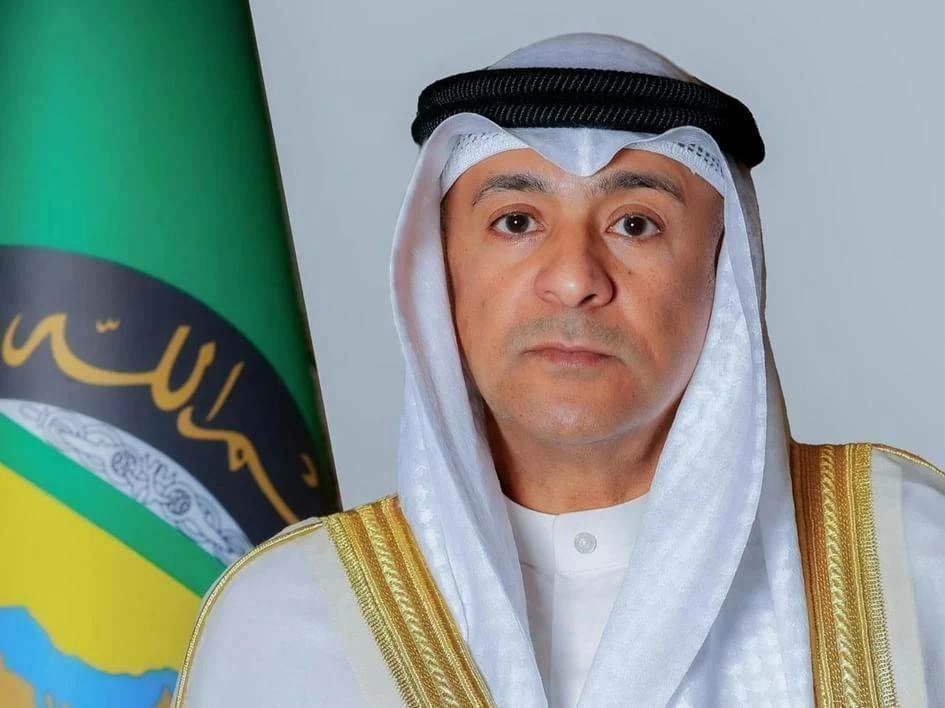
New York: Jasem Mohamed Albudaiwi, Secretary-General of the Gulf Cooperation Council (GCC), has reaffirmed the GCC states' rejection of any infringement on their security, sovereignty or territorial integrity, stressing that attacks against them violate international law, threaten international peace and security, and require Security Council action to halt them in accordance with its resolutions and prevent their recurrence.
Briefing the United Nations Security Council in New York on Friday, Albudaiwi said GCC states had been targeted by more than 7,000 missiles and drones since 28th February 2026, striking vital installations and civilian facilities, causing deaths and leaving people wounded, and inflicting extensive damage on infrastructure and the marine environment.
He called for follow-up on the implementation of relevant Security Council resolutions, enforcement of the arms embargo, accountability for those responsible for the attacks and compensation for the resulting damage. He also condemned violations against UN personnel and humanitarian workers, reaffirming support for efforts to reach a comprehensive political solution based on the three references.
Albudaiwi warned that the repercussions of the attacks and threats had extended to international maritime routes, condemning attacks on commercial vessels and oil and gas tankers in the Strait of Hormuz, the Red Sea and the Bab Al Mandab Strait.
He rejected any attempt to close these waterways or obstruct navigation, warning that disruptions had gone beyond economic consequences to create a serious humanitarian threat by affecting global supply chains.
The GCC Secretary-General reiterated the Council's long-standing position on the Palestinian cause and its support for an independent Palestinian state along the borders of 4th June 1967, with East Jerusalem as its capital.
He also reaffirmed support for Lebanon's sovereignty and the extension of state authority across its entire territory in accordance with UN Security Council Resolution 1701, as well as Syria's sovereignty, unity and stability.
Albudaiwi stressed the GCC states' commitment to resolving crises through dialogue and diplomacy and building relations based on respect for sovereignty, good neighbourliness and non-interference in internal affairs.
He emphasised that any understandings must address the security concerns of GCC states and ensure their participation in negotiations affecting their security and interests.
Concluding his briefing, Albudaiwi called on the Security Council and the international community for an immediate and unconditional cessation of attacks against GCC states and commercial vessels.
He reaffirmed that GCC states, under the directives of their leaders, would continue supporting mediation and peace efforts, stressing that the security of the Arabian Gulf is an integral part of international security.