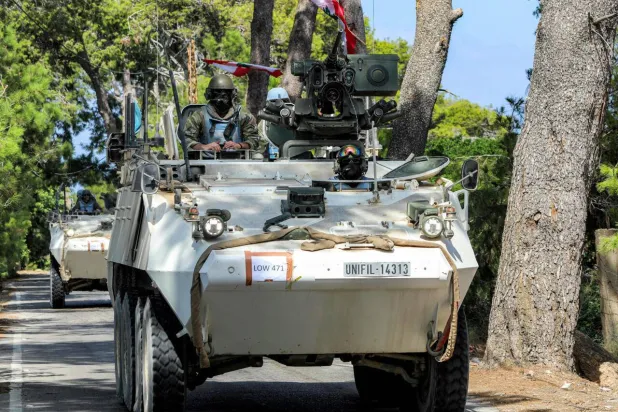
G7 foreign ministers agreed on "the need to avoid a security void" in Lebanon after UN peacekeepers pull out, French Foreign Minister Jean-Noel Barrot said on Tuesday after a meeting of the group in Paris. They also backed "the need to move quickly toward a new security architecture" after the mandate of United Nations peacekeeping forces in Israel's neighbor expires at the end of the year, he said. But Barrot acknowledged there had been no breakthrough on what should replace the United Nations Interim Force in Lebanon (UNIFIL), which has been in place since 1978 and now counts some 7,500 personnel from nearly 50 countries. Under US pressure, the UN Security Council voted last year to end UNIFIL's mandate on December 31, 2026. EU foreign policy chief Kaja Kallas told AFP in October that the bloc favored a UN peacekeeping mandate in south Lebanon. Lebanese group Hezbollah drew the country into the broader Middle East war by attacking Israel, which responded with massive airstrikes and a ground invasion that Lebanon says have killed more than 4,300 people. "I am hopeful that we will reach a consensus," said Barrot. "The objective is widely shared: the withdrawal of Israel (from southern Lebanon), the disarmament of Hezbollah (which is pro-Iranian), and the restoration of a strong state that holds a monopoly on the use of arms -- a state capable of ensuring the security and prosperity of all the populations and all the communities in Lebanon." Israel now maintains troops in a self-declared occupied "security zone" running around 10 kilometers (six miles) inside Lebanon along the border. "We underscored the need for a robust, credible, and long-lasting security architecture in Lebanon in support of the Lebanese Armed Forces," the ministers said in their final communique. US Secretary of State Marco Rubio said on Monday that he had discussed the issue with President Emmanuel Macron and suggested that what replaces UNIFIL "doesn't have to be a military mission, it could be a civilian mission." "We need a verification system trusted by everyone and trusted by both sides that both sides are complying with their obligations under the agreements that are in place," Rubio said. A transitional mechanism utilizing UNIFIL forces is among the options on the table, a European diplomat said, asking not to be named. But this could require a UN Security Council resolution and thus run into an American veto, the diplomat warned. The Europeans are also pushing a proposal for an international military coalition tasked with supporting the Lebanese Armed Forces in their mission to disarm Hezbollah. However, the formation of such a coalition faces hesitation from Italy, which "remains strongly committed to its presence in Lebanon but appears reluctant to join an ad hoc coalition", partly due to cost concerns, as such missions are not funded by the UN, diplomats said.