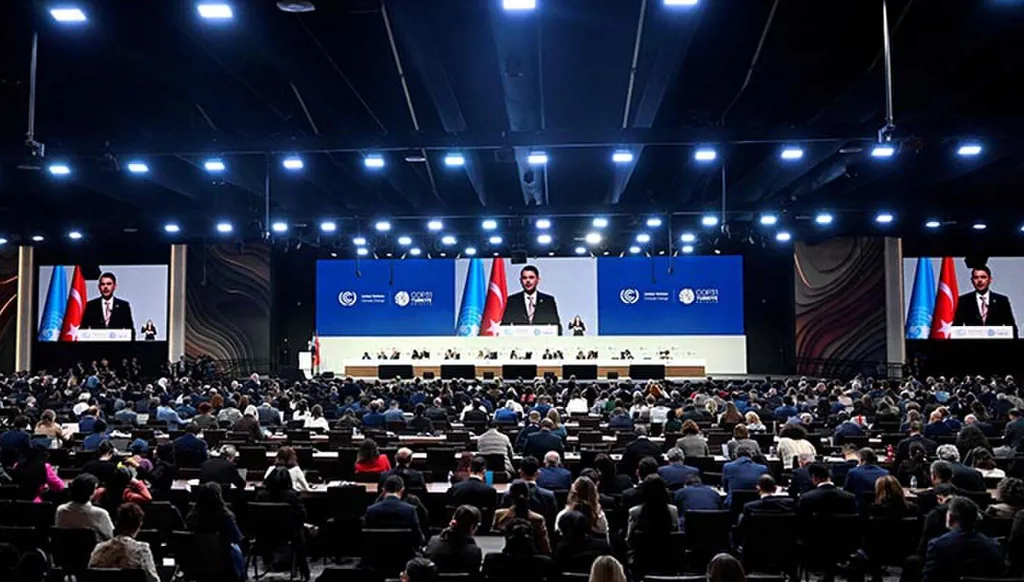
ANTALYA: After the leaders' summit at COP31 set the political ambitions, the focus shifts today, Monday, November 16, to the negotiation halls, where delegates' ability to turn speeches into decisions will be put to the test. The first week is dedicated to technical work, while unresolved issues requiring political compromises move into the second week of negotiations.
So how does the negotiation process work, who takes part, and how do the results make their way to the final session?
Participants do not all gather around a single table to draft a comprehensive agreement at once.
Agenda items are divided among contact groups and informal consultations, managed by chairs or facilitators.
Delegations present their proposals.
Draft texts are discussed line by line.
Disputed phrases are placed in square brackets, or alternative formulations are inserted.
Choosing a word such as "urges" or "requests" can take hours, as the wording determines the strength of the message and the responsibility expected.
Facilitators work to bridge differences, while political deadlocks are referred to ministers and negotiation leaders in search of compromises.
At COP31, Turkey chairs the conference, and Australian Chris Bowen leads the negotiations. However, the adoption of outcomes remains in the hands of the parties, as the chairmanship cannot impose an agreement on them.
Accredited government representatives, including diplomats, climate, energy, and finance officials, as well as legal and technical experts. Ministers join political deliberations to resolve major disputes.
Countries coordinate their positions within negotiating blocs, such as the Group of 77 and China, the European Union, the African Group, the Alliance of Small Island States, and the Least Developed Countries group.
These alliances help countries with smaller delegations defend their interests.
International organizations, researchers, environmental associations, business representatives, youth, and Indigenous peoples participate as observers, subject to attendance rules. They contribute expertise, proposals, and pressure, but have no authority to adopt decisions.
Some consultations are closed to observers.
The Climate Convention Secretariat provides organizational and technical support throughout the process.
Negotiations do not conclude with a list of recommendations, but with draft decisions and conclusions whose content has been negotiated by the parties.
Working groups submit their texts to the relevant body, and subsidiary bodies may recommend forwarding them to the Conference of the Parties or the Meeting of the Parties to the Paris Agreement for adoption.
Final drafts are circulated as official documents and presented at plenary sessions, where substantive decisions are adopted by consensus.
If disagreements persist, consultations may continue, or the issue may be deferred to a later session.
Success is measured by the substance of the text, the clarity of responsibilities, timelines, and follow-up mechanisms.