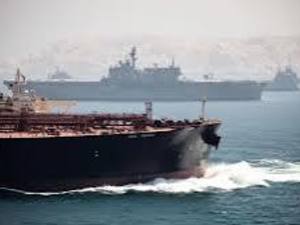
As tensions escalate from the Strait of Hormuz to the Red Sea, maritime corridors are emerging as decisive arenas where regional rivalries intersect with global economic stability.
The Iranian-American-Israeli war, along with its consequences, the mutual military escalation, and the threats to close the Strait of Hormuz, has reinforced the belief that the ongoing conflict is no longer merely about resetting the balance of deterrence among the parties involved. It has become a test of the very nature of the regional system itself and its ability to preserve a minimum level of stability amid intensifying competition over influence, energy resources, and maritime routes.
The importance of this dimension has become particularly evident with the resurgence of threats to use strategic routes as a mutual pressure card, whether through threats to close the Strait of Hormuz or through disruptions to navigation in the Red Sea due to the war in Gaza and Houthi operations against commercial shipping. In both cases, it has become clear that the security of maritime routes is no longer merely an economic or commercial issue, but rather a major factor in deterrence equations and in reshaping regional balances. The Strait of Hormuz remains a vital artery for global energy flows, and any threat to its stability has a direct impact on the international economy and oil markets.
Conversely, the Red Sea crisis has revealed the parallel importance of the Suez Canal as one of the world’s most significant strategic corridors, particularly after a decline in transit rates and rising shipping and insurance costs due to regional escalation. However, the fundamental difference between the two cases lies in crisis management. While the Strait of Hormuz was used within a framework of mutual pressure and deterrence, Egypt addressed the repercussions of the Red Sea crisis through a “stability management” approach, combining the maintenance of maritime security, the continued efficient operation of the Suez Canal, and political and diplomatic engagement to prevent the scope of confrontation from widening.
This comparison reveals an extremely important strategic dimension: Egypt views the security of maritime routes as part of a comprehensive concept of regional security, rather than merely as a tool for conflict or political pressure. Since the onset of the crisis, Cairo has recognized that threats to international trade and energy routes open the door to reshaping the security environment in the Middle East, potentially leading to an expanded external military presence and a weakening of the ability of Arab regional powers to manage their own balances.
In this context, Egypt’s performance during the crisis acquired strategic significance beyond the management of a temporary event, as Cairo demonstrated a clear understanding of the transitional phase the region is experiencing. Traditional stability patterns are giving way to a state of strategic fluidity, where security, energy, the economy, and international alliances are increasingly intertwined.
Thereafter, Egypt’s stance was based on preventing the region from sliding into sharp polarization or open conflict that would reproduce chronic patterns of instability. The crisis also reflected the limits of non-Arab regional powers’ ability to produce a stable regional order.
Iran, despite possessing extensive military and security pressure tools, was unable to convert escalation into a sustainable stability equation, while Israel showed an increasing tendency to use the turbulent environment to reshape regional security arrangements in line with its strategic interests. In both cases, the growing reliance on hard power has raised regional and international anxiety levels without producing real solutions to existing crises.
In contrast, Egypt emerged as the regional actor capable of adopting a “strategic balance” approach, based on a set of integrated determinants: Egypt’s geographic location grants Cairo an exceptional ability to connect the Gulf, Red Sea, and Eastern Mediterranean security spheres, while its control of the Suez Canal places it at the heart of international trade and energy equations.
Additionally, Cairo maintains balanced relations with international and regional powers, granting it a wider margin of maneuver compared to many other actors. This understanding has strengthened regional and international confidence in Egypt’s role during the crisis, with Cairo regarded as one of the pillars of collective Arab security, while major powers recognize that the stability of maritime routes in the region cannot be ensured without an active Egyptian role. Egypt’s balanced position, by distancing itself from adventurous or “polarizing” policies, has enhanced its political credibility as a “stabilizing force” rather than a “conflict-driving force.”
At a broader level, the current crisis reflects the transformation of the Middle East into an arena for the reshaping of international and regional power balances, with the decline of traditional deterrence patterns and the growing importance of controlling maritime routes and supply chains. In such turbulent environments, there is an increased need for regional powers with the capacity to manage rather than ignite balances, and to contain rather than expand crises.