France plans to deploy 70,000 police officers to contain a widely anticipated new wave of unrest on Saturday, as anger over the rising cost of living, public services and President Emmanuel Macron's government fuels the latest round of protests.
The demonstrations across the country, coinciding with Halloween celebrations, come two weeks after riots and looting caught security forces off guard, causing damage to shops, public buildings and businesses in cities across France. Interior Minister Laurent Nunez has vowed to prevent a repeat of those events.
At a press conference last week, where he announced security arrangements for a day he described as having a "very high likelihood" of disturbances, Nunez said: "Everyone is on high alert to ensure a very firm response to any acts of rioting."
Authorities are also preparing for the possibility that rioters could use Halloween masks to conceal their identities. Nunez noted that existing laws allow police to ban face coverings when public order is at risk.
The U.S. Embassy has advised travelers to avoid areas expected to host demonstrations or large gatherings.
Protests gathered pace in late September as the government began discussions on the 2027 budget. Authorities are under pressure to curb spending amid public debt approaching 120 percent of economic output and rising borrowing costs, leaving the government with limited room to maneuver.
Angry students, dissatisfied with conditions in many schools, overcrowded classrooms and a university admissions system widely considered unfair, have been joined by labor unions and the "Yellow Vests" movement, which has re-emerged to demand action on the cost of living.
The demonstrations have inspired youth-led protests across Europe, with rallies scheduled in more than 30 German cities on Saturday.
French government promises to reform education and reduce fuel costs have failed to ease public discontent.
Aaron Bertier de Grandrie, a 15-year-old high school student from the Paris suburb of Nogent-sur-Marne, plans to take part in protests for the third consecutive weekend.
"When I was young, I was told youth are the future," he said.
He added: "Well, if we, the future of France, lack resources, it means France will ultimately collapse."
The unrest has provided a political boost to far-right leader Marine Le Pen, who is leading the polls ahead of the presidential elections scheduled for April, while potential centrist successors to Macron remain divided.
The unrest marks another blow to an economy that data showed was already contracting in the third quarter.
The Chamber of Commerce estimates that retailers have suffered losses exceeding one billion euros ($1.1 billion). Other estimates put total losses at twice that amount when uninsured damage and lost revenue are taken into account.
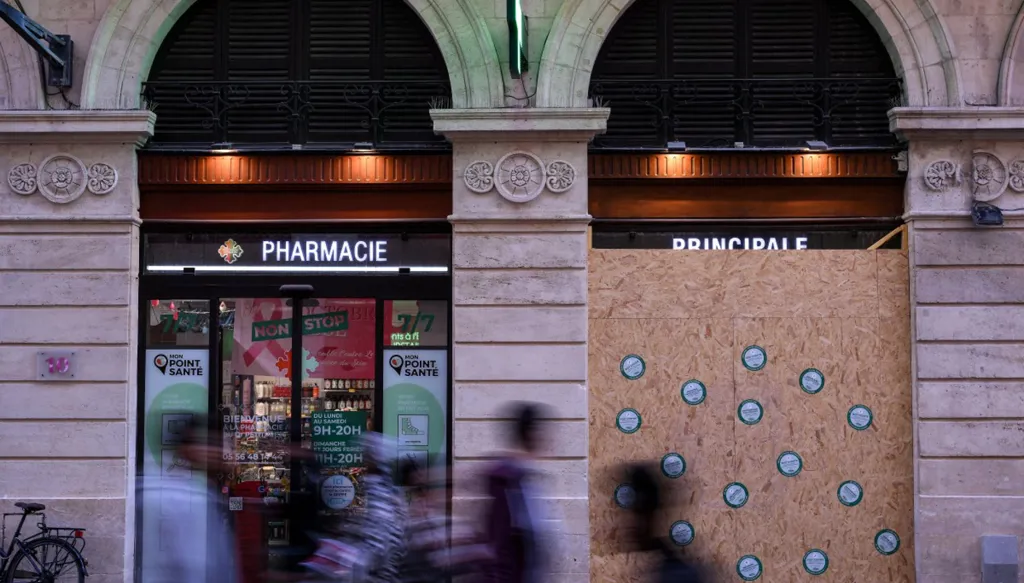
Along Paris's main shopping streets, early Christmas decorations illuminate the area around boarded-up windows and security barriers. Stores targeted during previous unrest included outlets belonging to luxury brands such as Hermes, Louis Vuitton and Burberry.
The government is moving ahead with controversial legislation that would make rioters liable to pay up to 10,000 euros ($11,000) in compensation for damage they cause themselves or damage caused by groups they are deemed to belong to.
Human rights groups and some lawyers argue that the measure risks undermining the right to peaceful protest.