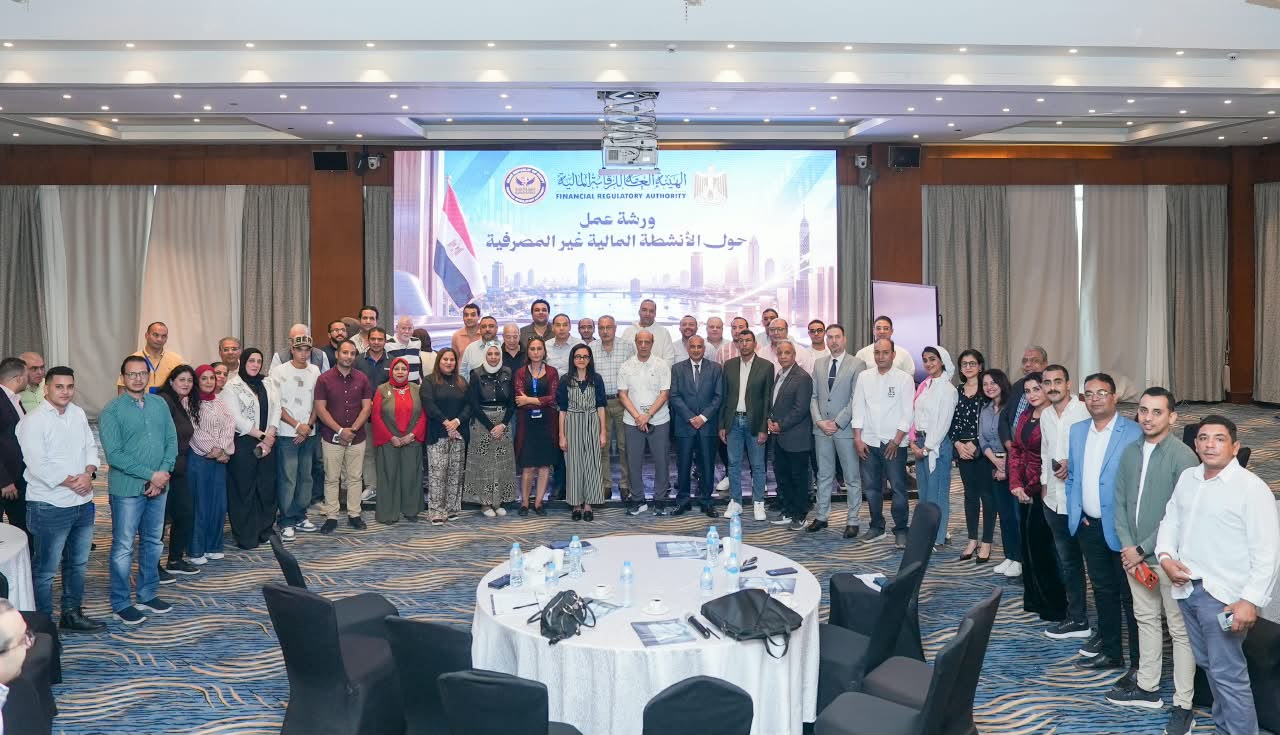
The Financial Regulatory Authority (FRA) organised a workshop for economic journalists and media professionals to highlight the latest developments in non-banking financial activities and review recent market trends and statistics across capital markets, insurance and non-banking finance, as part of its ongoing efforts to strengthen communication with the media.
FRA Chairperson Islam Azzam stressed the importance of the partnership between the authority and media organisations in raising awareness of developments in the activities under its supervision, mechanisms for protecting market participants and policies aimed at combating harmful practices.
He also highlighted the media’s role in informing the public about safe investment options regulated by the FRA and presenting accurate figures and data in their proper context, free from misinformation and rumours. Such efforts, he said, would help maximise the contribution of the non-banking financial sector to the national economy.
Azzam emphasised the importance and sensitivity of the media’s role in an era characterised by the rapid circulation of information and the spread of rumours on social media. This requires greater attention to fact-checking and consulting original sources, particularly when reporting on economic activities.
He thanked journalists and media professionals for their efforts to strengthen communication between the FRA and market participants.
The workshop opened with an interactive presentation by Azzam on short selling, or the borrowing of securities for sale, which is expected to be introduced on the Egyptian Exchange (EGX) within the next few weeks.
He outlined the mechanism’s operational details under the new regulatory framework established by FRA Board Decision No. 155 of 2026.
Azzam explained the differences between the new framework and previous regulations, as well as how the authority had sought to overcome the obstacles that had prevented the introduction of short selling in Egypt for many years.
He reviewed the rights and obligations of all parties under the new centralised securities lending system developed and operated by Misr for Central Clearing, Depository and Registry (MCDR).
He also outlined new safeguards designed to encourage competition and incentivise lenders, particularly mechanisms for monitoring securities lending offers and ensuring transparency for both lenders and borrowers.
The presentation covered the responsibilities of each party, particularly brokerage firms, MCDR’s role in investing proceeds, procedures for closing open positions and the potential returns available to participants depending on market conditions and investor expectations.
Azzam answered participants’ questions in detail, highlighting the anticipated benefits of short selling, including improved pricing efficiency and greater market balance and stability when used alongside margin trading.
He also pointed to its potential to attract new categories of investors, particularly following the introduction of regulations governing hedge funds, which are exempt from the borrowing limits imposed on other investment funds.
These funds can invest in equities, debt instruments, derivatives, short selling and other highly traded securities and financial instruments.
A regulated and reliable market under comprehensive supervision
During the workshop’s second session, FRA Vice-Chairperson Mohamed El-Sayyad delivered a detailed presentation on the supervisory procedures and regulatory controls applied by the authority in carrying out its responsibilities under the Constitution and the law.
He guided participants through the regulatory process, from company incorporation and licensing to the licensing and registration of professionals, corporate governance oversight, financial reporting and the role of the complaints department.
He also highlighted the FRA’s success in introducing new investment instruments that have generated positive indicators for the Egyptian economy.
El-Sayyad explained the authority’s role in facilitating recent listings and offerings on the EGX, reviewing fair value assessments and exercising its powers to approve share issuances, capital increases and related disclosure reports.
He also discussed the examination of information memoranda, subscription prospectuses, tender offers and public offerings, as well as disclosure reports prepared under Article 48 of the EGX Listing Rules and applications concerning existing shareholders’ subscription rights.
These procedures, he said, help protect investors’ and shareholders’ rights while reducing the risks associated with unjustified overvaluation or undervaluation of companies and assets.
Expanding insurance protection for individuals and businesses
The third session focused on the insurance sector, with FRA Vice-Chairperson Tarek Seif reviewing developments since the enactment of Unified Insurance Law No. 155 of 2024.
He outlined the authority’s efforts to issue supplementary regulatory decisions to implement the law, improve sector performance and advance insurance inclusion, ensuring that insurance services reach all Egyptians, particularly groups with limited access to traditional protection products.
Seif stressed the importance of ensuring that insurance products keep pace with citizens’ evolving needs.
He also discussed the role of recent FRA decisions, circulars and regulatory instructions in improving the governance of insurance companies and funds, strengthening their financial solvency and investment resources, and protecting customers from harmful practices.
These measures aim to expand financial protection, support the stability of various economic activities, mitigate the impact of unexpected risks and attract additional investment flows to the Egyptian market.
Financial awareness and literacy as foundations of economic progress
Mohamed Abdel Aziz, Assistant to the FRA Chairperson, then reviewed the authority’s financial awareness and literacy initiatives, which recently led to the introduction of a financial literacy curriculum for second-year secondary school students.
He emphasised that citizens’ awareness and their savings, investment and consumption decisions are key determinants of the success or failure of public policies.
He explained that individual behaviour is largely shaped by surrounding circumstances and levels of financial literacy, making financial education an essential foundation for national economic prosperity rather than an optional activity.
Abdel Aziz also highlighted the latest instruments supporting economic activity, focusing on the role of the Movable Collateral Registry in facilitating access to finance for businesses.
The registry enables companies to use movable assets, such as machinery, equipment and inventories, as collateral for credit, expanding the range of assets that can be used to secure financing.
This gives businesses, particularly small and medium-sized enterprises, greater opportunities to access funding while improving transparency and reliability in collateral registration and protecting the rights of parties to financial transactions.
Regulatory mechanisms to combat market manipulation and violations
In another session, Mahmoud Gabr, Assistant to the FRA Chairperson, presented a detailed overview of the authority’s efforts to supervise trading and conduct capital market inspections.
He revealed that the Central Department for Trading Supervision had completed approximately 922 regulatory files, requests and assignments during 2026, including investigations into 55 suspected cases of market manipulation.
The department also issued 442 approvals for transactions involving employees of brokerage and portfolio management companies and examined 275 files relating to ownership transfers, exemptions and other applications.
Meanwhile, the Central Department for Supervision of Capital Market Entities completed 244 inspection and verification assignments during the year.
Gabr provided a technical explanation of the procedures used to monitor artificially inflated share prices, the methodology for investigating violations and the measures taken to protect market participants.
He also reviewed supervisory mechanisms introduced through recent FRA decisions governing futures trading, short selling and insider transactions, alongside ongoing efforts to regulate market-making activities to improve liquidity and deepen the market.
Coordinated efforts to combat money laundering and terrorist financing
Hamdy Badawy, Assistant to the FRA Chairperson, addressed the regulatory frameworks and procedures that non-banking financial institutions must follow to mitigate risks associated with financial transactions.
These include verifying customers’ identities, applying due diligence procedures, monitoring unusual transactions and reporting them in accordance with applicable regulations.
Badawy highlighted the FRA’s role in raising awareness, providing training on early detection and enhancing the capabilities of personnel working in activities under its supervision.
He stressed that compliance with these requirements is essential to preventing the misuse of financial activities for unlawful purposes and strengthening market confidence.
He also provided a detailed explanation of the roles of the main parties involved in combating money laundering and terrorist financing in Egypt and internationally.
The presentation covered the frameworks governing coordination between these parties, the responsibilities of international and regional working groups, and the stages of examination and investigation, from identifying suspicious cases to imposing precautionary measures and referring cases for trial.
Regulatory decisions balance sector growth with customer protection
In another session, Rehab Taha, Assistant to the FRA Chairperson, delivered a presentation supported by the latest statistics on the non-banking finance sector.
She reviewed the main financing activities and their role in supporting economic activity and providing diverse funding alternatives for individuals and businesses.
These activities include mortgage finance, financial leasing, factoring, consumer finance and financing for medium-sized, small and microenterprises.
Taha explained that the indicators demonstrate the growing importance of these activities to the national economy and their capacity to meet the needs of millions of beneficiaries.
She focused on the FRA’s latest reforms and measures aimed at balancing sector growth with the protection of customers’ rights.
These include preparations to implement Basel III financial solvency standards next January, alongside recent decisions designed to assess customers’ creditworthiness, improve financing decisions, strengthen lending criteria and verify customer identities.
The measures also include establishing real-time connectivity between financing companies and the Egyptian Credit Bureau, as well as linking companies’ databases to the FRA.
Taha stressed the importance of cooperation between the media and the authority in educating customers about their rights and obligations, particularly regarding acceptable forms of collateral for financing transactions.
These include promissory notes, asset-backed guarantees and personal guarantees.
She also highlighted the prohibition on using trust receipts, blank signed documents, deposit agreements and similar instruments as guarantees.
A supportive environment for innovation, from ideas to practical application
The workshop concluded with an introductory session on the FRA’s regulatory sandbox, FRA-Sandbox, presented by its Executive Director, Ahmed Khalifa.
He explained the sandbox’s role in supporting innovation in non-banking financial activities by providing a controlled testing environment for new technological solutions and products before their wider introduction, subject to specific regulatory requirements and safeguards.
The session highlighted how the sandbox enables companies to test their business models, assess their effectiveness and evaluate associated risks.
This helps facilitate the development of innovative financial services and broaden access to them while maintaining customer protection and regulatory compliance.
Khalifa revealed that the sandbox had received 67 applications to date, with nine projects obtaining preliminary approval and two progressing to the live testing stage.
He said these developments demonstrated the sandbox’s importance in bridging the gap between innovation and practical implementation.
At the conclusion of the presentations and discussions, participating journalists and media professionals expressed their appreciation for the FRA’s commitment to holding the workshop as an annual event.
They noted that the initiative helps strengthen professional expertise and keep journalists informed of the latest developments, supporting efforts by the state and national media to raise awareness among market participants, develop financial markets and attract further investment.