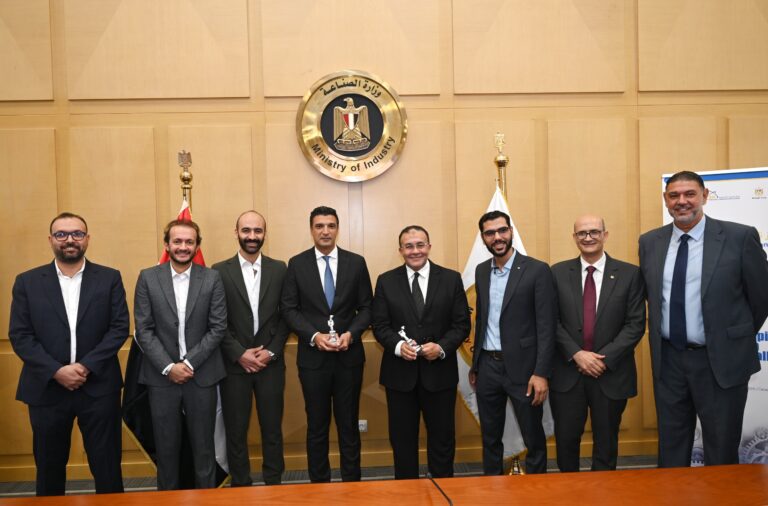
The Financial Regulatory Authority (FRA) held an extensive discussion session at its headquarters on the final preparations for activating the short selling mechanism on the Egyptian Exchange (EGX). The session was attended by Islam Azzam, Chairperson of the FRA; Omar Radwan, Chairperson of the EGX; Khaled Serry Siam, Chairperson of Misr for Central Clearing, Depository and Registry (MCDR); Mohamed Sabry, Vice-Chairperson of the EGX; Mahmoud Gebril, Assistant Chairperson of the FRA; a number of FRA and EGX officials and technical teams; and representatives of capital market stakeholders and securities brokerage firms. The meeting formed part of the FRA’s ongoing dialogue-based approach with market participants and its commitment to considering different views and proposals regarding the development of regulatory tools and mechanisms in a way that enhances market efficiency, competitiveness and attractiveness to domestic and foreign investors. Azzam stressed that completing the regulatory and operational framework for short selling remains a top priority for the Authority. He noted that technical discussions and efforts to activate the mechanism have continued for many years amid strong anticipation from market participants, given that it is one of the most widely used trading mechanisms in advanced capital markets and neighbouring countries. He emphasised his commitment to implementing the mechanism in accordance with international best practices in transparency and governance, while ensuring continuous coordination among all parties involved. He added that this would contribute to broadening and deepening the market and help investors across different categories better understand the benefits of short selling. This, he said, requires intensified awareness campaigns and greater investment education for market participants, whether potential lenders or borrowers. Azzam noted that activating short selling would represent an important step towards enhancing the competitiveness of Egypt’s capital market and expanding the range of investment tools and strategies available to investors, thereby improving market efficiency and strengthening its ability to attract investment. He also expects the mechanism to generate greater interest among foreign investors and younger market participants. The FRA Chairperson pointed out that short selling is an important tool that enables more efficient investment management, creates additional opportunities to generate returns, benefit from price movements and redeploy profits into new investments. It also contributes to increasing market liquidity and improving price discovery. Azzam explained that the FRA, in cooperation with the EGX and MCDR, has developed an integrated regulatory and supervisory framework with rapid-response capabilities to ensure the sound execution of short selling transactions, effective risk management and the protection of market participants’ rights. The discussions focused on evaluating and refining the regulatory and operational requirements needed to activate short selling, including ensuring the readiness of the Egyptian Exchange and MCDR and achieving full connectivity between brokerage firms and the clearing company. Participants also reviewed all aspects of the central lending system being developed and managed by MCDR to document every stage of the process. This includes identifying securities available for lending, displaying securities on the system by name, quantity, lending period and acceptable lending rate, as well as recording data related to borrowing transactions, lenders, borrowers and the termination of lending arrangements. The discussions further addressed a number of technical and regulatory issues in light of FRA Decision No. 365 of 2026 governing short selling transactions. These included requirements for brokerage firms wishing to participate in the activity, financial solvency standards, technical and operational efficiency requirements, safeguards for client funds, concentration limits and regulatory transaction thresholds. The decision will be amended to reflect recent developments in the system agreed upon by the FRA, the EGX, MCDR, and market participants. The meeting also reviewed the obligations imposed on brokerage firms, particularly the receipt of orders from borrowing clients and the requirement to obtain acceptable collateral equivalent to at least 50% of the market value of the borrowed securities. Firms must also establish automated systems to monitor and assess total collateral, conduct daily mark-to-market revaluations of borrowed securities based on closing prices, and implement collateral monitoring and margin-call procedures throughout the lending period to ensure effective risk management. Officials from the FRA, the EGX and MCDR listened to the views and proposals of brokerage firms and investors, discussed potential challenges that may arise during implementation, and responded to a wide range of technical and regulatory questions. At the conclusion of the session, Azzam reaffirmed the continuation of coordination and consultation between the Authority and relevant stakeholders with a view to launching the short selling mechanism in the near future through a sophisticated and transparent framework that takes into account the interests of all parties. He said the mechanism would operate under full regulatory oversight and achieve a balance between encouraging investment and maintaining the highest standards of market stability and discipline. Short selling, or the sale of borrowed securities, is a mechanism that allows investors to trade securities when they expect a decline in a stock’s price. The investor borrows shares from their owner, sells them at the current market price and later repurchases them at a lower price in order to return them to the original owner. The mechanism involves a lender, who is the original owner of the securities, and a borrower, who borrows the securities to trade them based on an expectation that their price will decline. Profit is generated from the difference between the selling and repurchase prices, depending on the investor’s assessment of market movements and the value of the security. If the borrower expects the price of a particular security to fall, they borrow it from a shareholder willing to lend part of their holdings, sell it on the market at a higher price and deposit cash collateral. If the borrower’s expectations prove correct and the share price declines, they repurchase the shares at the lower price, realise a profit and return the borrowed shares to the lender after deducting the borrowing cost. If, however, the share price rises and the borrower decides to limit losses, they repurchase the shares at the higher price, incur a loss and return the borrowed shares to the lender, in addition to paying the borrowing cost. In both cases, the lender earns a return from lending out their shares while retaining the other benefits associated with ownership of those securities. The post FRA Chair discusses final preparations for launch of short selling on EGX first appeared on Dailynewsegypt.