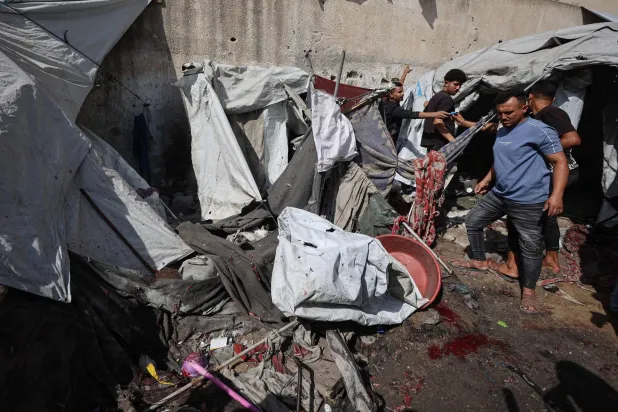
Fear of another war is prompting residents of Beirut’s southern suburbs to relocate or rent homes elsewhere. Housing decisions are no longer driven solely by the possibility of destruction or evacuation warnings. The prospect of renewed fighting is increasingly influencing where people choose to live, how they plan their marriages and even where they intend to spend their retirement. Testimonies gathered by Asharq Al-Awsat reveal how families are reorganizing their lives in search of safety. Some have left the southern suburb, known as Dahiyeh, altogether, while others remain in their homes but maintain alternative accommodation in case they need to flee. From homeowners paying additional rent to newlyweds choosing larger apartments to shelter relatives, security concerns are increasingly outweighing financial and social considerations. Marital home for two families For newlywed Nadia Houri, choosing a marital home was anything but a conventional decision. Having lived in Beirut’s southern suburbs before her marriage, she decided to move to Bchamoun, making the possibility of another war a central consideration. “When I decided to get married, I wasn’t thinking only about the home where my husband and I would live, but also about somewhere my family and my husband’s family could seek shelter if another war broke out,” Houri told Asharq Al-Awsat. Smoke rises from the site of an Israeli air strike that targeted the Haret Hreik neighborhood in Beirut's southern suburbs. (AFP) “That’s why I chose Bchamoun. I made sure the building was safe and the apartment spacious enough to accommodate both families.” She said the additional expense was preferable to being unable to help relatives forced to flee their homes. “I would rather bear the extra cost than see my family or my husband’s family displaced with nowhere to go. I wanted to be prepared for any emergency.” Trauma of bombardment drives residents away Lana Shouaib, from the Mreijeh neighborhood in the southern suburbs, rented a small studio in Beirut’s Ashrafieh after becoming increasingly uneasy about returning home. Her parents, meanwhile, moved to their village in the eastern Bekaa Valley. “The situation is worrying, and security fears aren’t the only reason we’re staying away from the southern suburbs,” Shouaib told Asharq Al-Awsat. “The area is still suffering from all the destruction and water problems. All these factors made me look for somewhere else.” Her greatest concern, however, remains the possibility of renewed airstrikes, particularly after experiencing a nighttime attack. With no guarantees that war will not resume, she finds the prospect of returning increasingly difficult. Shouaib is now considering leaving the neighborhood permanently. “When this situation ends and things return to normal, we’ll sell the house and look somewhere else,” she said, acknowledging how difficult it is to abandon a home into which someone has invested a lifetime of hard work. Retirement at an additional cost Khaireddine, who asked that his full name not be published, did not wait for his home in the Sainte-Therese neighborhood of Beirut’s southern suburbs to suffer damage before deciding to leave. Although the property remained intact, he and his wife moved to Khaldeh in Mount Lebanon, where they rented a house for $600 a month, hoping to spend their retirement away from fear and the prospect of repeated displacement. “My house wasn’t damaged, and we could have stayed there. But we’re tired of being afraid and of the possibility of having to flee again,” he told Asharq Al-Awsat. “We’ve reached an age when we want to rest and live peacefully, away from bombardment and anxiety about another war.” Families displaced by Israeli strikes from southern Lebanon seek refuge at a school transformed into a shelter in Sidon. (AFP) Their decision was also influenced by a desire to remain close to their children, who live in Khaldeh and the surrounding area. Khaireddine acknowledged that paying $600 in monthly rent despite owning a habitable property placed an additional financial burden on the couple during retirement. But for him, the trade-off was worthwhile. “Peace of mind has become more important to us,”he explained. A summer chalet becomes an emergency refuge Unlike those who have left, Abu Ali, a man in his 80s, still lives in his home in Beirut’s southern suburbs. He has nevertheless taken a precautionary step, renting a chalet in Faraya on an annual lease in case another war erupts. “I still live in the southern suburbs, and I don’t want to leave my home. But I’ve rented a chalet in Faraya for the whole year so I have somewhere to go if war resumes,” he told Asharq Al-Awsat. “I usually use it in the summer, but I decided to keep it in case of an emergency.” Abu Ali explained that his advanced age had made him more determined to secure accommodation where he could relocate immediately if the security situation deteriorated, rather than search for shelter in the middle of a crisis.